All species › Passerines › New World sparrows › Cuzco Brushfinch
Cuzco Brushfinch | Atlapetes canigenis
Grijze struikgors | Atlapetes de Cuzco | Tico-tico-de-cusco
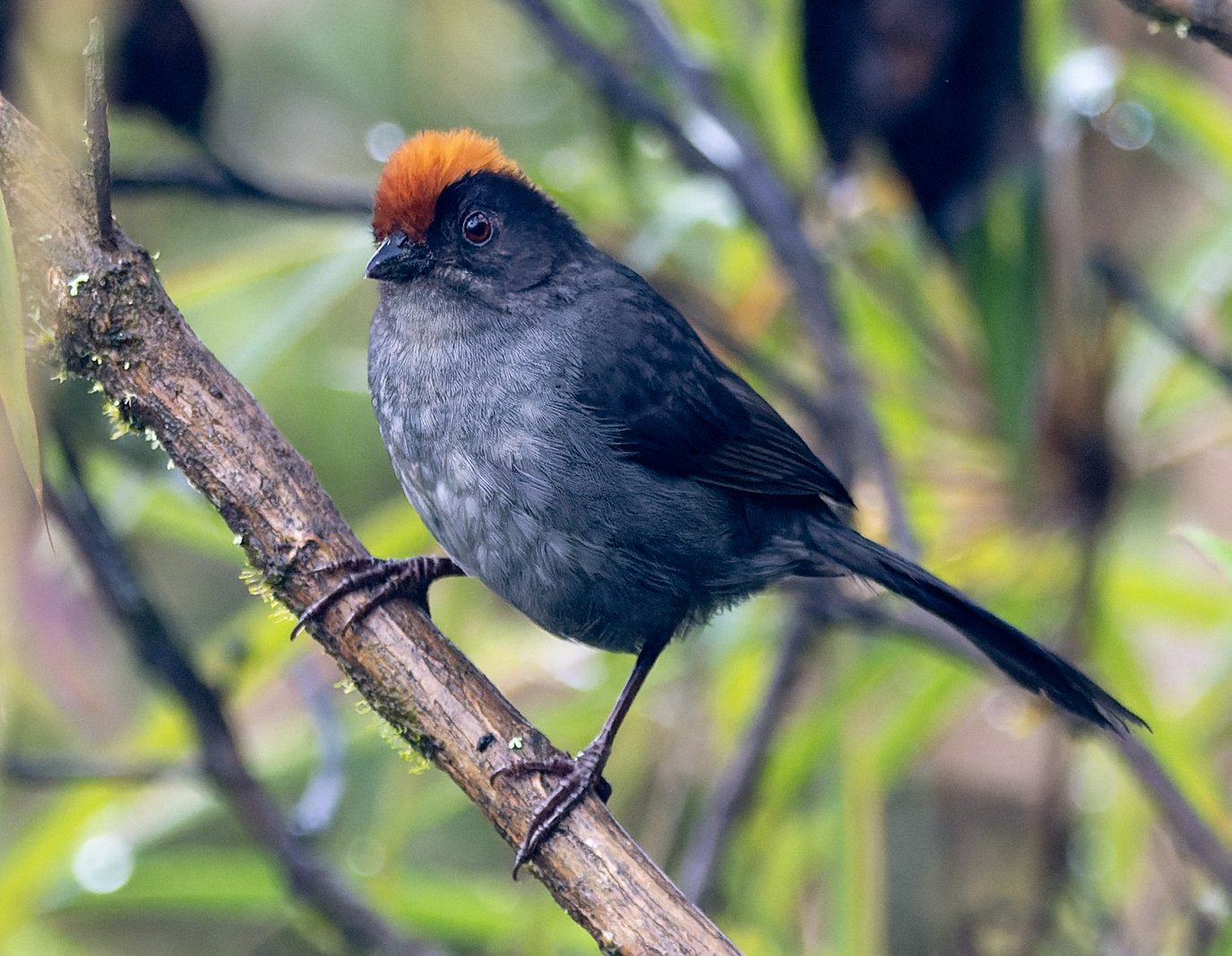
The Cuzco Brushfinch is a dark grey brushfinch with a rufous crown from the humid montane forests of Cusco department in southern Peru. It was long included in Slaty Brushfinch, but turns out to be more closely related to other brushfinches of southern Peru and Bolivia. The English name refers to Cusco.
Voice
High squeaks; the song is described as a shrill trill followed by chatter and tew-tew-tew swee swee. At dawn the male sings varied phrases at regular intervals, sometimes with loud, drawn-out notes.
Recording: Dan Lane — CC BY-NC-SA 4.0 · xeno-canto
Identification
17–18 cm. Almost entirely dark grey, with a rufous crown that extends to the nape. A black stripe runs from in front of the eye to the grey ear coverts. The wings and tail are blackish, the primaries edged grey, with a slight tawny tint on the outer flight feathers. The underparts vary from almost as dark grey as the back to pale grey with a greyish-white belly. The sexes are alike; the female is slightly smaller.
Confusion species
Apurimac Brushfinch Atlapetes forbesi has more rufous on the head, a white throat and a white lower cheek, and lives in drier valleys further west. Bolivian Brushfinch Atlapetes rufinucha has yellow underparts. White-browed Brushfinch Arremon torquatus has a black head with a grey crown stripe and a white supercilium, and a white throat.
Habitat
Humid montane forest, its edges and shrubbery on the slopes of the Andes, between about 2300 and 3600 m. It forages low in the vegetation for insects and seeds, usually in pairs. Little is known about the nest.
Where the bird is most at home, classified by the vegetation units of the Andes and the west coast.


Range and movements
Only in Peru, in the mountains of Cusco department. Absent from Colombia, Ecuador, Bolivia and the Galápagos. Does not occur outside the guide area.
- Resident
- dark = core range, pale = thinly spread
How and when to look
Search forest edges and shrubbery along mountain roads in the humid montane forests of Cusco. The male sings at dawn; look for the rufous crown above the otherwise grey body.
Conservation status
Least Concern. The range is restricted; numbers and trend are poorly known.
Scientific name
Atlapetes canigenis | Chapman, 1919
Chapman described the species in 1919 and placed it straight away in the genus where it still stands. The genus Atlapetes was introduced in 1831 by Wagler. The genus name comes from Greek: the mythical titan Atlas and petēs, 'flyer'. The species name comes from Latin canus, 'grey', and gena, 'cheek', for the grey cheeks. The specimen the first description was based on came from Torontoy, Urubamba valley, Cuzco, Peru.