All species › Passerines › Ovenbirds and woodcreepers › Apurimac Spinetail
Apurimac Spinetail | Synallaxis courseni
Apurímacstekelstaart | Pijuí de Apurímac | João-de-apurímac
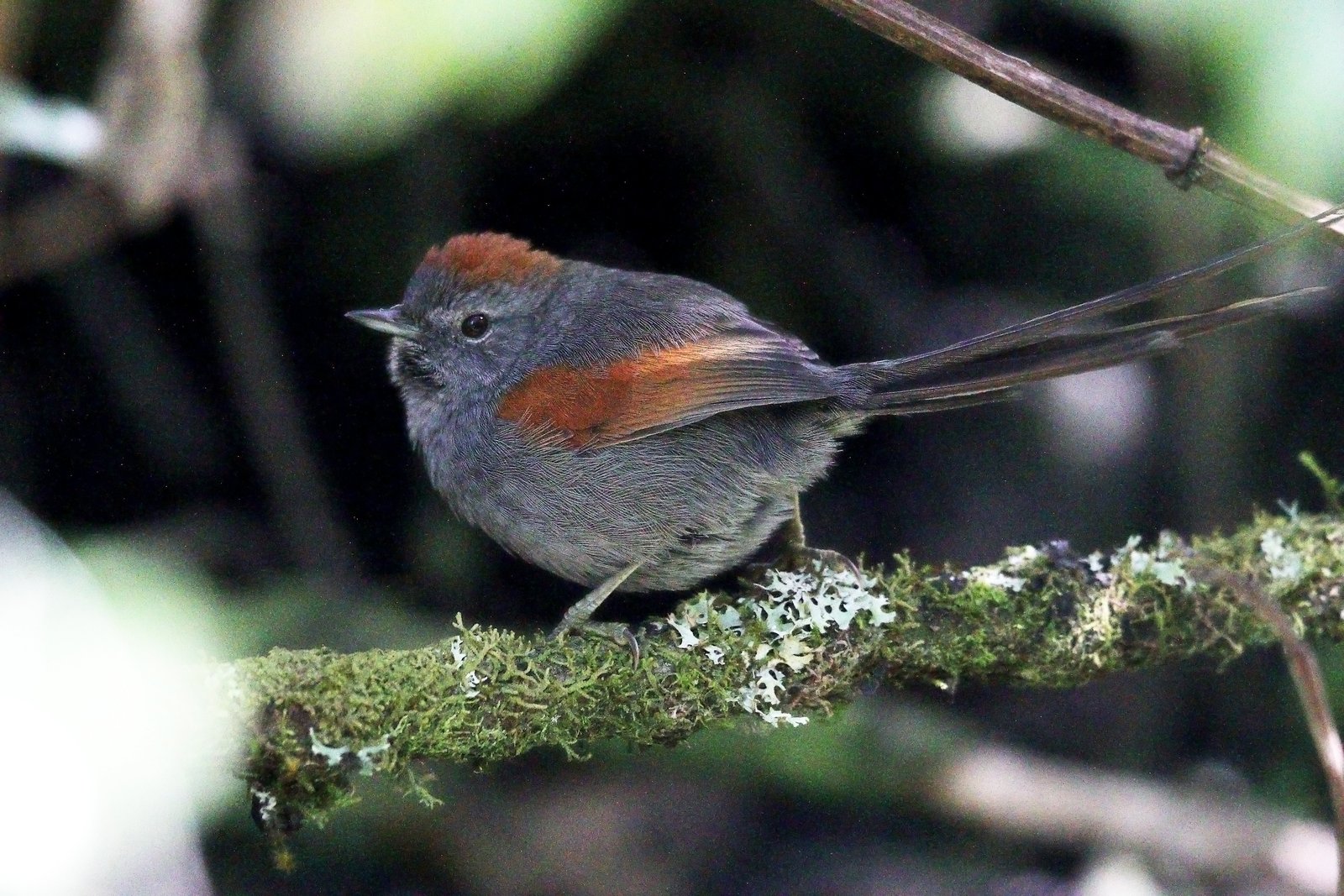
Apurimac Spinetail is endemic to Peru, with a very small range in the mountains of Apurímac. It looks like a large, dark Azara's Spinetail with a long tail. Much of its habitat lies within the Ampay National Sanctuary.
Voice
The song resembles that of Azara's Spinetail: a sharp, nasal call repeated for minutes. Also a low chatter as a contact call and a low, guttural, churring trill.
Recording: Jaime J. Valenzuela Trujillo — CC BY-NC-SA 4.0 · xeno-canto
Identification
17–19 cm, with a long, graduated, dark sooty-brown tail. It has a pale grey eyebrow, a dark grey face, a sooty-black throat and dark grey underparts. The hindcrown and nape are dark rufous, the wings rufous. The sexes are alike.
Confusion species
Azara's Spinetail Synallaxis azarae is smaller, with a shorter, chestnut tail, an olive-brown back and paler underparts; it lives elsewhere in the Andes of southern Peru. Thistletails and canasteros (Asthenes) have a frayed or patterned tail, a pale throat and lack the rufous on crown and wings.
Habitat
Cloud forest and humid forest with Podocarpus, and young growth in clearings and on landslides, between 2450 and 3500 m. It favours dense undergrowth and Chusquea bamboo. It forages low in the vegetation for insects.
Where the bird is most at home, classified by the vegetation units of the Andes and the west coast.


Range and movements
Endemic to Peru: known mainly from the slopes of Ampay south-west of the Apurímac River, in the department of Apurímac, with a few sites nearby. Absent from Colombia, Ecuador, Bolivia and the Galápagos.
- Resident
- dark = core range, pale = thinly spread
How and when to look
Visit the Ampay National Sanctuary above Abancay and search bamboo and dense undergrowth along the trails in the Podocarpus forest; the long series of nasal calls gives the bird away.
Conservation status
Near Threatened. The range is very small; the population is estimated at several hundred to over a thousand mature birds and appears stable. Cutting of Podocarpus, grazing and disturbance by visitors, also within the protected area, are threats.
Scientific name
Synallaxis courseni | Blake, 1971
Blake described the species in 1971 and placed it straight away in the genus where it still stands. The genus Synallaxis was introduced in 1818 by Vieillot. The genus name comes from Ancient Greek sunallaxis, 'exchange'. The species name honours C. Blair Coursen, an American patron whose support funded the Peruvian fieldwork that produced the type. The specimen the first description was based on came from Abancay, Apurímac, Peru.