All species › Birds of prey › Kites, Old World vultures, eagles and hawks › Black-collared Hawk
Black-collared Hawk | Busarellus nigricollis
Moerasbuizerd | Aguililla canela | Gavião-belo
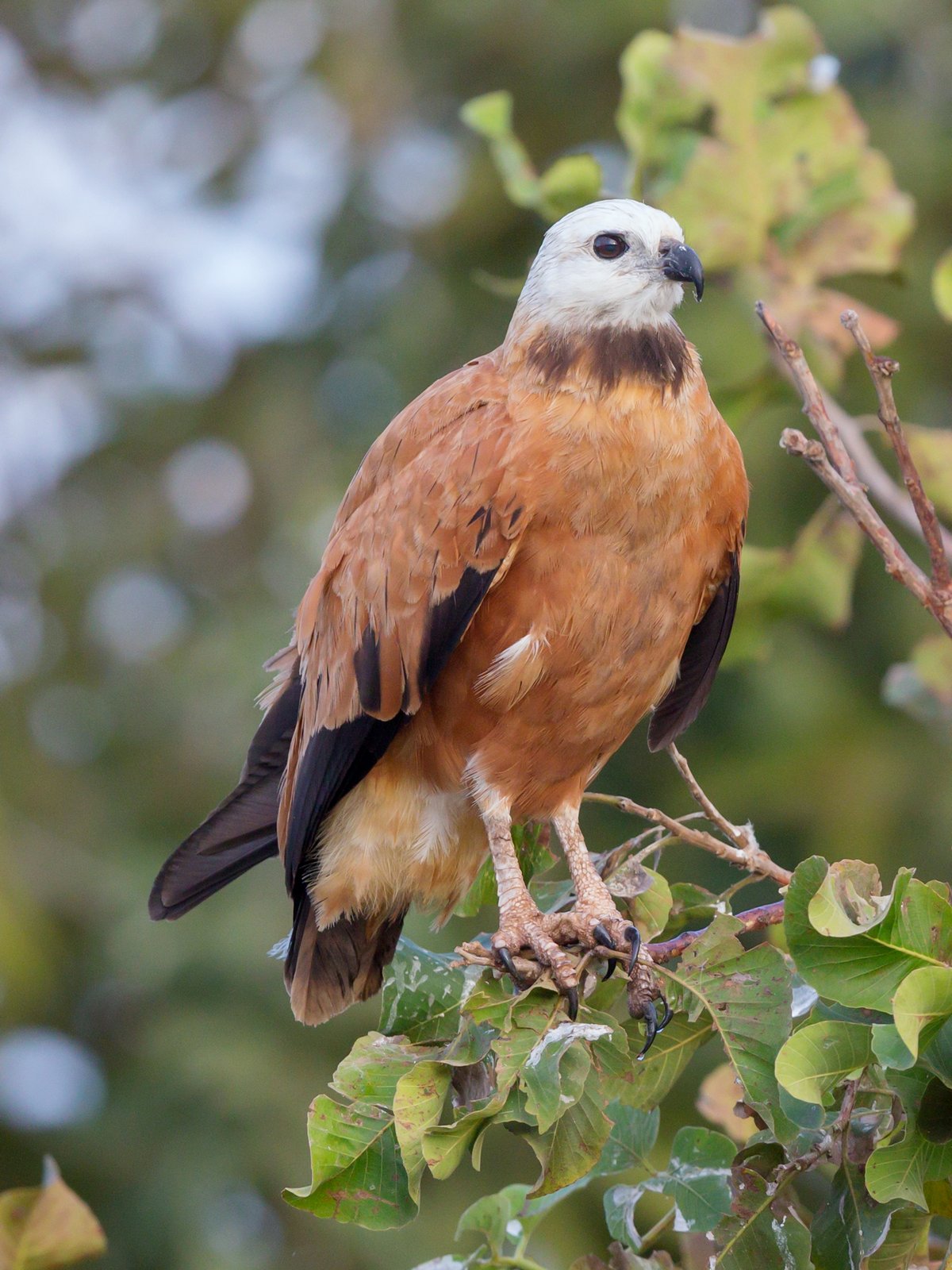
The Black-collared Hawk is a rufous raptor of marshes and slow waters in the lowlands, specialised in catching fish. The soles of its toes are covered with spiny scales, which help it grip slippery prey. It often sits in the open on a branch or post low over the water.
Voice
A hoarse, drawn-out scream, kreeeh, and a dry, grunting sound; mainly heard at the nest.
Recording: Jacob Wijpkema — CC BY-NC-SA 4.0 · xeno-canto
Identification
46–51 cm, with broad, short wings and a short, broad tail. The adult is warm cinnamon-rufous, with a whitish to pale buff head and a black, crescent-shaped patch on the upper breast. The flight feathers are black, as is the tail, which has narrow pale bars at the base. Bill black, legs greyish white. In flight the black flight feathers and tail contrast with the rufous wing coverts and body. The sexes are alike. Juveniles are duller and browner, with dark streaks on the head and breast and a less distinct throat patch.
Confusion species
Savanna Hawk Buteogallus meridionalis is also rufous, but has a greyish back, finely barred underparts, long yellow legs, a white band across the middle of the tail and no black breast patch. Snail Kite Rostrhamus sociabilis shares the habitat, but is slate grey or streaked brown, with a thin, strongly hooked bill and a white tail base.
Habitat
Marshes, lagoons, oxbow lakes, slow rivers and flooded savanna with scattered trees, mainly in the lowlands up to about 500 m. It waits on a perch low over the water and snatches fish just below the surface with its feet, without plunging; it also takes aquatic insects, frogs and occasionally small reptiles. The nest is a stick nest in a tree near or over water.
Where the bird is most at home, classified by the vegetation units of the Andes and the west coast.


Range and movements
In Colombia in the lowlands of the Caribbean region, the Magdalena valley, the llanos and Amazonia. In Ecuador mainly in the eastern lowlands. In Peru in the Amazonian lowlands. In Bolivia in the north and east, most numerous in the savannas of the Beni. Absent from the Galápagos. Outside the guide area from Mexico to northern Argentina.
- Resident
- dark = core range, pale = thinly spread
How and when to look
Search along marshes and flooded savanna in the Beni or the llanos, and along oxbow lakes in Amazonia; birds often sit for long periods on the same dead branch over the water.
Conservation status
Least Concern. Widespread in suitable wetlands; locally sensitive to the drainage of marshes.
Scientific name
Busarellus nigricollis | (Latham, 1790)
Latham described the species in 1790 as Falco nigricollis; because it was later moved to another genus, the author and year stand in brackets. The genus Busarellus was introduced in 1842 by De Lafresnaye. The genus name is based on Levaillant's 'Buserai' (Buseray) and the species name Falco busarellus Daudin, 1800; the genus was placed between the buzzards (French buses) and the harriers (busards). Lesson erected the genus in 1843. The species name comes from Latin niger, 'black', and collum, 'neck'. The specimen the first description was based on came from Cayenne, French Guiana.