All species › Passerines › Ovenbirds and woodcreepers › Caatinga Cacholote
Caatinga Cacholote | Pseudoseisura cristata
Kuifcacholote | Cacholote de la caatinga | Casaca-de-couro
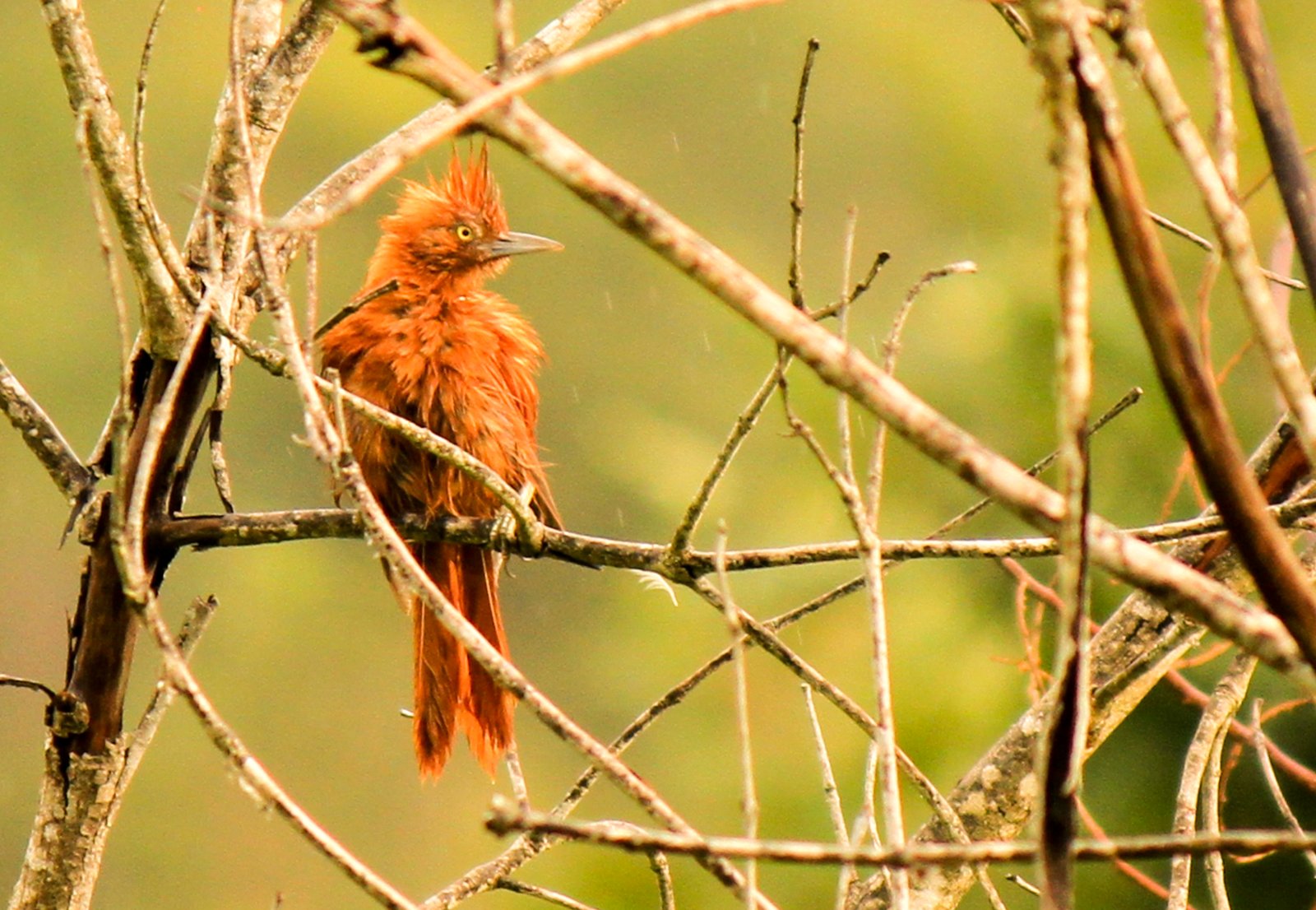
The Caatinga Cacholote is a large, plain rufous-brown ovenbird with a bushy crest, confined to the dry caatinga of north-eastern Brazil. Pairs build large stick nests in trees and call loudly in duet. In the guide area the species is listed only as a vagrant; older records from Bolivia probably refer to Grey-crested Cacholote, formerly treated as the same species.
Voice
Pairs sing loud duets: long, rattling series of shrill notes that vary in pace and pitch. Also short, harsh calls.
Recording: JAYRSON ARAUJO DE OLIVEIRA — CC BY-NC-SA 4.0 · xeno-canto
Identification
23–25 cm, sturdy, with a straight, strong, greyish bill, a long tail and an erectile crest. The whole plumage is plain cinnamon to rufous-brown, the underparts slightly paler; the crest is also rufous-brown, without grey. The eye is pale yellow. The sexes are alike. Juveniles are duller, with a shorter crest and a darker eye.
Confusion species
Grey-crested Cacholote Pseudoseisura unirufa is very similar, but has a greyish crest. Brown Cacholote Pseudoseisura lophotes is larger and darker brown, with a dark crest and rufous wings and tail. Rufous Hornero Furnarius rufus is smaller, without a crest, with a whitish throat, and walks a lot on the ground.
Habitat
Caatinga: dry thorn scrub and deciduous woodland, also farmyards, villages and open country with scattered trees in north-eastern Brazil. It forages on the ground and in trees for insects and other invertebrates, sometimes fruit. The nest is a large, closed structure of thorny sticks with an entrance tunnel, high in a tree.
Where the bird is most at home, classified by the vegetation units of the Andes and the west coast.


Range and movements
In the guide area listed only as a very rare vagrant, with no regular site or season. The former, broad species concept included the cacholotes of eastern Bolivia, which now belong to Grey-crested Cacholote; records from Bolivia should therefore be treated critically. Absent from Colombia, Ecuador, Peru and the Galápagos. Outside the guide area in north-eastern Brazil.
How and when to look
A cacholote in eastern Bolivia is almost always a Grey-crested or Brown Cacholote. For a possible Caatinga Cacholote, check for an entirely rufous crest without grey and document the record with photographs and sound recordings.
Conservation status
Least Concern. The species is common in the caatinga and persists in open, inhabited country.
Scientific name
Pseudoseisura cristata | (Spix, 1824)
Spix described the species in 1824 as Anabates cristatus; because it was later moved to another genus, the author and year stand in brackets. The genus Pseudoseisura was introduced in 1853 by Reichenbach. The genus name combines Greek pseudos, 'false', with seisoura, a bird mentioned by Hesychius of Alexandria and thought to be a wagtail. The species name cristata is Latin for 'crested'. The specimen the first description was based on came from Malhada, Rio São Francisco, Bahia, Brazil.