All species › Pelicans, herons and ibises › Herons, egrets and bitterns › Cocoi Heron
Cocoi Heron | Ardea cocoi
Cocoireiger | Garza cuca | Garça-moura
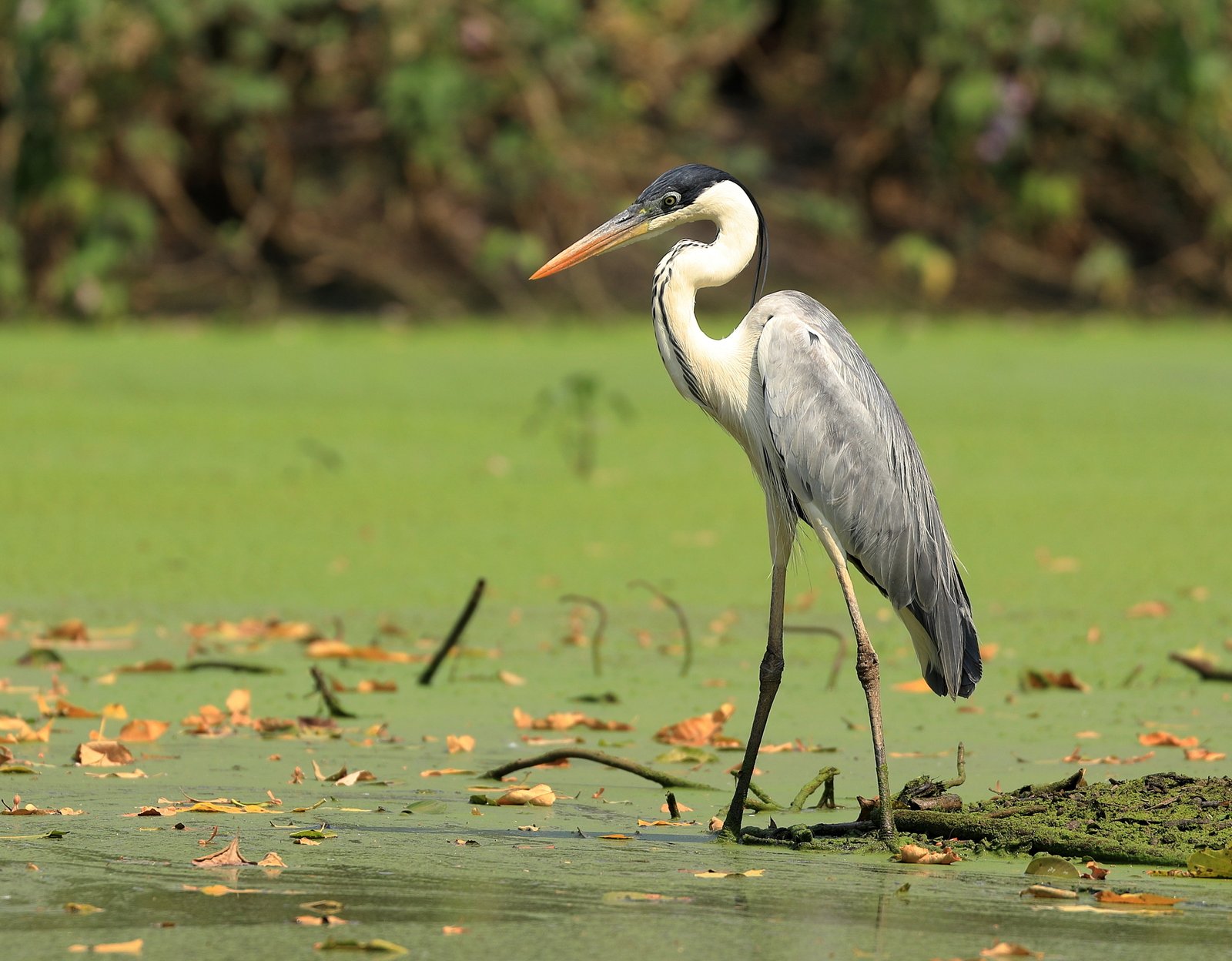
The Cocoi Heron is the largest heron of South America. It often stands motionless for long periods on the banks of rivers and lakes and hunts large fish. In the guide area it is a bird of the lowlands, both east and west of the Andes.
Voice
A deep, croaking graak, mainly when flushed.
Recording: José María Loaiza B. — CC BY-NC-SA 4.0 · xeno-canto
Identification
95–125 cm. Very large and long in neck and legs. Adults have a black crown with a short black crest, a white head and neck with a line of black streaks down the foreneck, grey back and wings, and a black patch on the sides of the breast and belly, with a white centre to the belly and white thighs. The bill is yellow, the legs are dark. The sexes are alike. Juveniles are duller and greyer, with a grey rather than black crown and less black on the underparts.
Confusion species
Great Blue Heron Ardea herodias has a grey to grey-brown neck, rufous thighs and a white crown with only a black stripe above the eye. Great Egret Ardea alba is all white. Rufescent Tiger Heron Tigrisoma lineatum is smaller, with a rufous head and neck and finely barred wings.
Habitat
Banks of rivers, lakes, oxbow lakes, marshes and lagoons, also rice fields and mangroves, mostly below 1000 m, occasionally into the Andean valleys. It eats mainly fish, also frogs, crabs and small mammals. It breeds in colonies, sometimes with other herons, in tall trees or reeds; the nest is a large platform of sticks.
Where the bird is most at home, classified by the vegetation units of the Andes and the west coast.


Range and movements
In Colombia widespread in the lowlands of the north and east, scarcer along the Pacific coast. In Ecuador in the western lowlands, mainly around the Gulf of Guayaquil, and in the Amazonian lowlands. In Peru in the Amazonian lowlands and locally in the north-west. In Bolivia in the lowlands of the north and east. Absent from the Galápagos. Outside the guide area from Panama to southern Argentina and Chile.
- Resident
- dark = core range, pale = thinly spread
How and when to look
Along the large rivers and lakes of the Amazonian lowlands, and in the llanos of Colombia, it stands on sandbars and banks; from a boat it can be recognised at long range by its white neck and black crown.
Conservation status
Least Concern. The species is widespread; locally it suffers from hunting and the loss of wetlands.
Scientific name
Ardea cocoi | Linnaeus, 1766
Linnaeus described the species in 1766 and placed it straight away in the genus where it still stands. The genus Ardea was introduced in 1758 by Linnaeus. The genus name is Latin ardea, 'heron'. The species name goes back to the indigenous names cocoi or cuca for this heron in Cayenne (compare the Tupí name socó for various herons). The specimen the first description was based on came from Cayenne, French Guiana.