All species › Swifts › Swifts › Fork-tailed Palm Swift
Fork-tailed Palm Swift | Tachornis squamata
Braziliaanse palmgierzwaluw | Vencejillo tijereta | Andorinhão-do-buriti
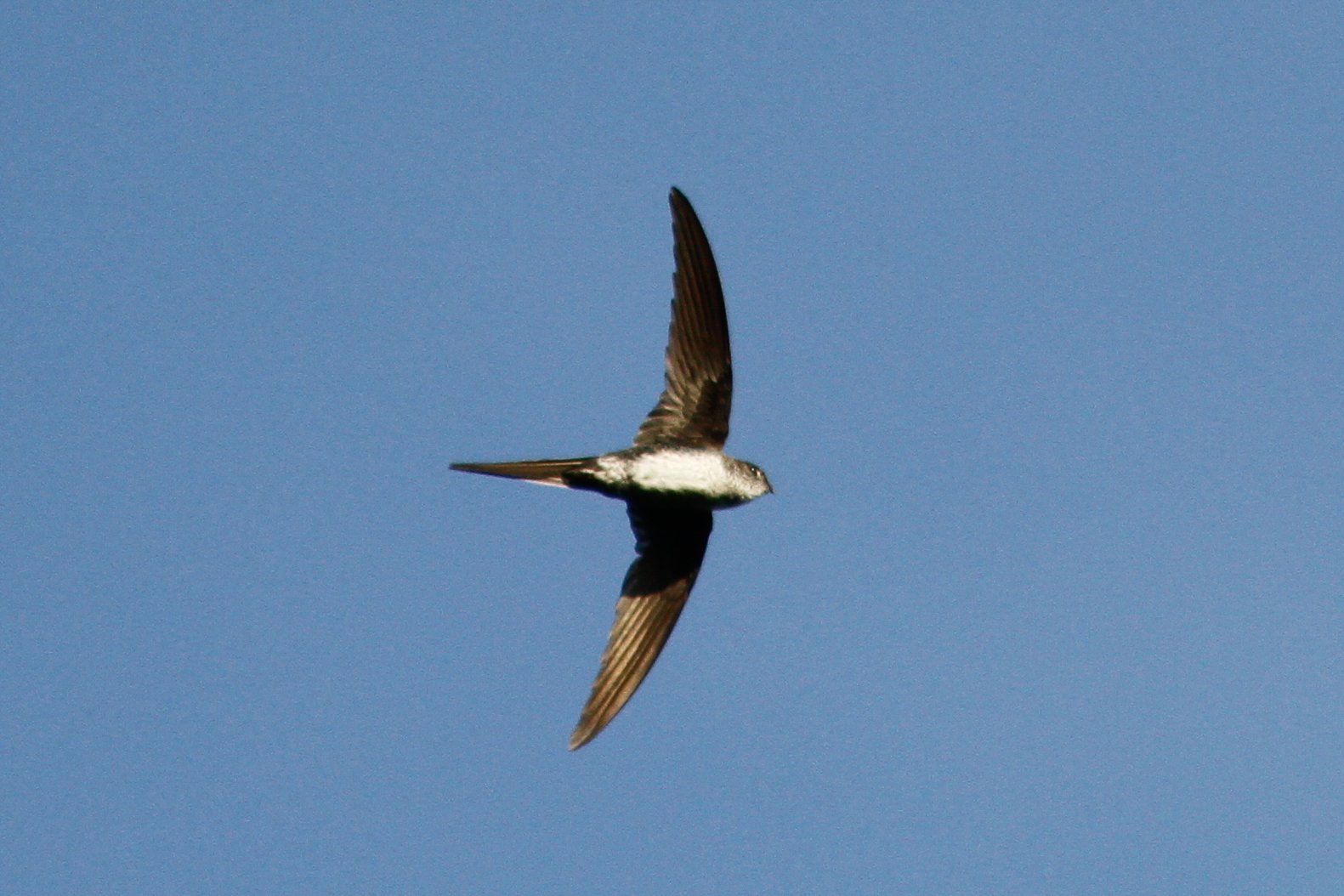
The Fork-tailed Palm Swift is a small, slender swift with a long, deeply forked tail that is closely tied to the moriche or aguaje palm Mauritia flexuosa. It builds its nest in the hanging dead fronds of this palm. It often flies low and fluttering over palm swamps, savannas and villages in the lowlands east of the Andes.
Voice
A thin, high, buzzy twittering, often in flight and around the nest palms.
Recording: Jacob Wijpkema — CC BY-NC-SA 4.0 · xeno-canto
Identification
12–13 cm, slender, with narrow wings and a long, deeply forked tail that is usually held closed in a thin point and opened only when turning. The upperparts are blackish brown, with fine pale feather edges that give a scaled look. The throat and belly are greyish white, the flanks and undertail coverts dark. The sexes are alike.
Confusion species
Lesser Swallow-tailed Swift Panyptila cayennensis is larger and black and white, with a white throat and collar and a white patch on the flanks. Pygmy Palm Swift Tachornis furcata is smaller, with a shorter tail, and occurs only in north-eastern Colombia. Swifts of the genus Chaetura are stockier, with a short, square tail. Swallows have broader wings and a slower flight.
Habitat
Palm swamps and scattered moriche palms in savannas, along rivers, in forest clearings and in villages and towns with palms, in the lowlands up to about 500 m. It hunts small insects low to fairly high in the air, often in pairs or small groups. The nest, of plant down and feathers glued with saliva, hangs on the inside of a dead, drooping palm frond.
Where the bird is most at home, classified by the vegetation units of the Andes and the west coast.


Range and movements
In Colombia in the Llanos and Amazonia east of the Andes. In Ecuador and Peru in the eastern lowlands. In Bolivia in the lowlands of the north and east, including the Beni savannas. Absent west of the Andes, from the high Andes and from the Galápagos. Outside the guide area in Venezuela, the Guianas, Trinidad and much of Brazil.
- Resident
- dark = core range, pale = thinly spread
How and when to look
Look at palm swamps (aguajales) and stands of moriche palms, also in villages; at the nest palms the birds fly in and out low.
Conservation status
Least Concern. The species is widespread and benefits from the palms left standing in villages and pastures.
Scientific name
Tachornis squamata | (Cassin, 1853)
Cassin described the species in 1853 as Cypselus squamatus; because it was later moved to another genus, the author and year stand in brackets. The genus Tachornis was introduced in 1847 by Gosse. The genus name comes from Greek takhus, 'fast', and ornis, 'bird'. The species name comes from Latin squamatus, 'scaly', after the scaled pattern of the plumage. The specimen the first description was based on came from Guyana.