All species › Passerines › Tanagers and allies › Fulvous Shrike-Tanager
Fulvous Shrike-Tanager | Lanio fulvus
Bruine klauwiertangare | Tangara fulva | Pipira-parda
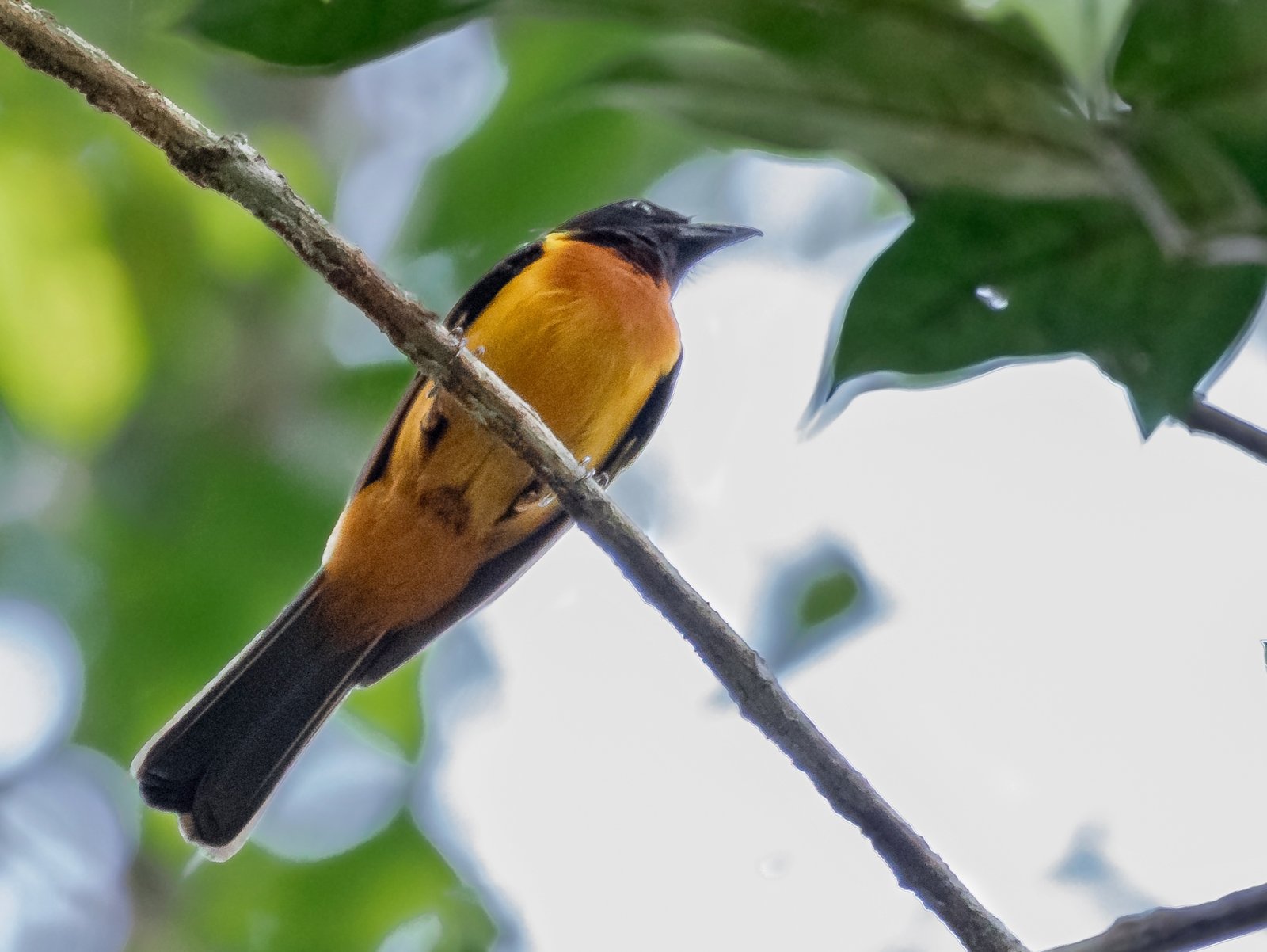
The Fulvous Shrike-Tanager is a robust tanager with a heavy, hook-tipped bill, of the canopy and middle levels of Amazonian forest north of the Amazon and the Marañón. It lives almost always in mixed flocks, in which it gives loud alarm calls at signs of danger. South of these rivers it is largely replaced by White-winged Shrike-Tanager.
Voice
A loud, sharp chew or chip, often repeated, with which it alerts the mixed flock; the song is a simple series of clear notes.
Recording: Juan Freile — CC BY-NC-SA 4.0 · xeno-canto
Identification
17–18 cm, with a heavy, dark bill with a small hook at the tip. The male has a black head, black wings and a black tail; the rest of the body is ochre-brown to tawny, warmer chestnut on the breast, and there is a variable white shoulder patch that is often hidden. The female is olive-brown, paler and warmer ochre-brown below. Juveniles resemble the female.
Confusion species
Male White-winged Shrike-Tanager Lanio versicolor is yellow below with a large white wing patch; that species lives south of the Amazon and the Marañón. The female resembles female ant tanagers Habia and Grey-headed Tanager Eucometis penicillata, but has the heavy, hooked bill. Male Fulvous-crested Tanager Tachyphonus surinamus is smaller, with a pointed bill and black underparts.
Habitat
Middle levels and canopy of humid terra firme and foothill forest, less in várzea and tall secondary forest, up to about 1350 m. It often perches upright on an open branch and takes large insects, such as katydids, picking them from leaves or catching them in short sallies. Little is known about the nest.
Where the bird is most at home, classified by the vegetation units of the Andes and the west coast.


Range and movements
In Colombia in the lowlands east of the Andes, mainly in the south. In Ecuador in the Amazonian lowlands and foothills. In Peru in the north, north of the Amazon and the Marañón, and along the foot of the Andes also further south, including San Martín. Absent from Bolivia and the Galápagos. Outside the guide area in southern Venezuela, the Guianas and northern Amazonian Brazil.
- Resident
- dark = core range, pale = thinly spread
How and when to look
Listen for loud, sharp calls in mixed canopy flocks in lowland forest; the shrike-tanager often sits upright and motionless on an open branch in the middle of the flock.
Conservation status
Least Concern. The species is widespread but fairly scarce, and depends on undisturbed forest.
Scientific name
Lanio fulvus | (Boddaert, 1783)
Boddaert described the species in 1783 as Tangara fulva; because it was later moved to another genus, the author and year stand in brackets. The genus Lanio was introduced in 1816 by Vieillot. The genus name is derived from the shrike genus Lanius, from Latin lanius, 'butcher'. The species name comes from Latin fulvus, 'tawny, fulvous', after the plumage. The specimen the first description was based on came from Cayenne, French Guiana.