All species › Waders, gulls and terns › Plovers and lapwings › Grey Plover
Grey Plover | Pluvialis squatarola
Zilverplevier | Chorlito gris | Batuiruçu-de-axila-preta
The Grey Plover is the largest plover occurring in the guide area. It breeds on the Arctic tundra around the entire North Pole and winters along almost all the coasts of the world. In the guide area it is a regular winter visitor to mudflats, beaches and rocky shores on the Pacific and Caribbean coasts and on the Galápagos.
Voice
A plaintive three-note whistle, tlee-oo-ee, with the middle note lower; often heard when flushed.
Recording: Teet Sirotkin — CC BY-NC-SA 4.0 · xeno-canto
Identification
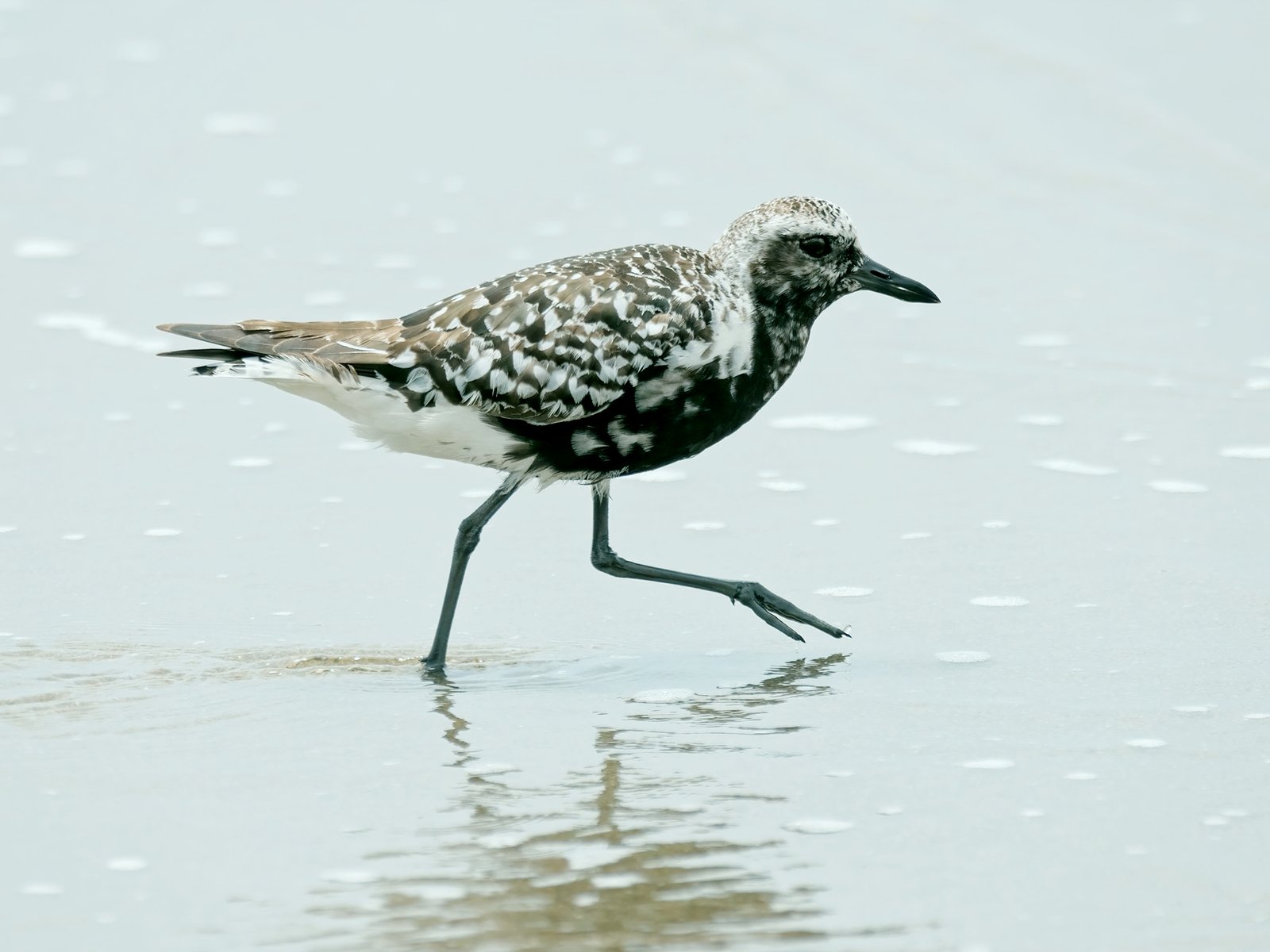
27–31 cm, a large, stocky plover with a big head, a heavy black bill and fairly long, dark grey legs. In non-breeding plumage grey, with finely white- and black-speckled upperparts, a pale supercilium and a white belly with some grey mottling on the breast. In breeding plumage, which some birds already partly show in April, the face, neck, breast and belly are black, bordered by a broad white band, and the upperparts are chequered silvery grey. In flight the black axillaries, the white wing bar and the white rump stand out. Juveniles are browner and more densely spotted. The sexes are alike in non-breeding plumage.
Confusion species
American Golden-Plover Pluvialis dominica is smaller and slimmer, with a smaller head and bill, a browner plumage with golden spots, grey axillaries and no white rump; it is mainly a passage migrant inland. Semipalmated Plover Charadrius semipalmatus is much smaller, with a dark breast band and orange legs. Red Knot Calidris canutus has a similarly sized, grey shape, but a longer, thin bill, shorter legs and a more sandpiper-like posture.
Habitat
Mudflats, muddy lagoons, estuaries, sandy beaches, rocky shores with a tidal zone and the edges of salt pans and shrimp ponds, almost only at sea level. It walks a few steps, stops and then picks worms, crustaceans and molluscs from the mud; it also feeds at night. At high tide it roosts in flocks on beaches and sandbars. It does not breed in the guide area.
Where the bird is most at home, classified by the vegetation units of the Andes and the west coast.


Range and movements
In Colombia and Ecuador along the whole Pacific coast, in Colombia also along the Caribbean coast. In Peru along the whole coast. On the Galápagos a regular winter visitor to the coasts of most islands. In Bolivia only as a rare visitor inland. Breeds on the Arctic tundra of North America and Eurasia and winters south to southern South America, Africa and Australia.
- Resident
- dark = core range, pale = thinly spread
How and when to look
From September to April at low tide on mudflats and in estuaries, for example in the Gulf of Guayaquil and along the coast of Peru; at high tide at the regular roosts on the beach. The plaintive call and the black axillaries in flight stand out.
Conservation status
Vulnerable. The world population is declining, mainly through the loss and disturbance of mudflats and roosts along the flyways and through climate change on the breeding grounds.
Scientific name
Pluvialis squatarola | (Linnaeus, 1758)
Linnaeus described the species in 1758 as Tringa Squatarola; because it was later moved to another genus, the author and year stand in brackets. The genus Pluvialis was introduced in 1760 by Brisson. The genus name is from Latin pluvialis, 'relating to rain', from pluvia, 'rain'; the birds were believed to flock when rain was imminent. The species name is a Latinised form of sgatarola, a Venetian name for some kind of plover. The specimen the first description was based on came from Sweden.