All species › Passerines › Ovenbirds and woodcreepers › Maquis Canastero
Maquis Canastero | Asthenes heterura
Iquicocanastero | Canastero de Iquico | Lenheiro-de-iquico
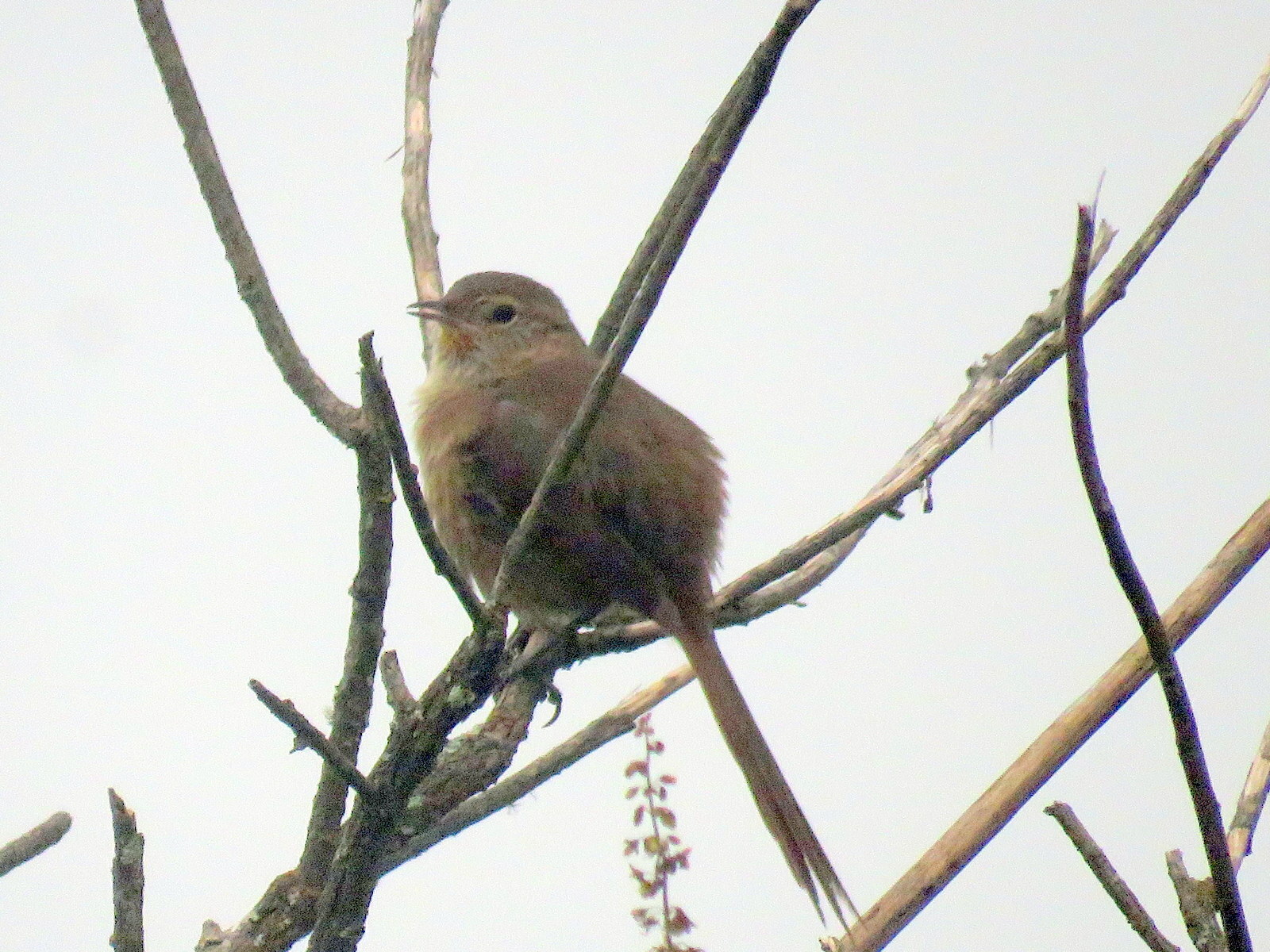
The Maquis Canastero is a brown canastero with rufous wings, endemic to the Andes of Bolivia. It lives in semi-humid to dry montane scrub and Polylepis woodland and the Dutch and Spanish names refer to Iquico, near La Paz. The species tolerates moderately disturbed terrain and also occurs in scrub along fields and pastures.
Voice
The song is a fast, accelerating series of squeaky notes. A longer song consists of high, strained notes that speed up and descend. The call is a monotonous trill.
Recording: Dan Lane — CC BY-NC-SA 3.0 · xeno-canto
Identification
16–17 cm, with a short, straight bill and a long, graduated tail. Crown, back and rump are brown, the uppertail coverts chestnut and the wings largely rufous. A buff supercilium and eye-ring. The breast is greyish buff. The central tail feathers are longer and dusky rufous. The sexes are alike.
Confusion species
Rusty-vented Canastero Asthenes dorbignyi has a rufous rump and undertail coverts and a whiter throat and breast. Cordilleran Canastero Asthenes modesta is paler, with a shorter tail, and lives in open puna grassland. Puna Thistletail Asthenes helleri and Black-throated Thistletail Asthenes harterti have a ragged, forked tail and live in more humid treeline forest; the latter has a black throat patch.
Habitat
Semi-humid to dry montane scrub, open woodland of Alnus and Polylepis, Festuca grassland with scattered shrubs, and shrubby hedgerows along fields, mostly between 3000 and 4200 m, locally from 2500 m. It searches for insects in shrubs and on the ground. Nothing is known about its breeding biology.
Where the bird is most at home, classified by the vegetation units of the Andes and the west coast.


Range and movements
Bolivia: on the eastern slope of the Andes in La Paz and Cochabamba, with records from the departments in between. Absent from Colombia, Ecuador, Peru and the Galápagos. Birds in north-western Argentina (Jujuy, Salta, Tucumán) are included in this species by some authors.
- Resident
- dark = core range, pale = thinly spread
How and when to look
Search scrub and Polylepis groves in the valleys around La Paz and in Tunari National Park above Cochabamba; the bird sings early in the morning from a shrub.
Conservation status
Least Concern, previously considered Vulnerable. The population is probably declining through the loss of Polylepis woodland, but the species also occurs in pastures and farmland with shrubs.
Scientific name
Asthenes heterura | (Berlepsch, 1901)
Berlepsch described the species in 1901 as Siptornis heterura; because it was later moved to another genus, the author and year stand in brackets. The genus Asthenes was introduced in 1853 by Reichenbach. The genus name comes from Ancient Greek asthenēs, 'insignificant', 'weak'. The species name comes from Greek heteros, 'different', and -ouros, '-tailed', for the distinctive tail. The specimen the first description was based on came from Iquico, La Paz, Bolivia.