All species › Passerines › Tanagers and allies › Orinoco Saltator
Orinoco Saltator | Saltator orenocensis
Orinocosaltator | Pepitero del Orinoco | Trinca-ferro-do-orinoco
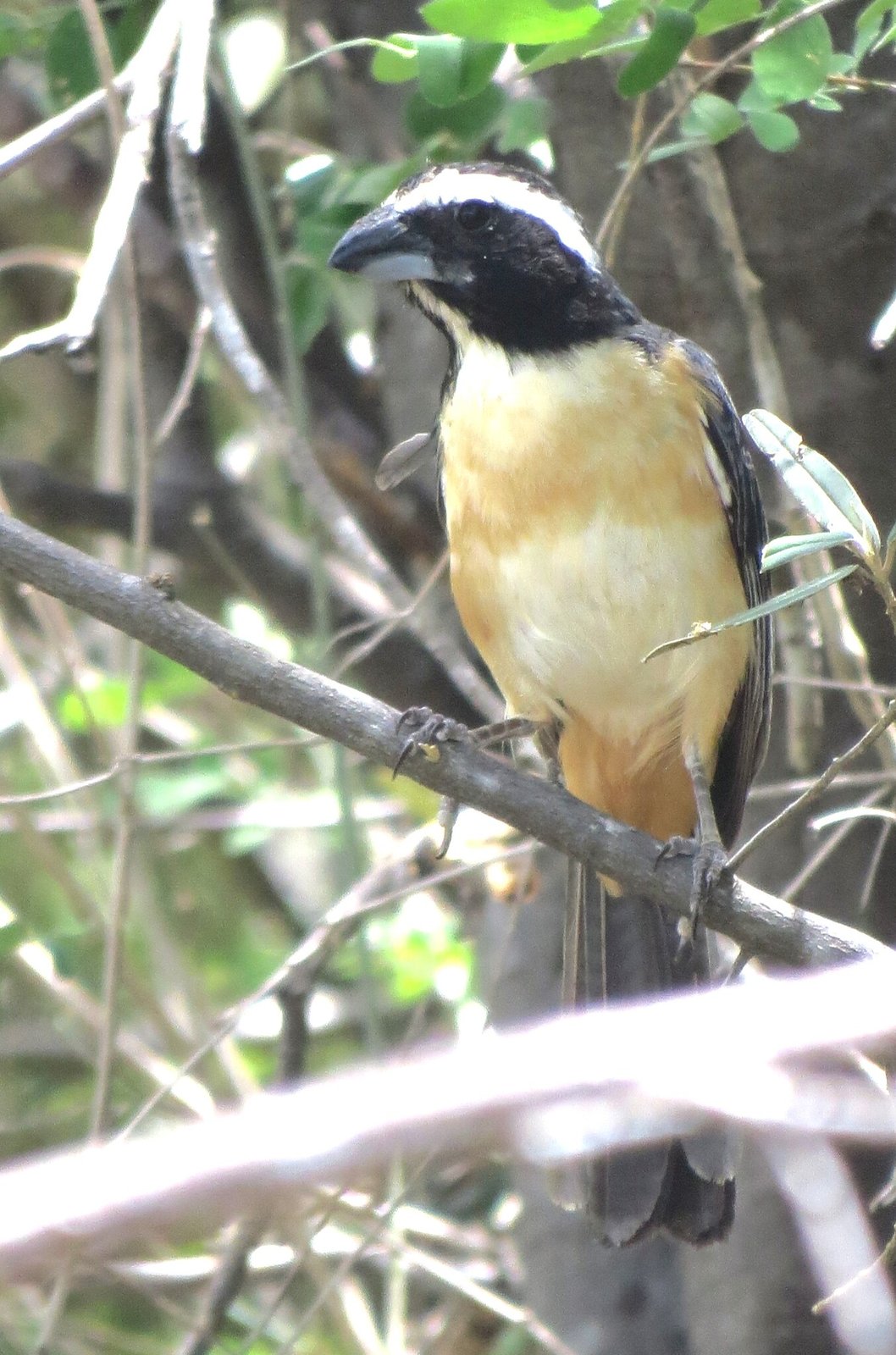
The Orinoco Saltator is a fairly small saltator of dry scrub, dry forest and the llanos of northern South America, with a black face, a long white eyebrow and buff underparts. The core of its range is in Venezuela; in the guide area it occurs only in north-eastern Colombia. Pairs often sing in duet.
Voice
The song is a series of short, rather scratchy and squeaky phrases, often a duet by the pair. Calls are short, sharp notes.
Recording: Joe Klaiber — CC BY-NC-SA 4.0 · xeno-canto
Identification
18–19 cm, with a black, conical bill. The upperparts are grey. The sides of the head are black, with a long white eyebrow from the bill to the nape. The throat is white, and the rest of the underparts buff to cinnamon, palest in the centre of the belly. The sexes are alike. Juveniles are duller, with a less crisp head pattern.
Confusion species
Olive-grey Saltator Saltator olivascens is larger, with grey rather than black sides to the head, black malar stripes along the white throat and greyer underparts. Streaked Saltator Saltator striatipectus is greenish brown, with streaked underparts. Buff-throated Saltator Saltator maximus has an olive-green back and a buff throat, and lives in humid forest.
Habitat
Dry thorn scrub, dry deciduous forest, gallery forest, groves in savanna and shrubby edges of pasture, in the lowlands, mostly below 500 m. It lives in pairs or family groups in shrubs and low trees. It eats fruit, seeds, flowers and insects. The nest is a cup in a shrub.
Where the bird is most at home, classified by the vegetation units of the Andes and the west coast.


Range and movements
In Colombia only in the north-east: in the dry lowlands of La Guajira and Cesar and in the eastern llanos in the Orinoco basin. Absent from Ecuador, Peru, Bolivia and the Galápagos. Outside the guide area in northern Venezuela and the Venezuelan llanos.
- Resident
- dark = core range, pale = thinly spread
How and when to look
Search the dry scrub of La Guajira or groves and gallery forest in the llanos; pairs often give themselves away by their duets in the early morning.
Conservation status
Least Concern. Fairly common in dry scrub and tolerant of grazed land with shrubs.
Scientific name
Saltator orenocensis | de Lafresnaye, 1846
De Lafresnaye described the species in 1846 and placed it straight away in the genus where it still stands. The genus Saltator was introduced in 1816 by Vieillot. The genus name comes from Latin saltator, 'dancer'. The species name refers to the Orinoco in Venezuela. The specimen the first description was based on came from Orinoco Delta, Venezuela.