All species › Passerines › New World sparrows › Pale-headed Brushfinch
Pale-headed Brushfinch | Atlapetes pallidiceps
Bleekkopstruikgors | Atlapetes cabecipálido | Tico-tico-de-cabeça-pálida
The Pale-headed Brushfinch is one of the rarest birds of Ecuador: the whole population lives in a few square kilometres of scrub in the Yunguilla Valley in Azuay province. Around 1999 only 12 to 22 breeding males were found. After control of Shiny Cowbirds, which parasitised the nests, the population grew roughly fivefold.
Voice
Only males sing. The song consists of 5 to 12 notes in three groups and serves mainly to mark the territory; young males sing the most. Also high, thin calls.
Recording: Niels Krabbe — CC BY-SA 4.0 · xeno-canto
Identification
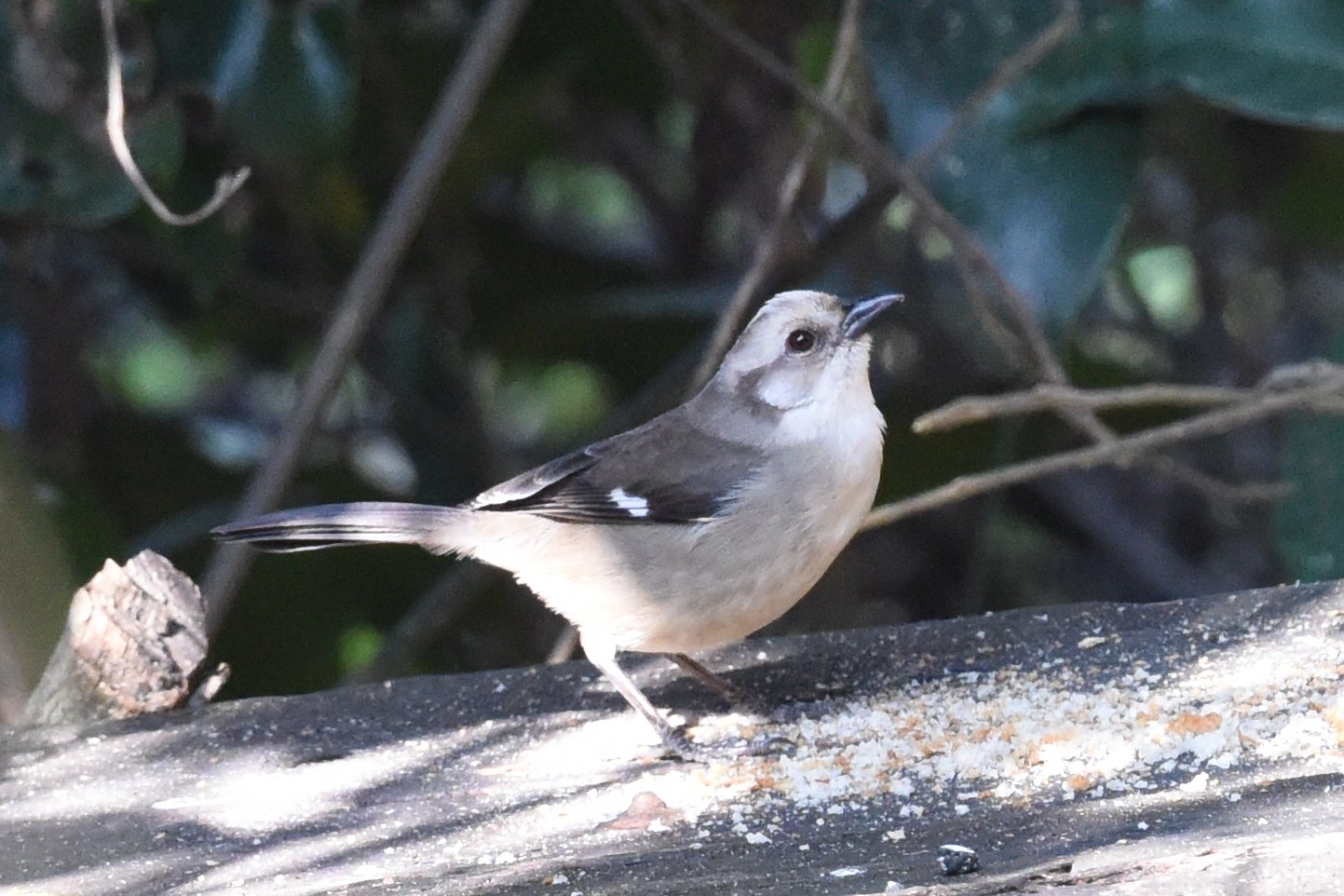
16–17 cm. The head is pale, whitish to light greyish brown, with a slightly browner crown and a dark stripe behind the eye. The back, wings and tail are greyish brown, with a white patch at the base of the primaries. The underparts are whitish, with greyish-brown breast sides and flanks. The sexes are alike.
Confusion species
White-winged Brushfinch Atlapetes leucopterus lives in the surrounding valleys and also has a white wing patch, but has a rufous crown and a black face. Rufous-collared Sparrow Zonotrichia capensis is smaller, with a streaked back, a rufous collar and a small crest. White-headed Brushfinch Atlapetes albiceps also has much white on the head, but lives further south-west, in Loja and north-western Peru.
Habitat
Sparsely vegetated landslides, scrub and fallow fields on the slopes of the Yunguilla Valley, usually within 100 m of streams with large stands of Chusquea bamboo, between about 1650 and 1900 m. It forages low in the vegetation and on the ground for insects and seeds. Many nests were parasitised by Shiny Cowbird Molothrus bonariensis.
Where the bird is most at home, classified by the vegetation units of the Andes and the west coast.


Range and movements
In Ecuador only in the Jubones drainage, in the Yunguilla Valley in southern Azuay province; the occupied area is smaller than 4 km². Absent from Colombia, Peru, Bolivia and the Galápagos. Does not occur outside the guide area.
- Resident
- dark = core range, pale = thinly spread
How and when to look
The Yunguilla reserve, set up for this species, is the place to look for it. Pairs keep to shrubbery along streams; in the early morning the males sing from the bushes.
Conservation status
Endangered. The population is estimated at 240 to 340 birds, of which 160 to 226 are mature, and is almost entirely confined to the Yunguilla reserve. Brood parasitism by Shiny Cowbird once affected about 38% of nests; its control allowed the population to grow strongly, but the suitable habitat now appears full. Competition with other brushfinches and Rufous-collared Sparrow may also play a role.
Scientific name
Atlapetes pallidiceps | (Sharpe, 1900)
Sharpe described the species in 1900 as Buarremon pallidiceps; because it was later moved to another genus, the author and year stand in brackets. The genus Atlapetes was introduced in 1831 by Wagler. The genus name comes from Greek: the mythical titan Atlas and petēs, 'flyer'. The species name comes from Latin pallidus, 'pale', and -ceps, 'head', for the pale head. The specimen the first description was based on came from Guishapa, Oña, Azuay, Ecuador.