All species › Passerines › Ovenbirds and woodcreepers › Royal Cinclodes
Royal Cinclodes | Cinclodes aricomae
Koningswipstaart | Churrete real | Pedreiro-real
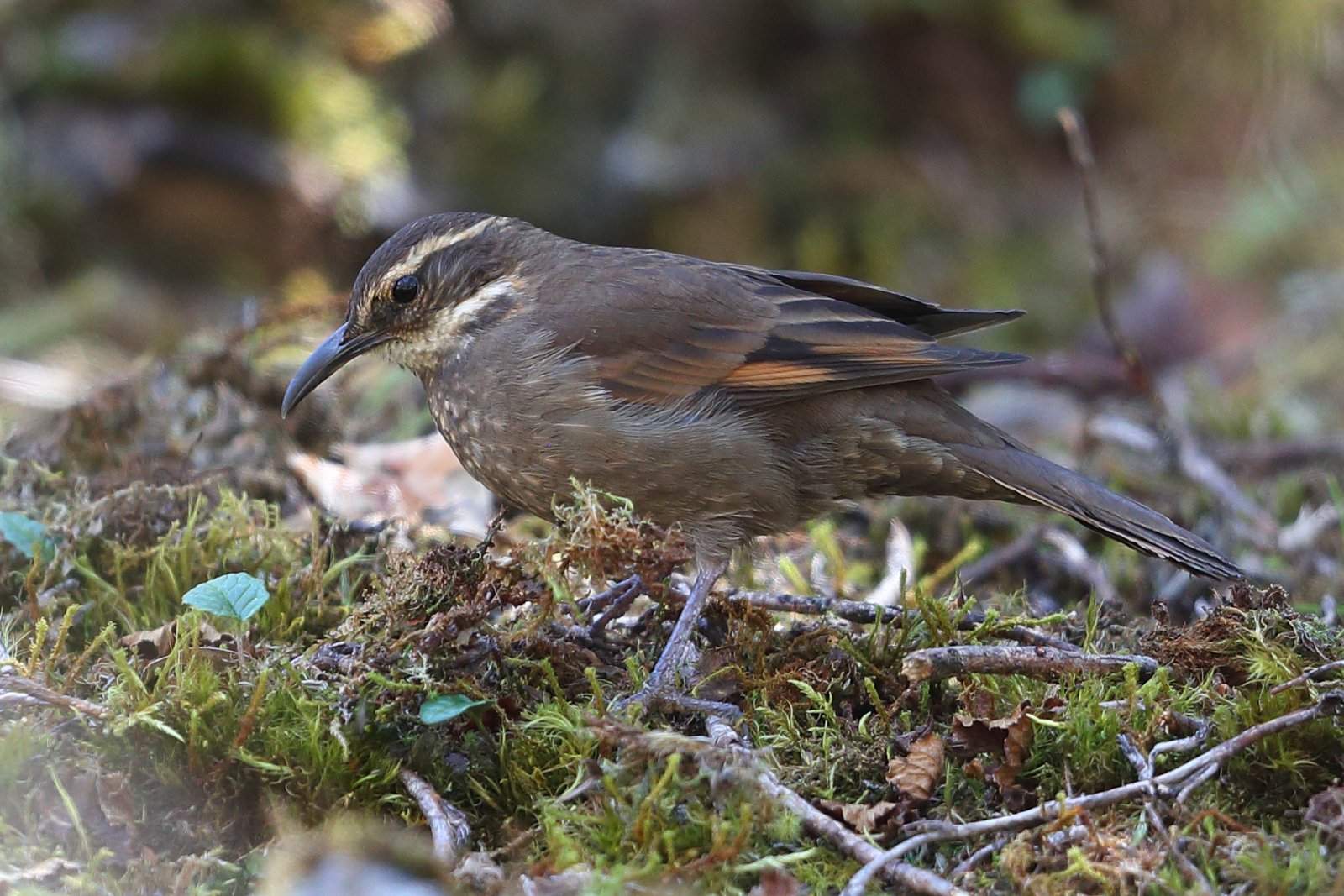
The Royal Cinclodes is a large, dark cinclodes that lives almost exclusively in Polylepis woodland above 3500 m. It occurs in fragmented groves in southern Peru and adjacent western Bolivia. The loss of this woodland threatens the species.
Voice
The song is a fast series of notes that runs into a trill. The call is short and sharp.
Recording: Joseph Tobias and Nathalie Seddon — CC BY-NC-SA 3.0 · xeno-canto
Identification
20–21 cm, with a long, thick, slightly decurved bill. The upperparts are dark brown, with a pale eyebrow. The throat is pale buff with dark scaling, breast and belly are dark brown with fine pale streaks. A rufous wing band is visible mainly in flight. The sexes are alike.
Confusion species
Stout-billed Cinclodes Cinclodes excelsior of Colombia and Ecuador is very similar but does not occur in the same area. Buff-winged Cinclodes Cinclodes fuscus is smaller and paler, with a short, straight bill and a pale wing band, and lives mainly in open grassland. White-winged Cinclodes Cinclodes atacamensis has large white wing patches and forages along streams.
Habitat
Humid Polylepis woodland with a dense moss layer and boulders, often on steep slopes, roughly between 3500 and 4600 m. It searches the ground among moss, leaf litter and stones for insects and other invertebrates. The nest is placed in a crevice or burrow among rocks.
Where the bird is most at home, classified by the vegetation units of the Andes and the west coast.


Range and movements
Peru: in fragmented Polylepis woodland in the south, among others in Apurímac, Cusco and Puno. Bolivia: in the Andes of the department of La Paz, among others in the Cordillera Apolobamba. Absent from Colombia, Ecuador and the Galápagos; does not occur outside the guide area.
- Resident
- dark = core range, pale = thinly spread
How and when to look
In the Polylepis woodland of Abra Málaga near Cusco. The bird walks over the mossy forest floor and is heard mainly in the early morning.
Conservation status
Endangered. The population is very small and fragmented. Polylepis woodland is disappearing through logging, fire and grazing; protection and replanting of groves by local communities are important for the species.
Scientific name
Cinclodes aricomae | (Carriker, 1932)
Carriker described the species in 1932 as Upucerthia aricomae; because it was later moved to another genus, the author and year stand in brackets. The genus Cinclodes was introduced in 1840 by Gray. The genus name combines Ancient Greek kinklos, an unidentified waterside bird, with -oidēs, 'resembling'. The species name refers to the Aricoma Pass in the Puno region of Peru, where the species was discovered. The specimen the first description was based on came from Aricoma Pass, Puno, Peru.