All species › Waders, gulls and terns › Plovers and lapwings › Rufous-chested Dotterel
Rufous-chested Dotterel | Zonibyx modestus
Patagonische plevier | Chorlo chileno | Batuíra-de-peito-avermelhado
The Rufous-chested Dotterel is a medium-sized plover of southern South America, breeding on the steppes of Patagonia, Tierra del Fuego and the Falkland Islands. In the southern winter part of the population moves north along the coasts of Chile, Argentina, Uruguay and southern Brazil. The guide area lies at the extreme northern edge of that range; the species occurs there at most as a very rare visitor.
Voice
A soft, descending whistle and a short, ticking call, mainly in flight.
No recording with a suitable Creative Commons licence is available for this species yet.
Identification
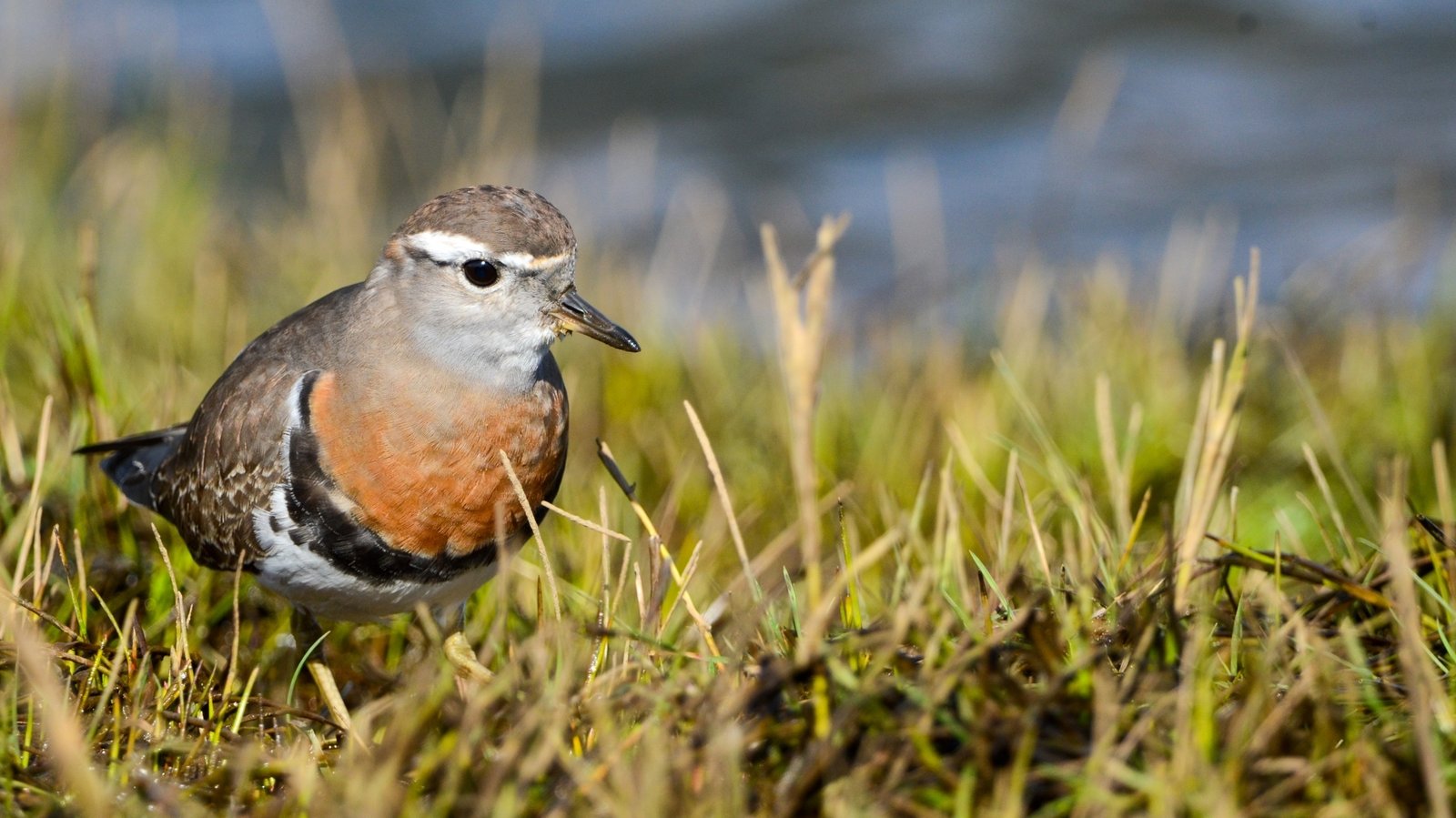
19–22 cm, a slender plover with a small head, a thin black bill and fairly long, greyish green legs. In breeding plumage the face, throat and foreneck are grey, with a white supercilium, and the breast is warm rufous, bordered below by a black band; the belly is white and the upperparts are plain greyish brown. In non-breeding plumage, the plumage in which it appears in the north, the breast is greyish brown without rufous or black, and the pale, creamy supercilium is the most obvious feature. The sexes are nearly alike.
Confusion species
American Golden-Plover Pluvialis dominica is larger, with spotted upperparts. Two-banded Plover Anarhynchus falklandicus is smaller and more compact, with a white front and one or two dark breast bands. Tawny-throated Dotterel Oreopholus ruficollis is larger, with streaked upperparts, a tawny throat and a black belly patch.
Habitat
On the breeding grounds dry steppe, short grassland and bare hills, partly high in the Andes. In winter mainly sandy beaches, salt marshes and bare coastal plains, locally also short grassland inland. It feeds on foot on insects, small crustaceans and other invertebrates.
Where the bird is most at home, classified by the vegetation units of the Andes and the west coast.


Range and movements
In the guide area only as a very rare visitor, for example on the coast or the altiplano in the far south of Peru and western Bolivia; there are few or no well-documented records. Absent from Colombia, Ecuador and the Galápagos. Breeds in southern Chile and Argentina and on the Falkland Islands and winters north to central Chile, Uruguay and southern Brazil.
- Summer visitor (c. Apr–Sep)
- dark = core range, pale = thinly spread
How and when to look
Not a species to search for in the guide area; in the southern winter, check shorebirds on the coast of southern Peru for a slender plover with an obvious pale supercilium and plain upperparts.
Conservation status
Least Concern. The population appears stable; on the breeding grounds overgrazing and introduced predators may play a role locally.
Scientific name
Zonibyx modestus | (Lichtenstein, 1823) (GBIF: Charadrius modestus)
Lichtenstein described the species in 1823 as Charadrius modestus; because it was later moved to another genus, the author and year stand in brackets. The genus Zonibyx was introduced in 1853 by Reichenbach. The genus name probably derives from Greek zōnē, 'belt, band', after the breast band; the meaning of the second part is unclear. The species name is Latin modestus, 'modest, unassuming', after the plain plumage. The specimen the first description was based on came from Montevideo, Uruguay.