All species › Passerines › New World sparrows › Rufous-eared Brushfinch
Rufous-eared Brushfinch | Atlapetes rufigenis
Roodoorstruikgors | Atlapetes orejirrufo | Tico-tico-de-orelha-ruiva
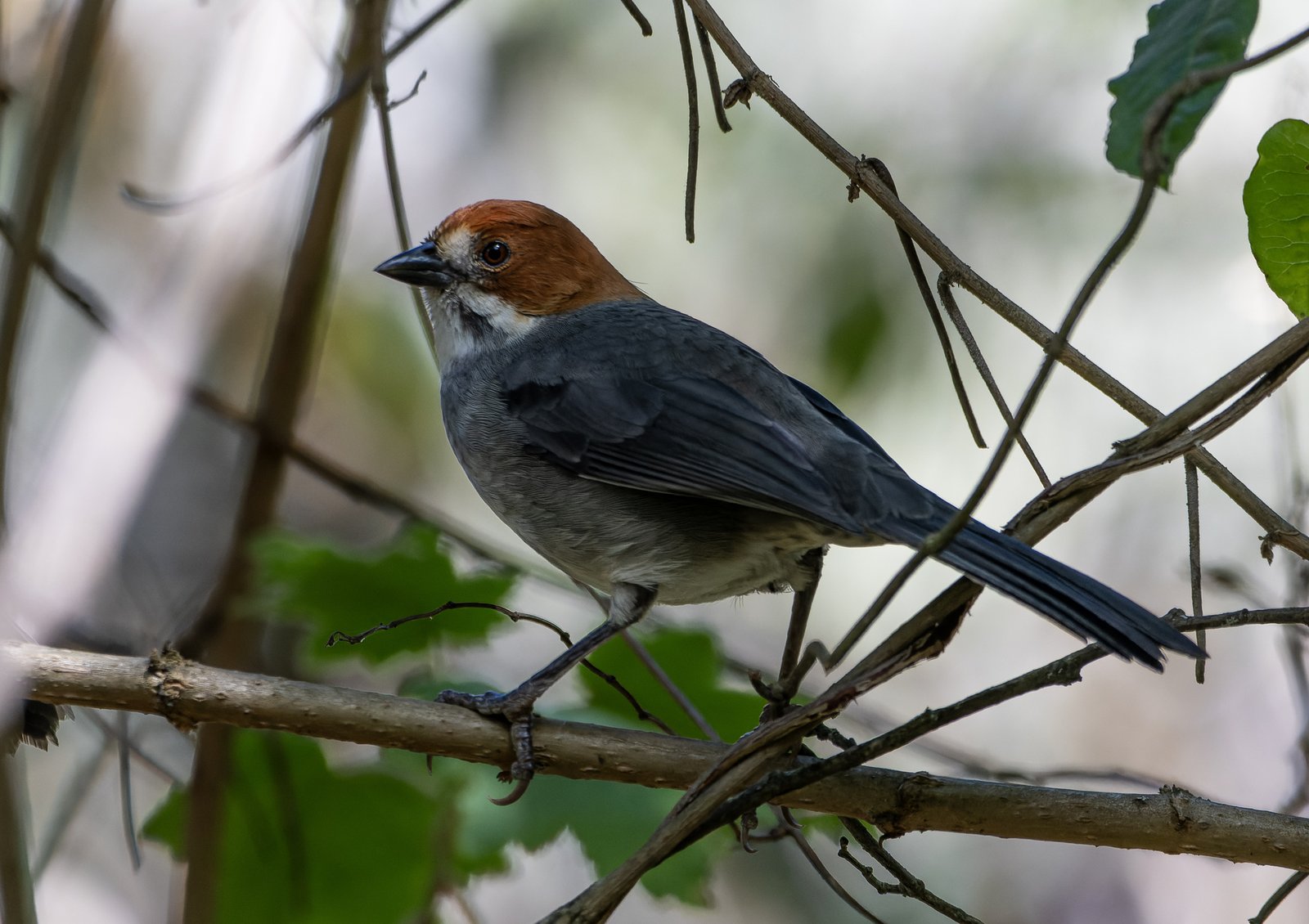
The Rufous-eared Brushfinch is a large, grey brushfinch with a rufous head, found only in the high Andes of northern and central Peru. It lives higher than most brushfinches, in scrub and Polylepis woodland up to above 4000 m. It occurs in pairs or family groups and keeps in and under shrubs.
Voice
The song has hardly been described. Excited pairs give a duet of low chattering notes with some high, lisping notes. The call is a high tsi.
Recording: Ross Gallardy — CC BY-NC-SA 4.0 · xeno-canto
Identification
18–19 cm, with a sturdy black bill and a long tail. The head is mostly rufous, with white lores and a broad white moustachial stripe below. The upperparts, wings and tail are dark smoky grey. The throat is white, the breast and flanks grey, and the belly whitish. The sexes are alike. Juveniles have a dingy grey-brown head and a dark brown breast and flanks.
Confusion species
Rusty-bellied Brushfinch Atlapetes nationi lives farther south, on the western slope of central and southern Peru, and has a grey head with a dark face and a rusty lower belly, without rufous cheeks. Apurimac Brushfinch Atlapetes forbesi lives in southern Peru and has a rufous crown, but a black face. Other sparrows live in the same area too, such as Rufous-collared Sparrow Zonotrichia capensis, which is smaller, with a streaked back and a rufous collar.
Habitat
Montane scrub, shrubby slopes and Polylepis woodland at and above the treeline, roughly between 3200 and 4500 m. It searches on the ground and low in shrubs for insects, other invertebrates, seeds and berries. The nest is a cup low in a shrub.
Where the bird is most at home, classified by the vegetation units of the Andes and the west coast.


Range and movements
Only in Peru: on both sides of the upper Marañón watershed, from southern Cajamarca through La Libertad to western Huánuco, and west into the Cordillera Blanca in Ancash. Absent from Colombia, Ecuador, Bolivia and the Galápagos. Does not occur outside the guide area.
- Resident
- dark = core range, pale = thinly spread
How and when to look
Search Polylepis woodland and high scrub in the Cordillera Blanca, for example in the valleys of Huascarán. Pairs often hide in dense shrubs; listen for their high calls and look along the edges of shrubs and thickets.
Conservation status
Least Concern (considered Near Threatened until 2021). The range is small. Firewood cutting, burning and grazing prevent the regeneration of Polylepis woodland, and changes in land use are also a threat.
Scientific name
Atlapetes rufigenis | (Salvin, 1895)
Salvin described the species in 1895 as Buarremon rufigenis; because it was later moved to another genus, the author and year stand in brackets. The genus Atlapetes was introduced in 1831 by Wagler. The genus name comes from Greek: the mythical titan Atlas and petēs, 'flyer'. The species name comes from Latin rufus, 'rufous', and gena, 'cheek', for the rufous cheeks. The specimen the first description was based on came from Huamachuco (La Libertad) and Cajabamba (Cajamarca), Peru.