All species › Passerines › Wrens › Santa Marta Wren
Santa Marta Wren | Troglodytes monticola
Santamartawinterkoning | Cucarachero de Santa Marta | Corruíra-de-santa-marta
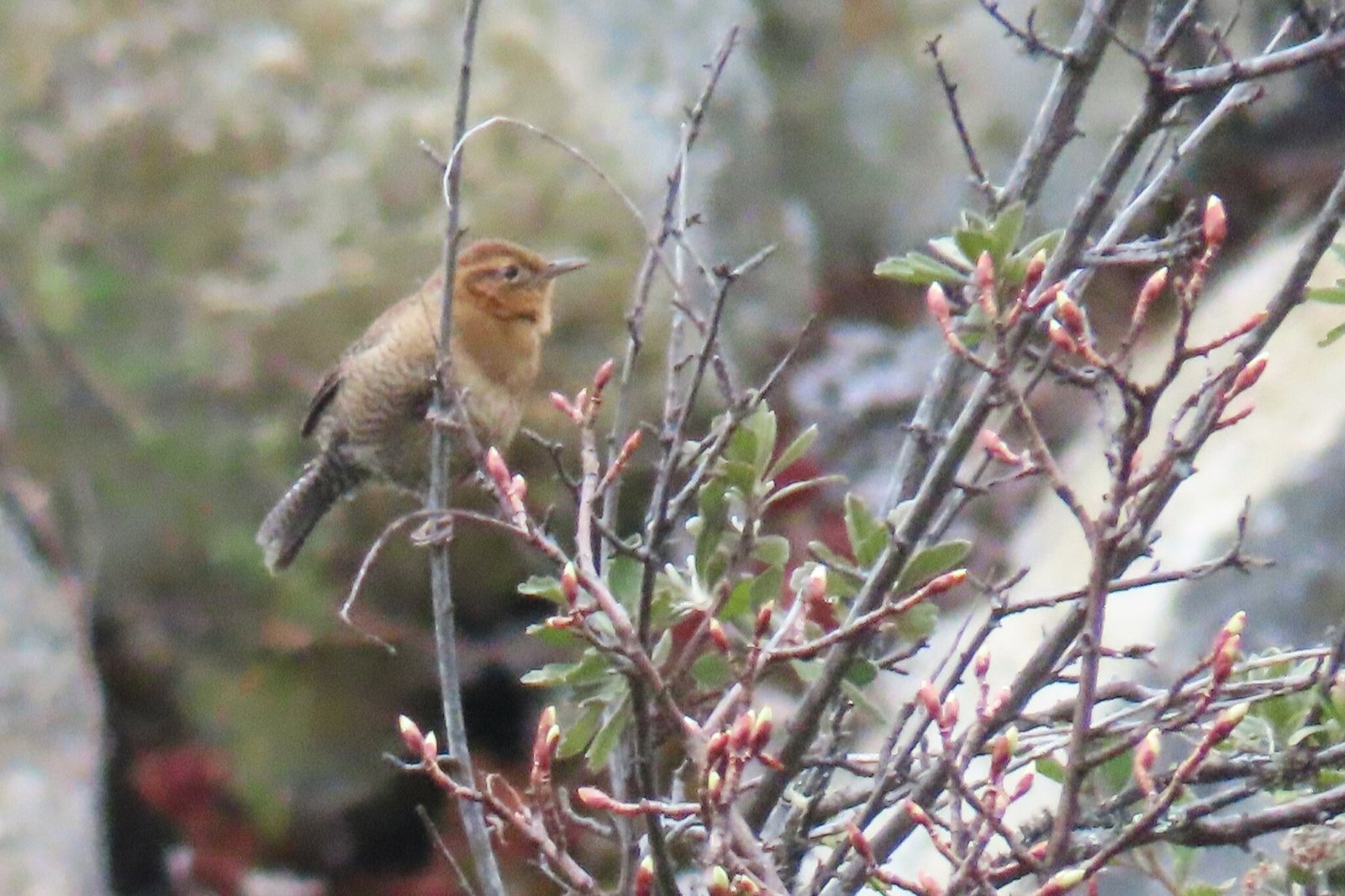
The Santa Marta Wren is a small, grey-brown and white wren found only in the highest zone of the Sierra Nevada de Santa Marta in Colombia. It lives in shrubbery at the edge of the páramo and is known from only a few records. It is closely related to Mountain Wren.
Voice
Poorly known. The song is described as a short, high series of notes, similar to that of Mountain Wren.
Recording: Ross Gallardy — CC BY-NC-SA 4.0 · xeno-canto
Identification
11–12 cm, with a short, thin bill and a short tail. The upperparts are grey-brown, with dark barring on the wings and tail. A pale, whitish supercilium contrasts with a dark eye-stripe. The underparts are white, with buff, finely barred flanks and undertail coverts. The sexes are alike.
Confusion species
Mountain Wren Troglodytes solstitialis is warmer rufous-brown, with a buff supercilium and an ochre breast, and lives in montane forest. Southern House Wren Troglodytes musculus is warmer brown, with buff underparts and a vaguer supercilium, and lives lower, in open country and around buildings. Grass Wren Cistothorus platensis has a streaked back.
Habitat
Low shrubs, elfin forest and shrubbery at the edges of the páramo, roughly between 3200 and 4600 m. It seeks insects and spiders low in the vegetation. Little is known about its nest and breeding biology.
Where the bird is most at home, classified by the vegetation units of the Andes and the west coast.


Range and movements
Endemic to Colombia: only the highest zone of the Sierra Nevada de Santa Marta. Absent from Ecuador, Peru, Bolivia and the Galápagos.
- Resident
- dark = core range, pale = thinly spread
How and when to look
The high zone of the Sierra Nevada de Santa Marta is remote and access is restricted; visit only with permission and local guidance. Every record is valuable and deserves documentation with photographs and sound recordings.
Conservation status
Critically Endangered. Its habitat is very small and is being degraded by fires, grazing and clearance; climate change may shrink the high zone further. There are few recent records.
Scientific name
Troglodytes monticola | Bangs, 1899
Bangs described the species in 1899 and placed it straight away in the genus where it still stands. The genus Troglodytes was introduced in 1809 by Vieillot. The genus name comes from Greek trōglodutēs, 'cave-dweller', after the wrens' habit of creeping into and nesting in cavities. The species name comes from Latin monticola, 'mountain-dweller', from mons, 'mountain', and colere, 'to inhabit'. The specimen the first description was based on came from Páramo de Chiruqua, Sierra Nevada de Santa Marta, Colombia.