All species › Pelicans, herons and ibises › Ibises and spoonbills › Sharp-tailed Ibis
Sharp-tailed Ibis | Cercibis oxycerca
Stekelstaartibis | Ibis rabudo | Trombeteiro
The Sharp-tailed Ibis is a large, dark ibis with a long, graduated tail, the longest of any ibis in the guide area. It lives on wet savannas and along rivers in northern South America. Its loud trumpeting calls, often in duet, explain the Portuguese name trombeteiro.
Voice
Loud, trumpet-like calls such as too-too or too-hoo, often by the pair in duet and also in flight.
Recording: Daniel Lane — CC BY-NC-SA 3.0 · xeno-canto
Identification
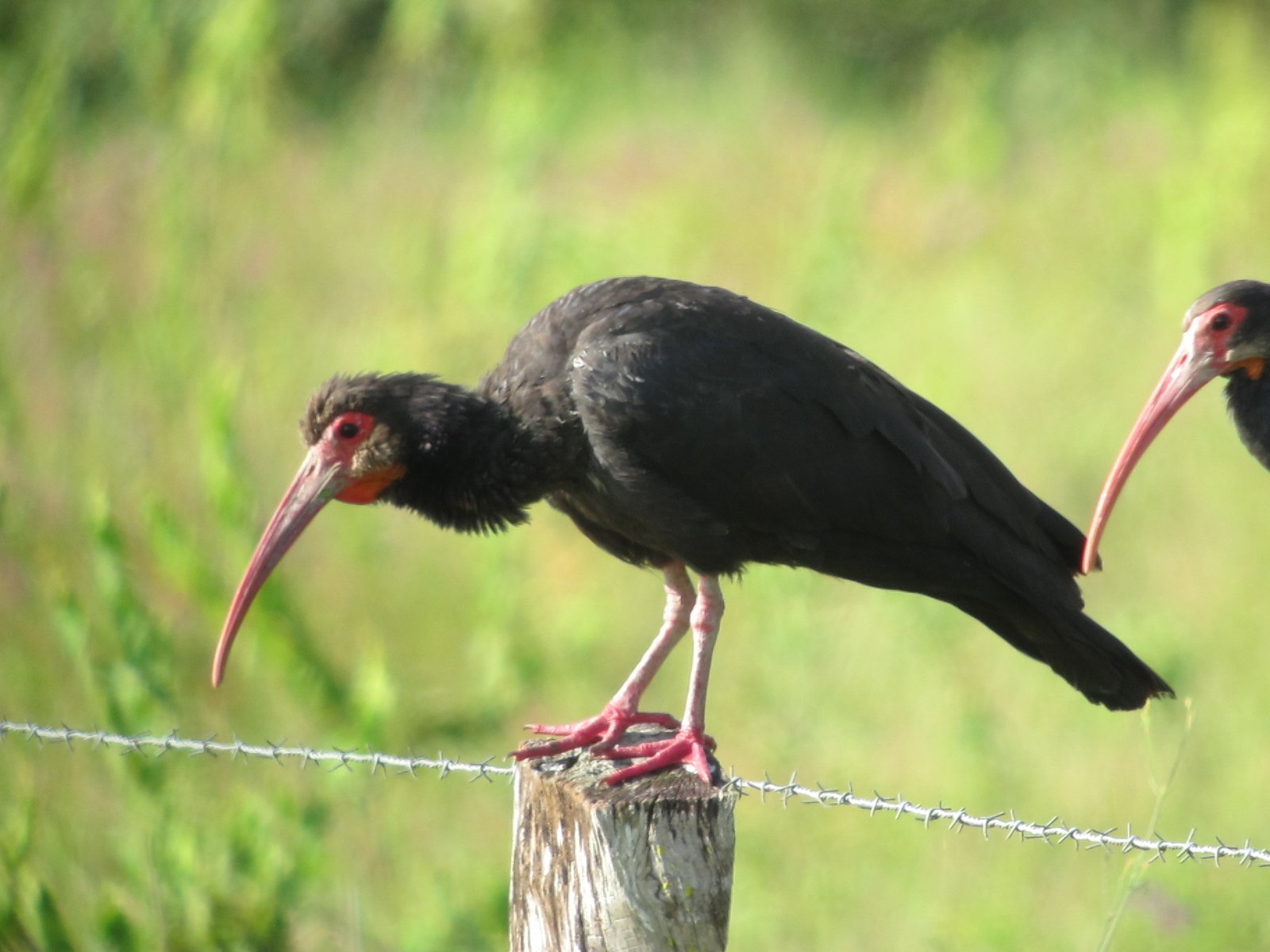
75–86 cm. The plumage is black with a green or bronze gloss on the back and wings. The tail is long, broad and graduated. The bare face and throat are orange to reddish. The decurved bill is reddish to dark, the short legs orange-red. The sexes are alike; juveniles are duller, with less gloss and a paler face.
Confusion species
Green Ibis Mesembrinibis cayennensis is smaller, with a shorter tail, a bluish-grey face and a greenish bill, and lives in forest along water. Bare-faced Ibis Phimosus infuscatus is much smaller, with a pink face and bill and a short tail. Glossy Ibis Plegadis falcinellus is smaller and slimmer, chestnut with long legs.
Habitat
Wet savannas, marshes, flooded grasslands and banks of rivers and lagoons in the lowlands, below 500 m. It eats insects, crustaceans and other small animals, which it seeks on foot on the ground and in shallow water. It usually lives in pairs or small groups. It breeds in trees along water; the nest is a platform of sticks.
Where the bird is most at home, classified by the vegetation units of the Andes and the west coast.


Range and movements
In Colombia in the llanos of Arauca, Casanare, Meta and Vichada. In Bolivia scarce and local in the savannas of Beni. Virtually absent from Ecuador and Peru; absent from the Galápagos. Outside the guide area in the llanos of Venezuela, in the Guianas and in northern and central Brazil.
- Resident
- dark = core range, pale = thinly spread
How and when to look
In the llanos of Arauca and Casanare, for example on the large cattle ranches, pairs can be found at pools and in wet grasslands, especially in the dry season (Dec–Apr), when the birds gather at the remaining water.
Conservation status
Least Concern. The habitat is largely intact, but the conversion of savannas into farmland and rice fields may play a role locally.
Scientific name
Cercibis oxycerca | (Spix, 1825)
Spix described the species in 1825 as Ibis oxycercus; because it was later moved to another genus, the author and year stand in brackets. The genus Cercibis was introduced in 1832 by Wagler. The genus name combines Greek kerkos, 'tail', with ibis, after the long, pointed tail. The species name comes from Greek oxus, 'sharp', and kerkos, 'tail', after the pointed tail. The specimen the first description was based on came from Pará, Brazil.