All species › Passerines › Wrens › Southern House Wren
Southern House Wren | Troglodytes musculus
Zuidelijke huiswinterkoning | Ratona común | Corruíra
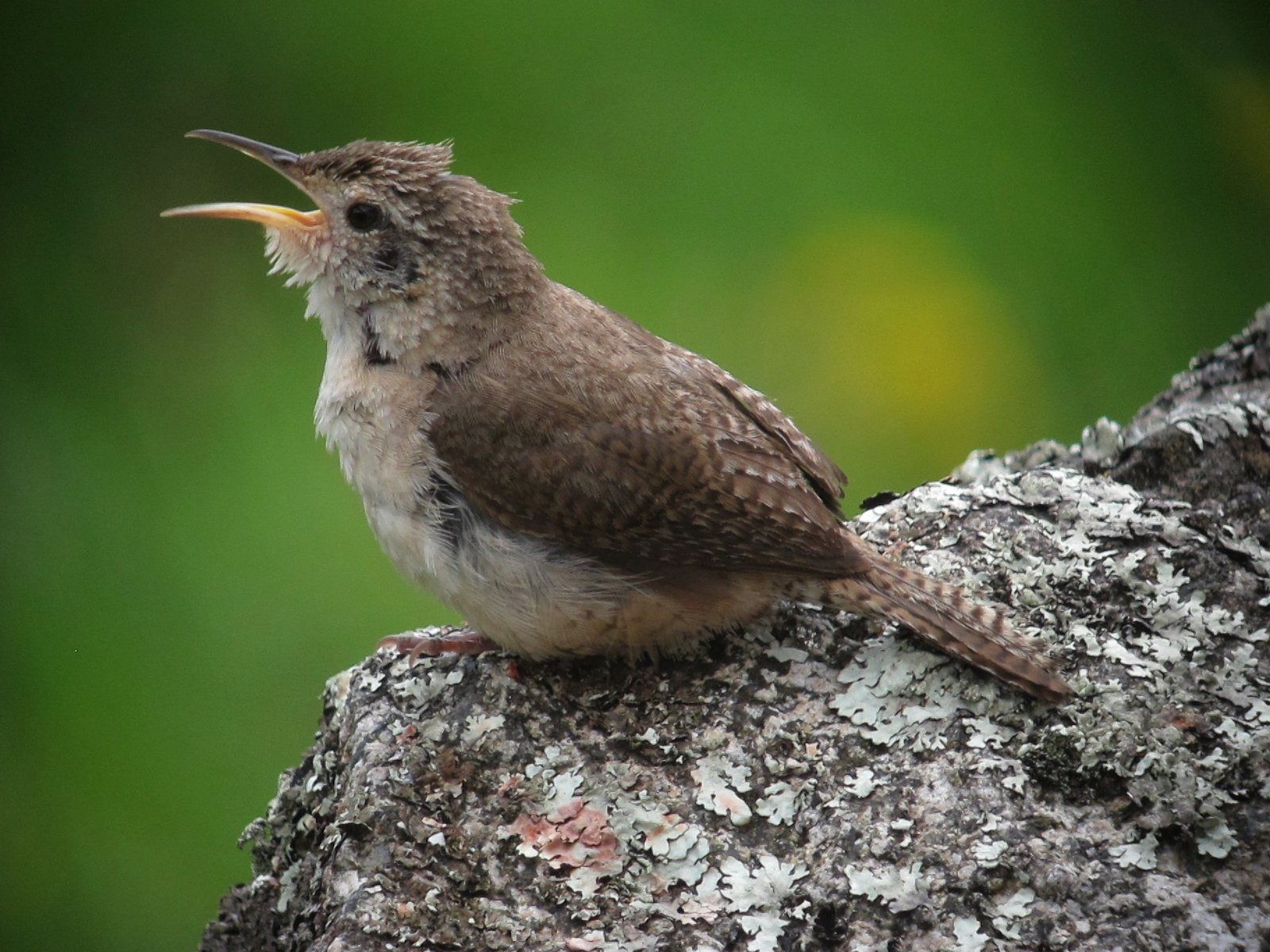
The Southern House Wren is the most widespread wren in the guide area, from the coast to high in the Andes. It lives close to people, in gardens, villages and farmland, and sings throughout the year. It is now often treated as a separate species from the Northern House Wren of North America.
Voice
A cheerful, bubbling, rapid song of trills and series of clear notes, often repeated, throughout the year. Calls are a grating chrr and a hard, dry rattle.
No recording with a suitable Creative Commons licence is available for this species yet.
Identification
11–12 cm, with a thin, slightly decurved bill and a fairly short tail, often cocked. The upperparts are warm brown, with fine dark barring on the wings and tail. A narrow, buff supercilium is inconspicuous. The throat and breast are pale buff, the flanks and undertail coverts warmer buff with fine barring. Birds of the dry coast are greyer, those of the high Andes often darker. The sexes are alike; young birds have fine dark scaling on the breast.
Confusion species
Mountain Wren Troglodytes solstitialis is smaller and shorter-tailed, with a distinct buff supercilium, and lives in montane forest. Grass Wren Cistothorus platensis has a streaked back and lives in tall grass. Northern House Wren Troglodytes aedon has not been reliably recorded in the guide area.
Habitat
Almost any open or semi-open landscape: gardens, villages and towns, fields and terraces, pasture, scrub, forest edges, dry forest and riparian vegetation, from sea level to about 4000 m; absent from closed forest. It eats insects and spiders, which it seeks in low vegetation, in walls and under roofs. It nests in cavities, including in buildings, walls and nest boxes.
Where the bird is most at home, classified by the vegetation units of the Andes and the west coast.


Range and movements
In Colombia, Ecuador, Peru and Bolivia common over almost the whole country, including the dry Pacific coast and the inter-Andean valleys; in the Amazonian lowlands mainly in clearings, villages and along rivers. Absent from the Galápagos. Outside the guide area from Mexico to Tierra del Fuego and on some Caribbean islands.
- Resident
- dark = core range, pale = thinly spread
How and when to look
In almost every village and garden; the song usually gives it away first, often from a roof, wall or fence.
Conservation status
Not Evaluated as a separate species; the Red List treats the house wrens as one species, which is listed as Least Concern. Common, and benefits from deforestation and settlement.
Scientific name
Troglodytes musculus | Naumann, 1823
Naumann described the species in 1823 and placed it straight away in the genus where it still stands. The genus Troglodytes was introduced in 1809 by Vieillot. The genus name comes from Greek trōglodutēs, 'cave-dweller', after the wrens' habit of creeping into and nesting in cavities. The species name comes from Latin musculus, 'little mouse', for its small size and mouse-like creeping. The specimen the first description was based on came from Bahia, Brazil.