All species › Nightjars › Nightjars and nighthawks › Spot-tailed Nightjar
Spot-tailed Nightjar | Antiurus maculicaudus
Vlekstaartnachtzwaluw | Chotacabras colipinto | Bacurau-de-rabo-maculado
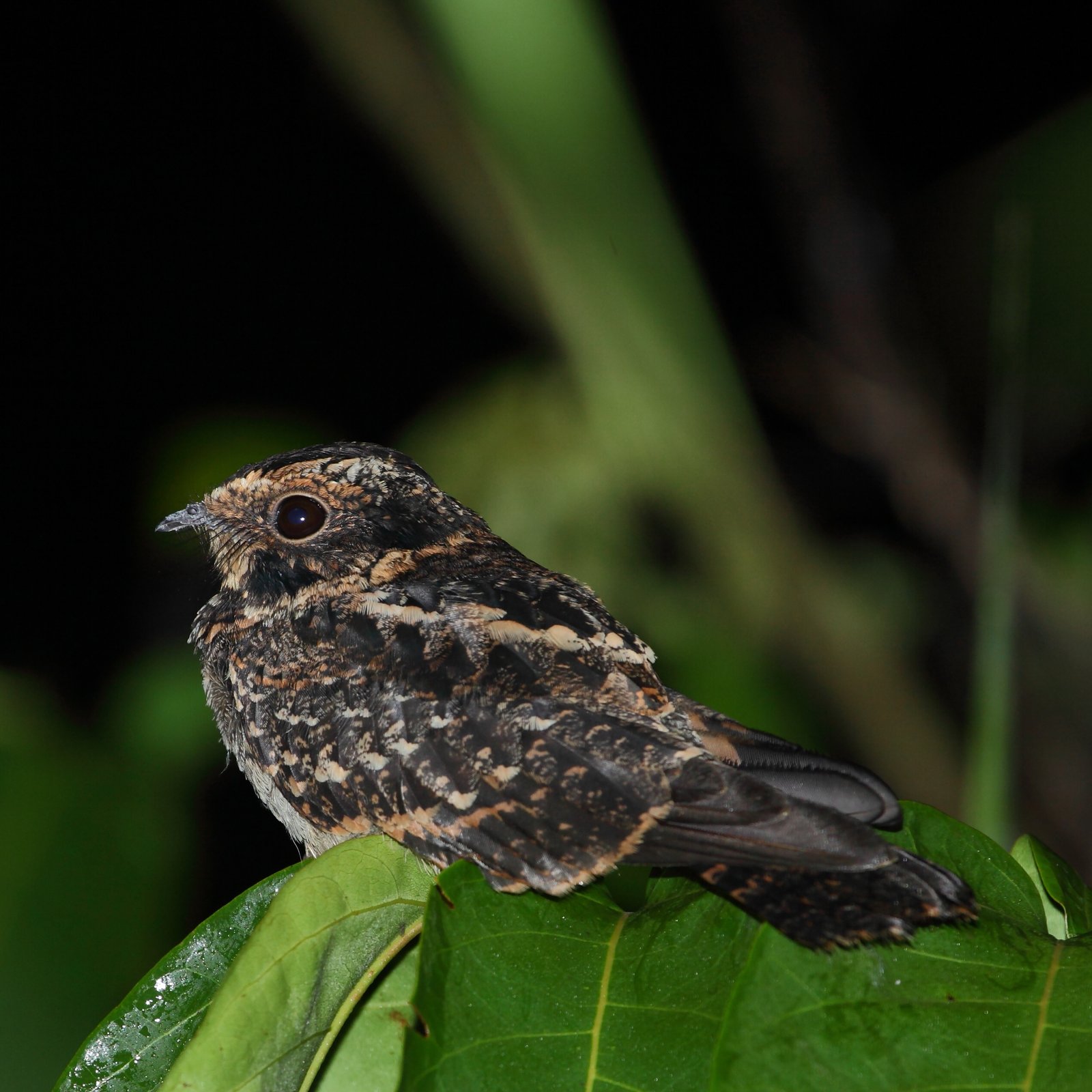
The Spot-tailed Nightjar is a small, warm brown nightjar of wet savanna and damp grassland. Characteristic are a tawny face with a broad buff supercilium and white spots in the tail. Its range consists of several widely separated parts, from Mexico to Bolivia and Brazil.
Voice
The song is a high, lisping tip-SEEEUUEEET. The call is a rapidly repeated t-seet; in flight a slightly wailing seeeu is heard.
No recording with a suitable Creative Commons licence is available for this species yet.
Identification
20–21 cm. The upperparts are brown, spotted and barred with buff or tawny; the face is tawny-rufous with a broad buff supercilium; the underparts are cinnamon to buff. The outer tail feathers have white spots; the male also has white tail tips washed with buff.
Confusion species
Little Nightjar Setopagis parvula is greyer, the male with a white wing band. The male White-winged Nightjar Eleothreptus candicans has largely white wings and tail. Pauraque Nyctidromus albicollis is larger and has a longer tail. Ladder-tailed Nightjar Hydropsalis climacocerca has a longer, graduated tail and lives along rivers.
Habitat
Wet savanna, damp grassland and grassy marsh edges, in Colombia up to about 400 m and in Peru up to about 1350 m. It hunts insects from the ground or in low, slow flight. The eggs are laid without a nest on the ground.
Where the bird is most at home, classified by the vegetation units of the Andes and the west coast.


Range and movements
In Colombia in the savannas east of the Andes, extending into eastern Ecuador, where it is rare. In Peru in the far south-east, including the Pampas del Heath. In Bolivia in the savannas of the north and east. Absent from the Galápagos. Outside the guide area in southern Mexico and parts of Central America, and in Venezuela, the Guianas and Brazil.
- Resident
- dark = core range, pale = thinly spread
How and when to look
Search at dusk in wet savannas, such as the Pampas del Heath in Peru and the savannas of Beni in Bolivia; the high, lisping song gives the birds away.
Conservation status
Least Concern. The species is local and depends on wet savanna, which can disappear through drainage and conversion to farmland.
Scientific name
Antiurus maculicaudus | (Lawrence, 1862)
Lawrence described the species in 1862 as Stenopsis maculicaudus; because it was later moved to another genus, the author and year stand in brackets. The genus Antiurus was introduced in 1912 by Ridgway. The genus name combines Greek antios, 'different', with oura, 'tail'. The specific name combines Latin macula, 'spot', with cauda, 'tail': spot-tailed. The specimen the first description was based on came from Pará, Brazil.