All species › Parrots › Parrots › Yellow-shouldered Amazon
Yellow-shouldered Amazon | Amazona barbadensis
Geelvleugelamazone | Amazona hombrogualda
The Yellow-shouldered Amazon, known on Bonaire as lora, is an amazon of arid country: cactus scrub, thorn scrub and dry forest on the coast of Venezuela and on a few offshore islands. Within the Caribbean region, Bonaire is its stronghold. On Aruba it died out around the middle of the twentieth century and was reintroduced in 2024.

Voice
Loud, hoarse and grating calls, somewhat higher-pitched than in related amazons, mainly in flight. Flocks are noisy at the roost.
No recording with a suitable Creative Commons licence is available for this species yet.
Identification
31–33 cm, smaller and slimmer than most amazons. Green, with a whitish forehead and white lores, a yellow crown and yellow around the eye; throat, cheeks and belly often have a bluish tinge. The bend of the wing and the thighs are yellow. The wing shows a red speculum and broad dark blue tips to the flight feathers. A bare white eye-ring; the bill is horn-coloured. The sexes are alike; the amount of yellow on head and thighs varies between individuals.
Confusion species
The yellow bend of the wing and the white forehead separate it from the other amazons in the region. Yellow-crowned Amazon Amazona ochrocephala has a red bend of the wing, a green forehead and a dark bill; Orange-winged Amazon A. amazonica has blue above the eye, yellow cheeks and an orange speculum. Escaped cage birds of these species are occasionally seen on the ABC Islands. Brown-throated Parakeet Eupsittula pertinax is much smaller, with a long pointed tail.
Habitat
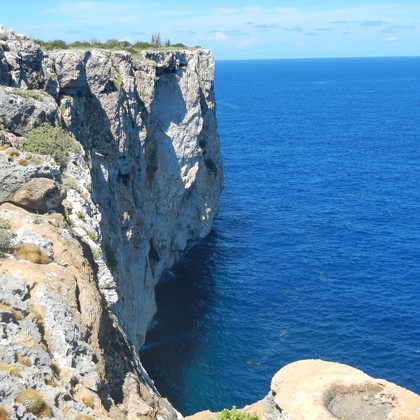
Dry thorn scrub and cactus scrub, dry forest and limestone terraces with scattered trees, also cliffs, where birds nest in rock cavities. It eats fruit, seeds, flowers and nectar of native plants, such as cactus fruit, and also visits mango trees and gardens; locally crops such as sorghum are raided. Nests in cavities in trees, boulders and cliff faces up to about 20 m high.
Where the bird is most at home, classified by the vegetation types of the Caribbean.



Range and movements
Resident on Bonaire, mainly in the north and in Washington Slagbaai National Park but also scattered elsewhere on the island. On Aruba extinct by around 1950 and reintroduced in 2024. Curaçao has no wild breeding birds; records there are probably escaped cage birds. Outside the region in northern Venezuela and on the Venezuelan islands of Margarita and La Blanquilla.
- Resident
- dark = core range, pale = thinly spread
How and when to look
On Bonaire best early in the morning or towards evening in the north of the island, when flocks fly noisily between roost and feeding trees. They are regularly seen at Echo, the parrot rehabilitation and conservation centre on Bonaire, and in Washington Slagbaai.
Conservation status
Near Threatened. On Bonaire numbers have risen strongly: the mean roost count rose from just over 500 birds in 2005–2010 to over 1,100 in 2018–2023. Threats are poaching for the cage-bird trade, habitat degraded by goat and donkey browsing, predation by feral cats and nest cavities taken over by bees.
Scientific name
Amazona barbadensis | (Gmelin, 1788)
Gmelin described the species in 1788 as Psittacus barbadensis; because it was later moved to another genus, the author and year stand in brackets. The genus Amazona was introduced in 1830 by Lesson. Amazona comes from 'Amazone', the French name Buffon gave to various tropical American parrots because they came from the Amazon region. barbadensis refers to Barbados, the mistaken origin of the type; the species lives in Venezuela and on Bonaire and (formerly) Aruba. The specimen the first description was based on came from Venezuela (originally given in error as Barbados).