All species › Jacamars and puffbirds › Puffbirds
Puffbirds | Bucconidae
Baardkoekoeken | Bucos
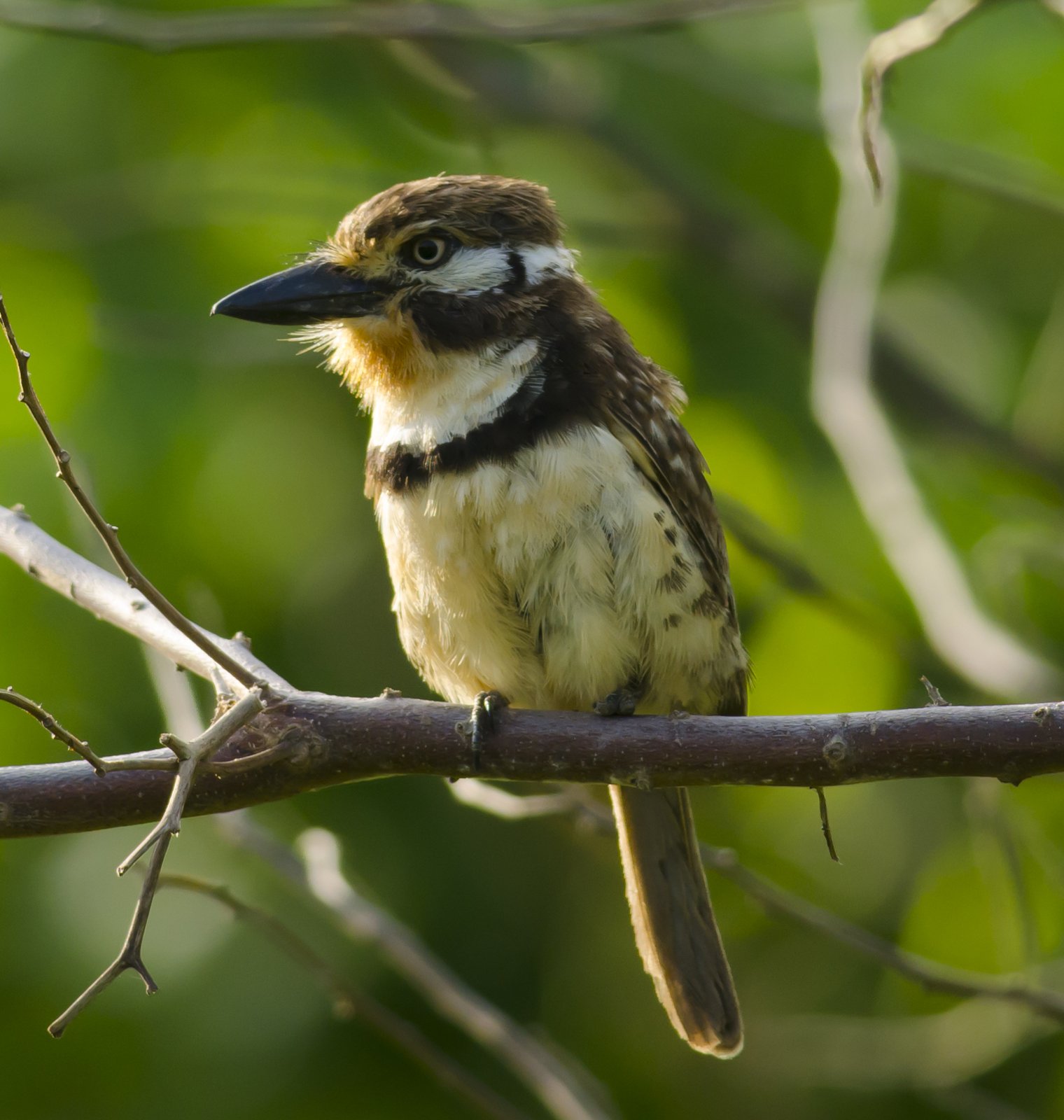
In Mexico and Central America the family numbers nine species in seven genera. Most live in humid lowland forest in Costa Rica and Panama; a few, such as the White-necked and White-whiskered Puffbirds, reach southern Mexico. They are stocky birds with a large head, a short neck and loose, fluffy plumage in brown, black and white, which makes them look plumper than they are. The bill is stout, often with a small hook at the tip or a crossed point, and is surrounded by bristles. The foot is zygodactyl, with two toes forward and two back. Puffbirds are patient sit-and-wait hunters: they perch motionless for long periods on an open branch in the middle storey, then sally suddenly at a large insect, a spider or a small lizard and beat the prey against the branch before swallowing it. This stillness means they are often overlooked. The nunbirds of the genus Monasa are the exception, noisy birds that move through the forest in small groups and join in loud, chattering choruses. The nest lies at the end of a tunnel in the ground or in an arboreal termite nest, with two or three white eggs.
Native species 8 species
Species that occur here by nature: breeding birds, winter visitors and passage migrants. They are arranged by genus, in the sequence of the list.
Nystalus 1 species
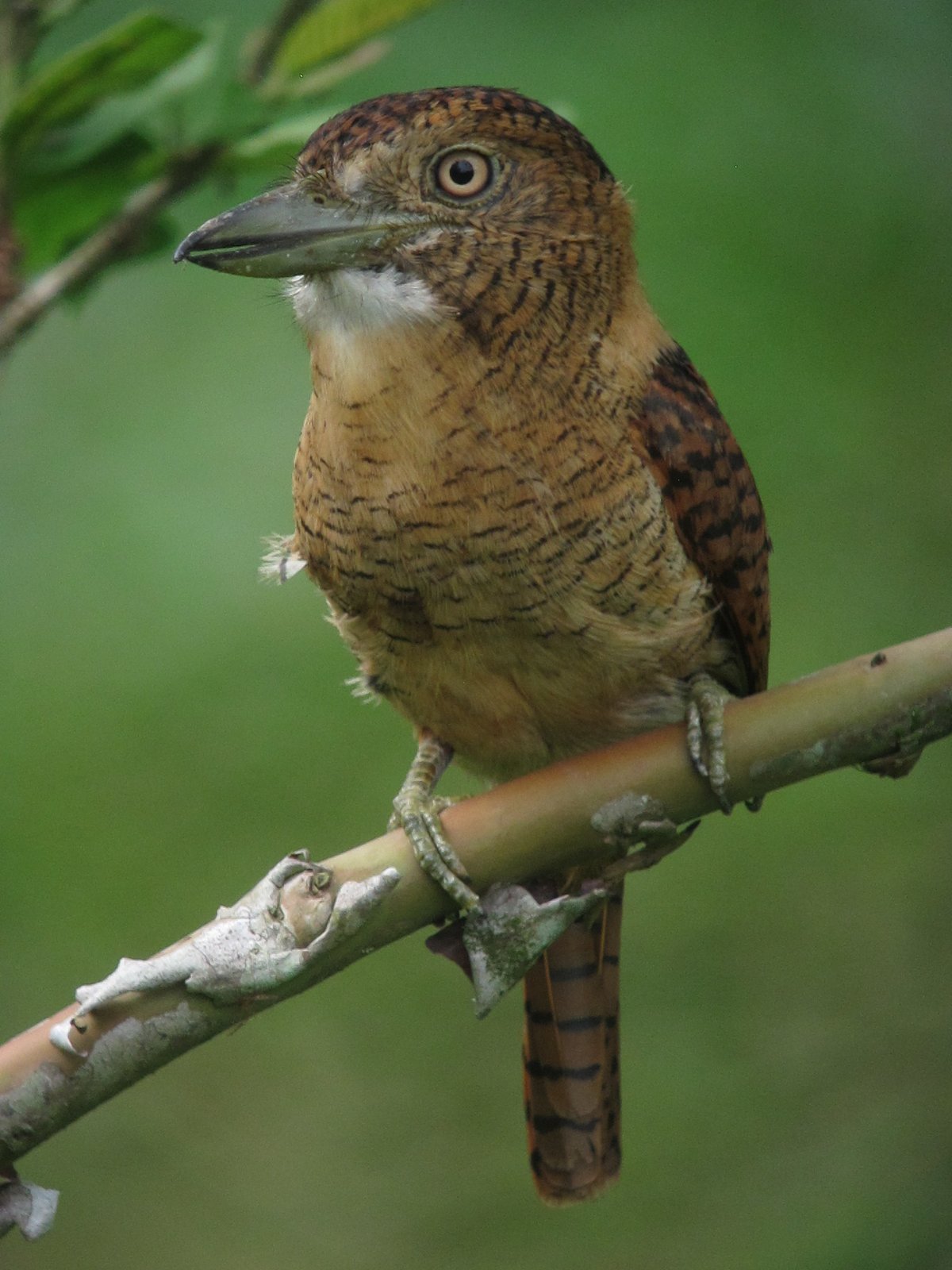

Monasa 1 species

Nonnula 1 species

Malacoptila 1 species

Micromonacha 1 species
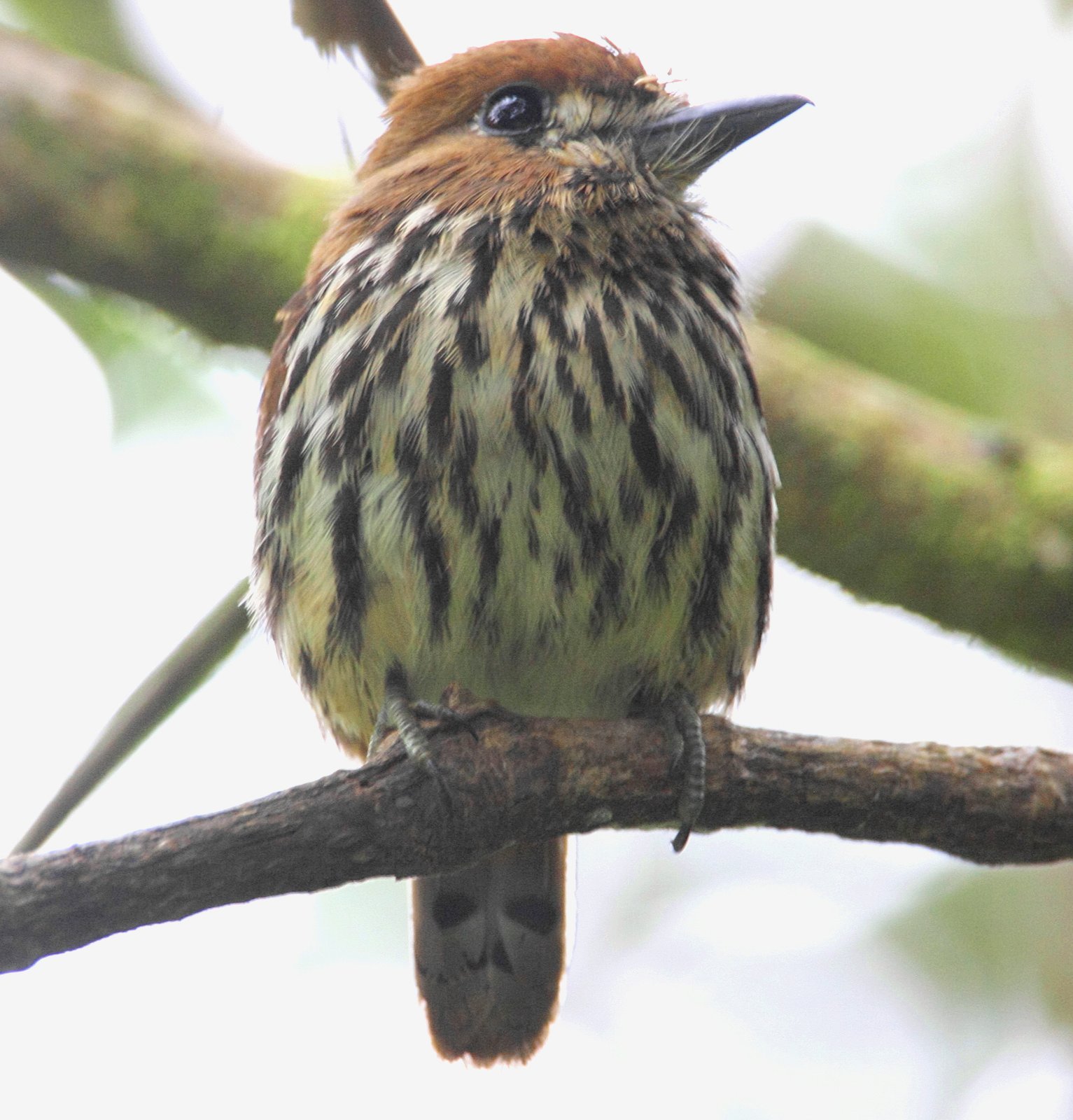
Notharchus 3 species
-
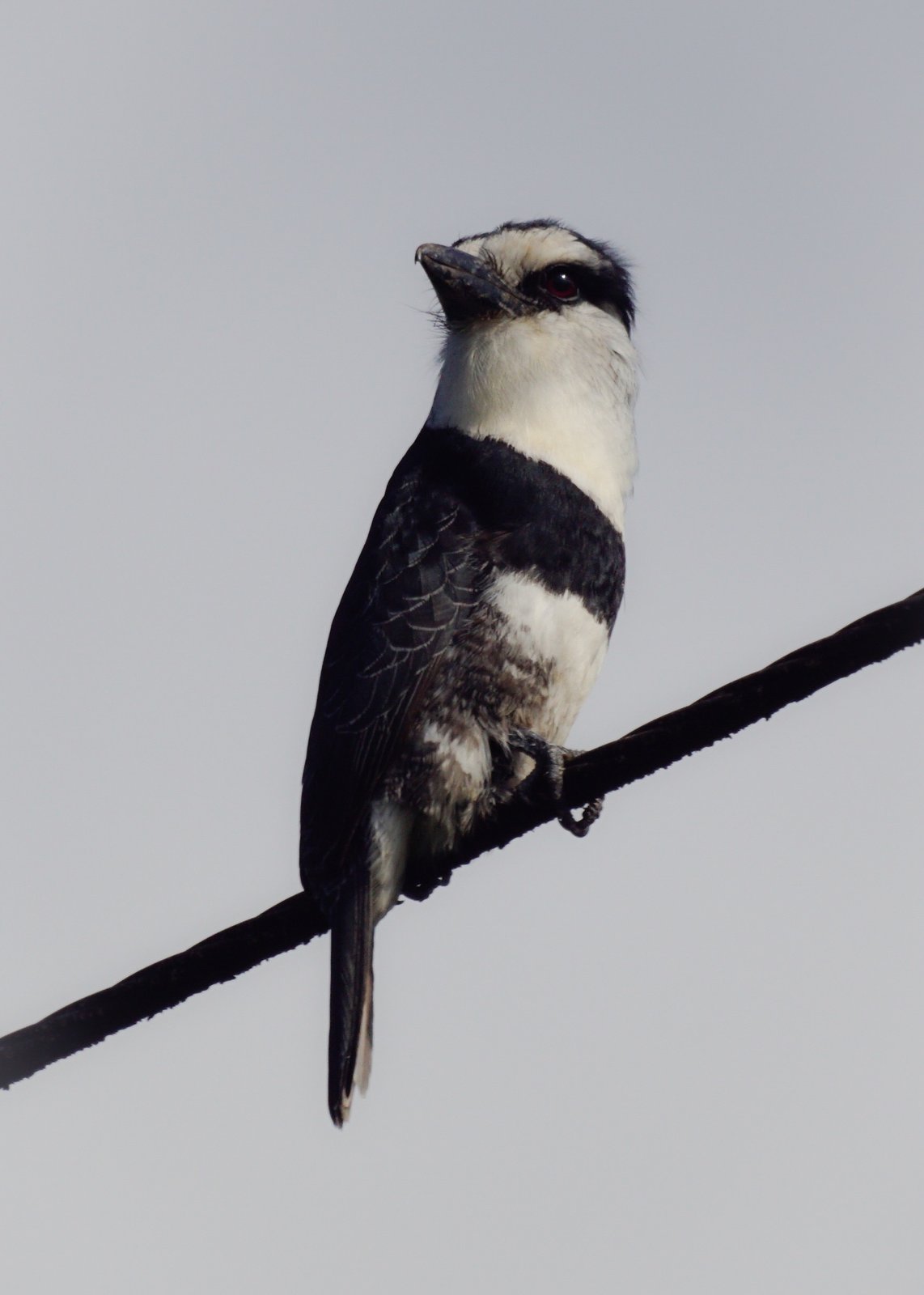
White-necked Puffbird
Notharchus hyperrhynchus Lowland rainforest
 Foothill (submontane) forest
 Secondary forest and forest edge
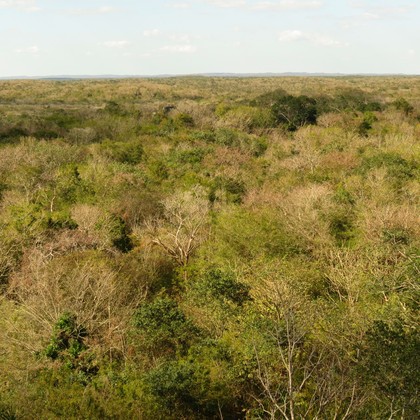 Yucatán and Caribbean-interior seasonal forest
 Pacific tropical dry forest
 Floodplain and gallery forest
-
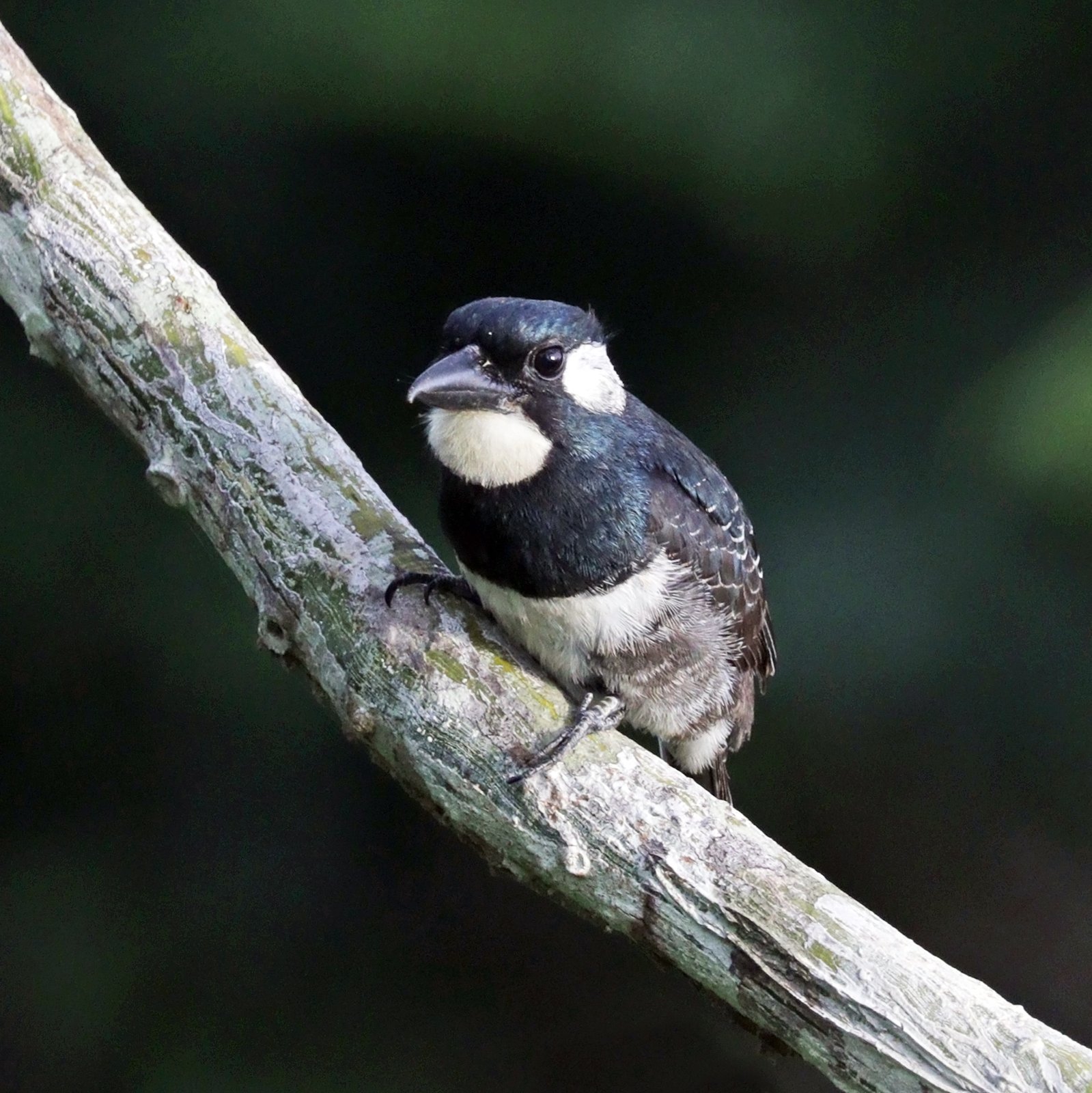
Black-breasted Puffbird
Notharchus pectoralis- Lowland rainforest
- Foothill (submontane) forest
 Chocó-Darién rainforest
- Secondary forest and forest edge
-
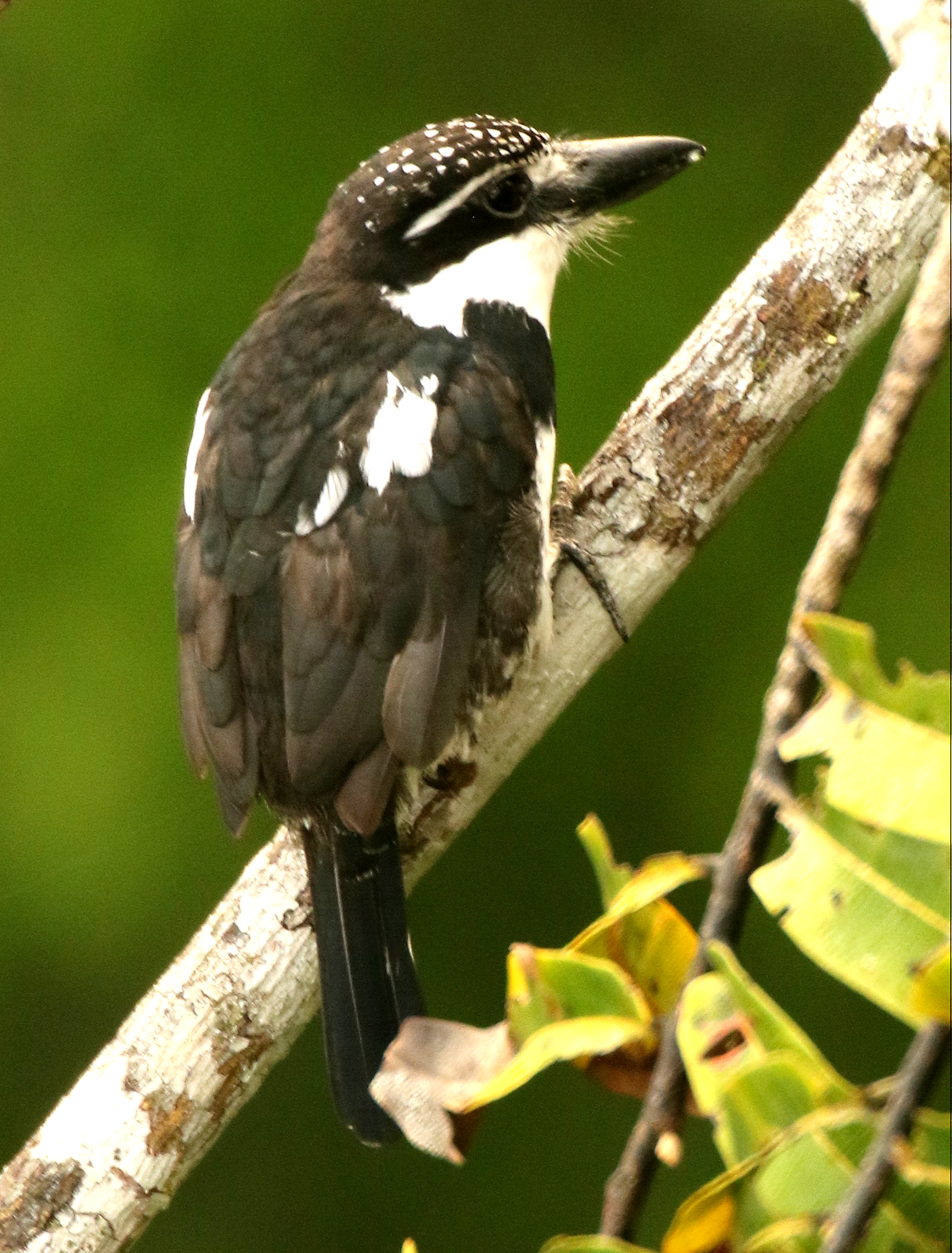
Pied Puffbird
Notharchus tectus- Lowland rainforest
- Chocó-Darién rainforest
- Secondary forest and forest edge
- Floodplain and gallery forest
Vagrants 1 species
Birds blown in from other continents. They have no range here, and so no distribution map.