All species › Passerines › Sparrows › Abd Al-Kuri Sparrow
Abd Al-Kuri Sparrow | Passer hemileucus
Abd-al-Kurimus | Gorrión de Abd al-Kuri
A pale desert sparrow of a single hot, dry island: Abd al-Kuri, in the west of the Socotra archipelago. It was described as a species in 1899, long lumped with Socotra Sparrow and recognised again as a separate species since 2008–2009. With fewer than a thousand mature birds it is one of the rarest sparrows in the world.
Voice
A simple sparrow chilp and soft chirping, as far as known not clearly different from Socotra Sparrow; small groups keep up a continuous twittering when going to roost. The voice is poorly documented.
Recording: Mischa Keijmel — CC BY-NC-SA 4.0 · converted to mono · xeno-canto
Identification
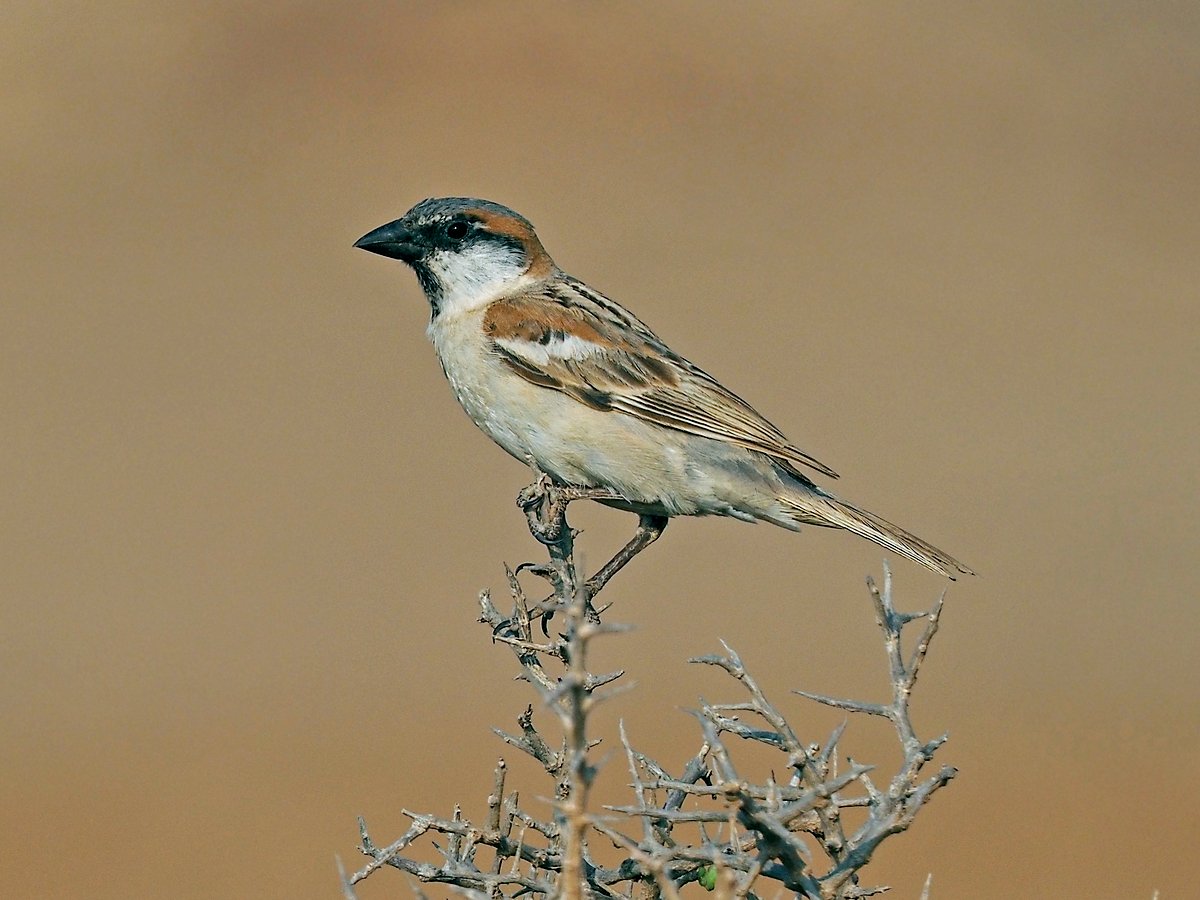
About 13–14 cm, slightly smaller and distinctly paler than Socotra Sparrow. The male has a grey crown, sandy rufous rather than chestnut head-sides and wing-coverts, little black around the ear-coverts, a white cheek and a small black bib confined to the throat. Back and rump are sandy grey with moderate, light mantle streaking; the underparts are sandy buff-white, which explains the scientific name ‘half white’. The female is pale sandy brown with a pale supercilium and dirty white underparts; juveniles resemble the female.
Confusion species
There is no other sparrow on the island itself. Socotra Sparrow (Passer insularis), on Socotra, Samha and Darsa, is larger and darker, with rich chestnut head-sides, extensive black on the ear-coverts, a bib extending onto the breast, grey underparts and a heavily streaked mantle. Females of the two are hardly separable in the field; locality decides.
Habitat
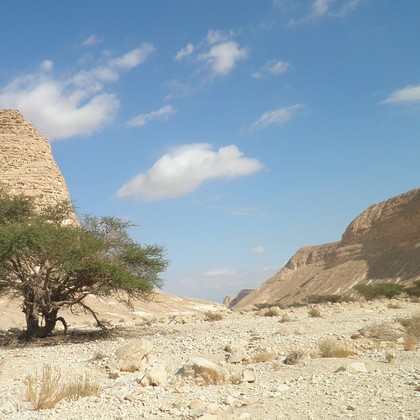
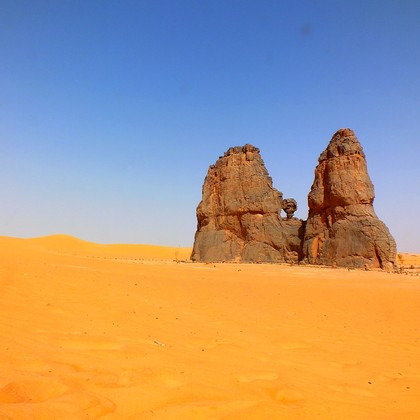
The island is very hot and dry, with no surface water and little vegetation. The sparrows live along dry drainage lines with scattered shrubs and in the better-vegetated wadis at the foot of the central limestone ridge, from sea level to the highest peaks. At the main settlement they feed around refuse and on rice; at dusk pairs fly to taller vegetation in the hills to roost.
Where the bird is most at home, classified by the habitats of North Africa and the Middle East.

Range and movements
Only on Abd al-Kuri (Yemen), an island of about 130 km² between Socotra and the Horn of Africa; the occupied range is smaller than 100 km². Not known elsewhere, including the rest of the Socotra archipelago, where Socotra Sparrow takes its place on Socotra, Samha and Darsa.
- Resident
- dark = core range, pale = thinly spread
How and when to look
Abd al-Kuri is hard to reach and is mainly visited by boat from Socotra in the calm season (autumn to spring). The sparrows are easiest to see around the main settlement and in the wadis at the foot of the hills, early in the morning and at dusk when they move to roost.
Conservation status
Vulnerable. The world population is fewer than a thousand mature birds on one small island. Local people catch the birds for food, mainly in autumn, and cyclones have caused damage in recent years; rats and cats are not a problem there according to available data. Further decline would bring a higher Red List category into view.
Scientific name
Passer hemileucus | Ogilvie-Grant & Forbes, 1899
Ogilvie-Grant & Forbes described the species in 1899 and placed it straight away in the genus where it still stands. The genus Passer was introduced in 1760 by Brisson. Passer is the Latin word for 'sparrow'. hemileucus is Greek for 'half white', from hēmi 'half' and leukos 'white'. The specimen the first description was based on came from Abd al Kuri, Socotra archipelago, Yemen.