All species › Pelicans, herons and ibises › Ibises and spoonbills › African Spoonbill
African Spoonbill | Platalea alba
Afrikaanse lepelaar | Espátula africana
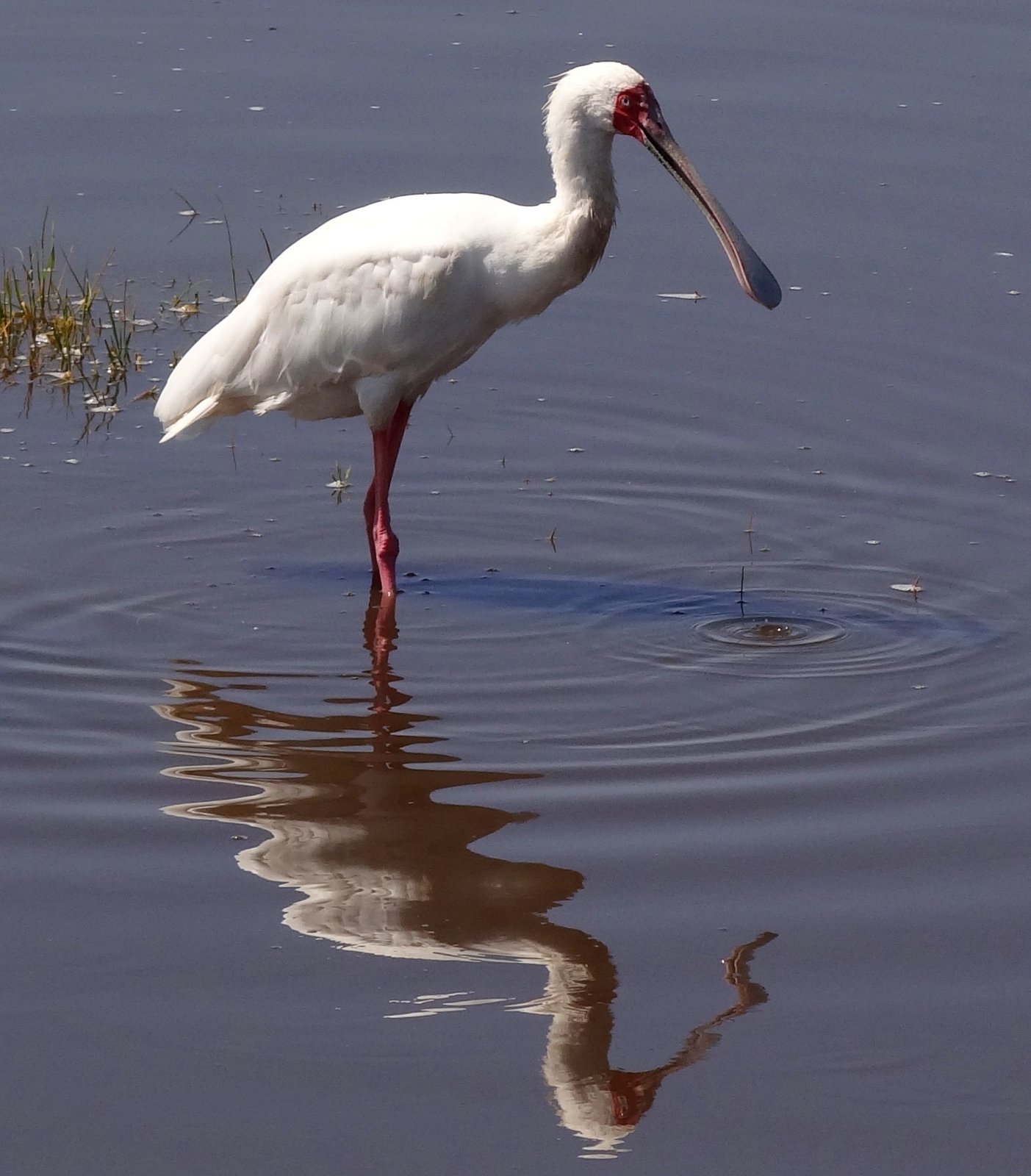
The African counterpart of the Eurasian Spoonbill, with a red face and red legs. It breeds south of the Sahara and reaches the region only as a rare vagrant, almost always in the khawrs of Dhofar in southern Oman, across the Gulf of Aden.
Voice
Usually silent; at colonies a low, hoarse grunting and bill-clattering.
Recording: Tony Archer — CC BY-NC-SA 4.0 · converted to mono · xeno-canto
Identification
Large and all white, without a crest and without yellow on breast or bill tip. The bare face, extending behind the eye, is red; the long spatulate bill is grey with red edges and a pinkish-red base; the legs are pinkish-red. Juveniles have a yellowish bill, a feathered face and black tips to the outer primaries. Flies with the neck extended, like Eurasian Spoonbill.
Confusion species
Eurasian Spoonbill (Platalea leucorodia) has black legs, a black bill with a yellow tip, a feathered white face with only a small bare yellow throat patch, and in the breeding season a crest and a yellow breast band. Juvenile Eurasian Spoonbills have a pinkish-grey bill and pale legs and can cause confusion; look for the bare red face of an adult African Spoonbill. Great Egret (Ardea alba) has a pointed bill and flies with the neck retracted.
Habitat
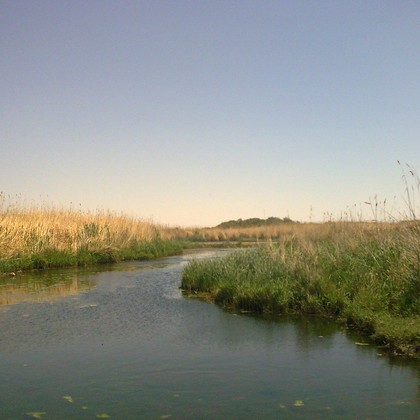
Shallow fresh and brackish water: marshes, coastal lagoons, estuaries, reservoirs and sewage ponds. Feeds by sweeping the bill sideways through the water. In Oman mainly in the sand-barred coastal khawrs.
Where the bird is most at home, classified by the habitats of North Africa and the Middle East.

Range and movements
A rare vagrant in the region. Most records come from Dhofar in southern Oman: Khawr Taqah (1986), Khawr Rawri (1994) and the khawrs around Salalah, where one bird stayed from 2004 to 2008 and another was seen in 2022; one was reported near Muscat in 1997. In the United Arab Emirates one was seen at Al Zorah (Ajman) in 2021, but birds are also kept in captivity there. There are a few old, undated reports from Egypt. No records elsewhere in the region. Beyond it widespread in sub-Saharan Africa, from Senegal and Sudan to South Africa, and on Madagascar.
How and when to look
In the khawrs of Dhofar and the lagoons of southern Arabia, check every spoonbill for face and leg colour: a red face and red legs point to this species. With birds in the Emirates, bear in mind escapes from zoos and safari parks.
Conservation status
Not globally threatened and common over much of Africa. In the region it has no status of its own: about ten individual birds, presumably arriving from East Africa across the Gulf of Aden.
Scientific name
Platalea alba | Scopoli, 1786
Scopoli described the species in 1786 and placed it straight away in the genus where it still stands. The genus Platalea was introduced in 1758 by Linnaeus. Platalea is the Latin word for the spoonbill, going back to Greek platus 'broad, flat', after the bill. alba is Latin for 'white' — for the all-white plumage. The specimen the first description was based on came from Cape of Good Hope (originally given in error as Luzon, Philippines).