All species › Waders, gulls and terns › Plovers and lapwings › Caspian Plover
Caspian Plover | Anarhynchus asiaticus
Kaspische plevier | Chorlito asiático
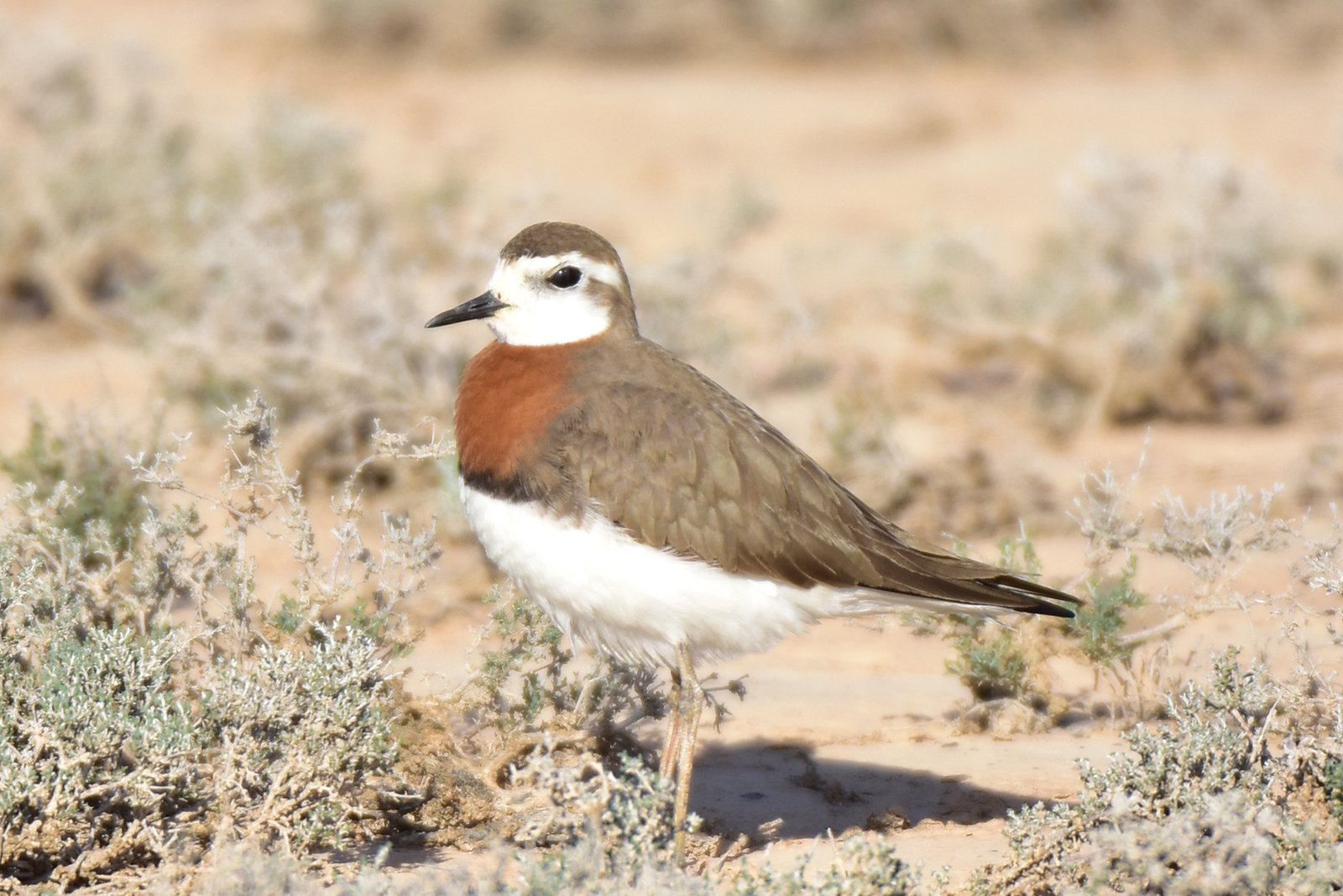
A slender, long-legged plover of the Central Asian steppes that passes through the region twice a year on its way to East and southern Africa. In spring small groups in breeding plumage rest on the desert plains and fields of Iraq, Kuwait and Arabia, often far from water.
Voice
A sharp, short chup or kwit, often in flight; in flocks a soft, whistling twitter.
Recording: Stephanie Dolrenry — CC BY-NC-SA 4.0 · converted to mono · xeno-canto
Identification
Slender, with long legs, long wings and a thin black bill. The breeding male has a white head with a broad white supercilium, a brown crown and ear patch and a broad chestnut breast band separated from the white belly by a narrow black lower border. Females and non-breeding birds have a complete grey-brown breast band and a pale buff supercilium. The upperparts are plain brown, the legs grey-green to yellowish. In flight a narrow white wingbar, mainly at the base of the primaries, and toes projecting beyond the tail.
Confusion species
Greater Sand-Plover (Anarhynchus leschenaultii) is stockier, with a heavier bill, shorter legs and only breast patches or a narrow band; it also stands mainly on mud. Eurasian Dotterel (Eudromias morinellus) has a white band across the breast and a supercilium meeting on the nape. Tibetan Sand Plover (Anarhynchus atrifrons) is smaller, with a shorter, blunter bill and a black mask in breeding plumage.
Habitat
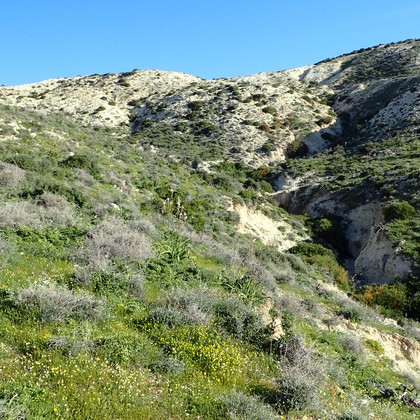
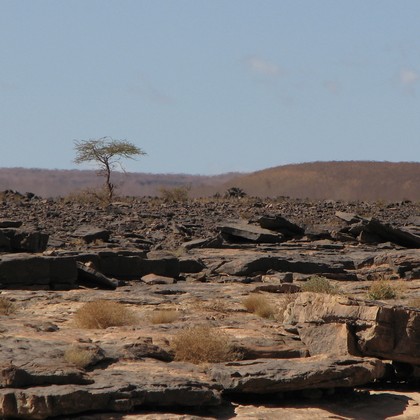
On migration dry, open ground: short steppe, stony desert plains, edges of salt flats, ploughed and irrigated fields, airfields and racecourses; less on mudflats and beaches. Often rests in small groups on bare ground, where its sandy colour makes it surprisingly hard to see.
Where the bird is most at home, classified by the habitats of North Africa and the Middle East.

Range and movements
Passage runs mainly through the east of the region. In Iraq, Kuwait and eastern and central Saudi Arabia a fairly common passage migrant, in spring sometimes in flocks of dozens; also regular in Bahrain, Qatar, the Emirates, Oman (including Dhofar) and Yemen. In Israel and Jordan a scarce migrant, mainly in spring in the Arava and around Eilat; in Egypt scarce, mainly in the east. Rare in Syria and Lebanon, and a vagrant to Libya, Tunisia, Algeria and Morocco. Beyond the region it breeds in the steppes of the Caspian and Kazakhstan to north-western China and winters in East and southern Africa.
- Summer visitor (c. Oct–Mar)
- Winter visitor (c. Apr–Sep)
- Passage (Mar–Apr, Oct–Nov)
- dark = core range, pale = thinly spread
How and when to look
Best from mid-March to late April in Kuwait and eastern Saudi Arabia, after rain, on bare desert plains, pivot fields and lawns; scan resting groups carefully, as they only stand out when they move. In Israel it pays to search the fields of the Arava and around Eilat in spring.
Conservation status
Not globally threatened. Little is known about numbers; ploughing of steppe on the breeding grounds and possibly hunting on migration are the main risks.
Scientific name
Anarhynchus asiaticus | (Pallas, 1773) (GBIF: Charadrius asiaticus)
Pallas described the species in 1773 as Charadrius asiaticus; because it was later moved to another genus, the author and year stand in brackets. The genus Anarhynchus was introduced in 1832 by Quoy & Gaimard. Anarhynchus is Greek, from ana- 'backward' and rhunkhos 'bill', after the sideways-bent bill of the wrybill, the type species of the genus. asiaticus is Latin for 'Asian', after the breeding grounds in the Central Asian steppes. The specimen the first description was based on came from the salt lakes of the Central Asian steppes.