All species › Birds of prey › Hawks, eagles and kites › Long-Legged Buzzard
Long-Legged Buzzard | Buteo rufinus
Arendbuizerd | Busardo moro
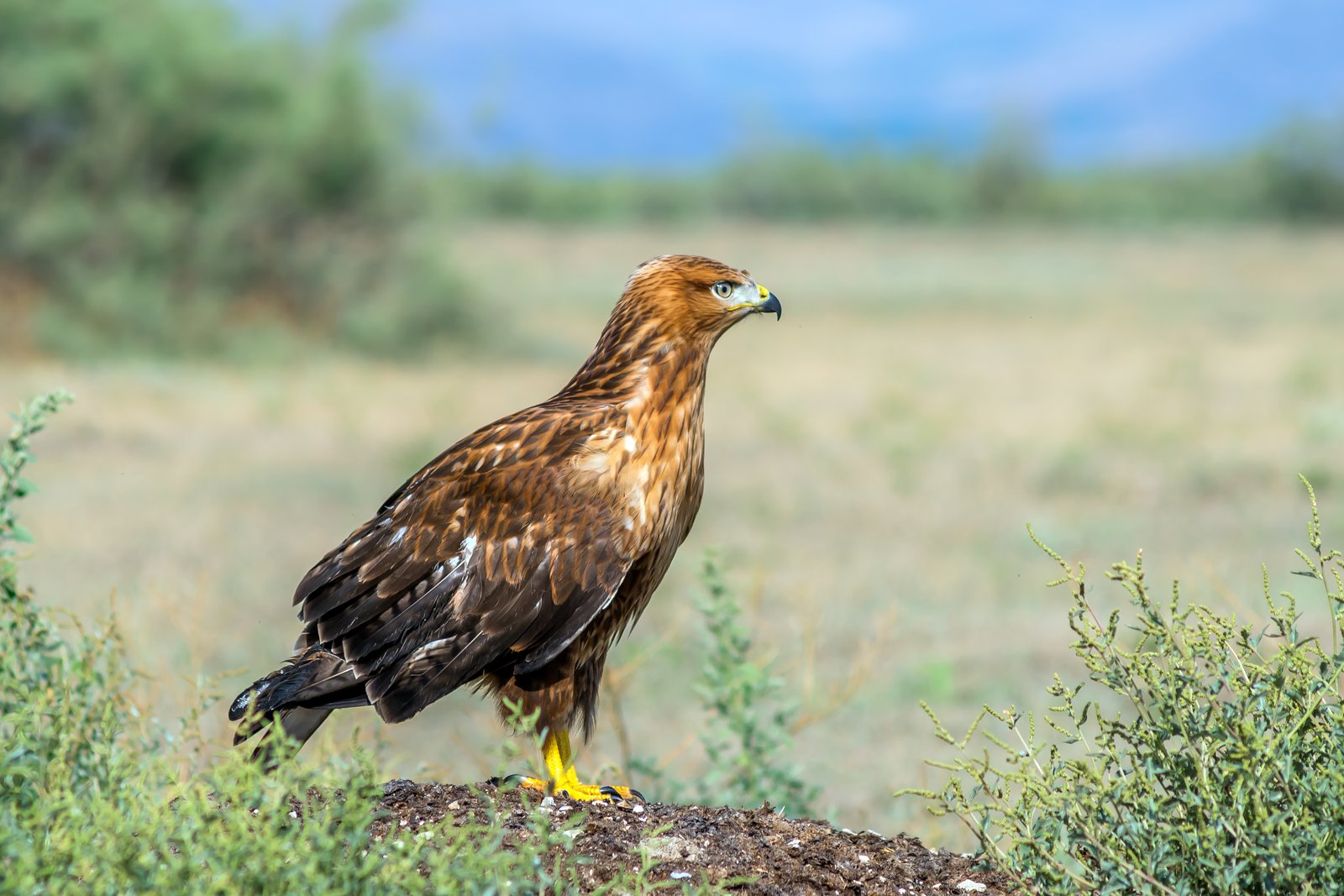
The Long-legged Buzzard is the buzzard of steppe, desert edge and dry mountains: a large, long-winged buzzard with a pale orange-brown tail, the most frequently seen raptor of open, arid country from Morocco to Arabia. The smaller form cirtensis lives in the Maghreb; the nominate form breeds in the Levant and Arabia, where birds from Central Asia also winter.
Voice
Almost silent away from the territory. At the nest a drawn-out, plaintive peeeh-a, shorter, lower and hoarser than the mewing of Common Buzzard.
Recording: Mischa Keijmel — CC BY-NC-SA 4.0 · converted to mono · xeno-canto
Identification
50–65 cm, wingspan 126–155 cm; the North African cirtensis is smaller, about the size of Common Buzzard. Larger and more powerful than Common Buzzard, with long, broad wings, a long arm and a clearly projecting head; soars with the wings in a marked V. The usual pale type has a creamy-white to ochre-brown head and breast, a dark rufous belly and thighs, a mainly white underwing with large black carpal patches and a dark trailing edge, and from above a pale area at the base of the primaries. The adult's tail is plain pale orange-brown to whitish without bars. There are also rufous and all-dark birds, with a barred tail. The juvenile has a finely barred pale tail and a less sharply defined belly patch.
Confusion species
Common Buzzard (Buteo buteo), especially the rufous Steppe Buzzard, looks very similar but is smaller and more compact, with shorter arms and a finely barred tail with a dark terminal band. Rough-legged Hawk (Buteo lagopus) has a white tail with a sharp black terminal band. Dark Long-Legged Buzzards can resemble a dark Booted Eagle (Hieraaetus pennatus), but that has pale shoulder patches, a pale uppertail and soars on flat wings. Young Steppe Eagles (Aquila nipalensis) are much larger, with a white wing band.
Habitat
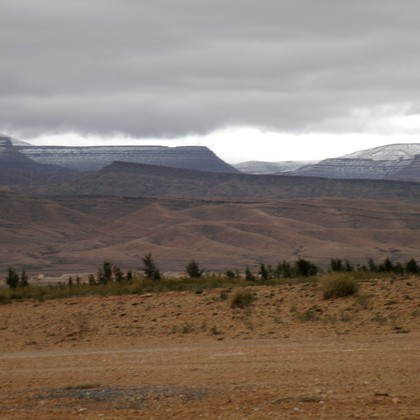
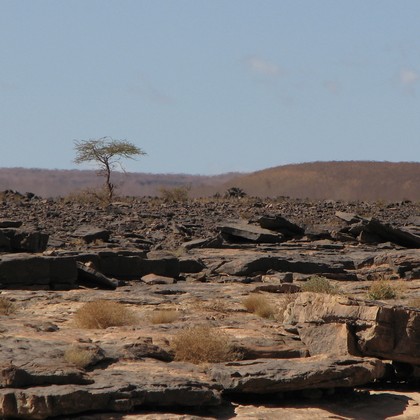
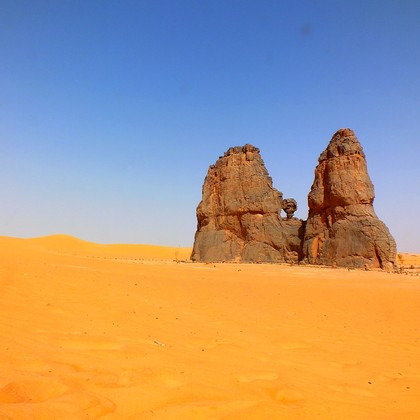
Open, arid country: steppe, semi-desert, stony desert with wadis, rocky hills, mountain slopes and gorges, and farmland on the desert edge. The nest is on a cliff ledge, in a tree or on a pylon. Hunts rodents such as gerbils and jirds, lizards, snakes and large insects.
Where the bird is most at home, classified by the habitats of North Africa and the Middle East.
Range and movements
In Morocco a common resident from the Rif and the Atlas to the Anti-Atlas and the Saharan fringes, south into Western Sahara; also widespread in Algeria and Tunisia, mainly on the high plateaus and at the edge of the Sahara, and in northern Libya. In Egypt it breeds scattered in the deserts, Sinai and along the Nile Valley, and is a winter visitor. In the Levant it breeds in Israel (mainly the Negev, the Judean Desert and the north), Jordan, Syria, Lebanon and Iraq; in winter many birds arrive from Turkey and Central Asia. In Arabia it breeds in northern and central Saudi Arabia and locally in Kuwait; in winter widespread to the UAE, Oman and Yemen. Beyond the region from southeastern Europe and Turkey to Central Asia, Pakistan and Mongolia.
- Resident
- Summer visitor (c. Oct–Mar)
- Winter visitor (c. Apr–Sep)
- Passage (Mar–Apr, Oct–Nov)
- dark = core range, pale = thinly spread
How and when to look
In Morocco you see it along any road through the steppe, perched on a post or pylon, for example between Boumalne-du-Dadès and Merzouga. In Israel the Negev in winter is the best place; look for the pale, unbarred tail as the bird takes off.
Conservation status
Not threatened; in southeastern Europe and the Maghreb it is even increasing. Locally a victim of electrocution on badly designed pylons, where it likes to perch, and of poisoned rodents in agriculture.
Scientific name
Buteo rufinus | (Cretzschmar, 1829)
Cretzschmar described the species in 1829 as Falco rufinus; because it was later moved to another genus, the author and year stand in brackets. The genus Buteo was introduced in 1799 by De Lacépède. Buteo is the Latin word for a buzzard. rufinus is Latin for 'reddish', from rufus 'red', after the rusty plumage. The specimen the first description was based on came from upper Nubia, Sudan.