All species › Passerines › Starlings › Somali Starling
Somali Starling | Onychognathus blythii
Somalische spreeuw | Estornino somalí
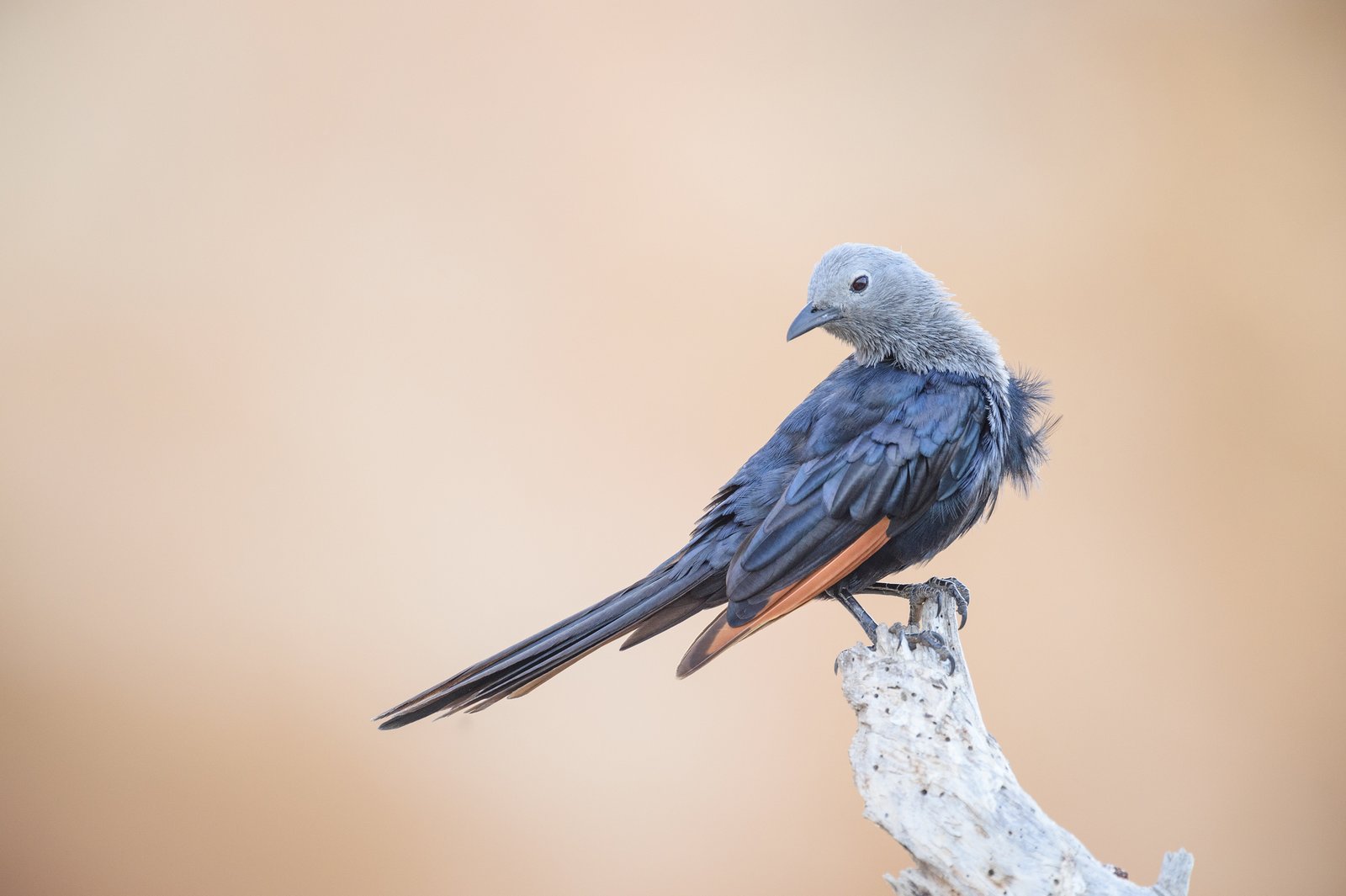
Somali Starling is a slender, very long-tailed red-winged starling of the Horn of Africa, which in this region occurs only on Socotra. There it lives alongside the endemic Socotra Starling, mainly in the mountains, moving in noisy groups along cliffs and gorges.
Voice
Loud, clear, somewhat plaintive whistles, chee-oo and peeoo, often in flight; groups make a chattering twitter.
Recording: Mike Evans — CC BY-NC-SA 4.0 · shortened to the first 60 s, mono · xeno-canto
Identification
28–31 cm, much of it tail. Slender, with a slim black bill and a long, strongly graduated, pointed tail. The male is glossy blue-black. The female has a plain pale grey head, neck and upper breast, sharply set off from the black body. Both sexes have rufous primaries with dark tips, showing a large rusty wing patch in flight. Juveniles resemble the male but are duller and shorter-tailed.
Confusion species
Socotra Starling (Onychognathus frater) is stockier, with a clearly shorter, square-ended tail and a heavier bill; the female has a streaked, darker grey head. Young Somali Starlings with a still short tail are the most difficult; note the slimmer build and bill.
Habitat
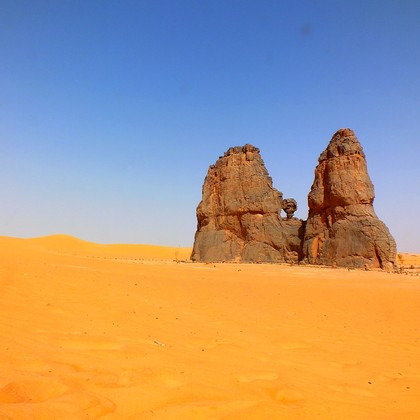
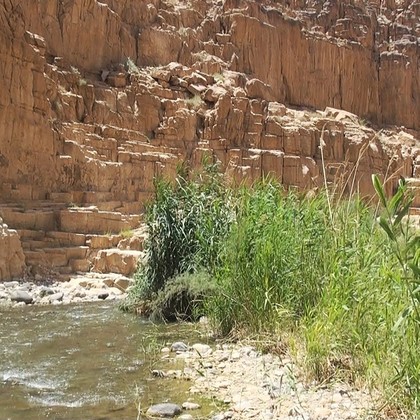
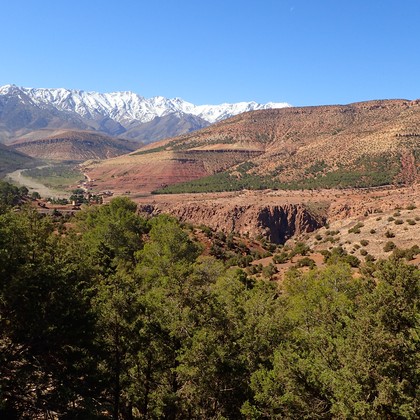
On Socotra mainly rocky mountain slopes, cliffs and deep gorges in the Hagghier Mountains and on the limestone plateaus, also in scrub and woodland with fig and dragon's blood trees; less at villages and on the coast than Socotra Starling. Eats fruit and invertebrates. Nests in rock crevices.
Where the bird is most at home, classified by the habitats of North Africa and the Middle East.
Range and movements
In this region only on Socotra (Yemen), where it is fairly common in the mountains and on the plateaus, but less numerous than Socotra Starling. There are no confirmed records from the Arabian mainland. Beyond the region in Eritrea, Djibouti, northern Ethiopia and northern Somalia.
- Winter visitor (c. Apr–Sep)
- Passage (Mar–Apr, Oct–Nov)
- dark = core range, pale = thinly spread
How and when to look
In the gorges of the Hagghier Mountains and on the Diksam plateau: watch groups flying along the cliff faces and note the long, pointed tail and the pale grey head of the females.
Conservation status
Not globally threatened. On Socotra dependent on the conservation of the natural vegetation in the mountains.
Scientific name
Onychognathus blythii | (Hartlaub, 1859)
Hartlaub described the species in 1859 as Amydrus blythii; because it was later moved to another genus, the author and year stand in brackets. The genus Onychognathus was introduced in 1849 by Hartlaub. Onychognathus combines the Greek onyx 'nail, claw' and gnathos 'jaw'. blythii honours the English zoologist Edward Blyth (1810–1873), curator of the Asiatic Society's museum in Calcutta. The specimen the first description was based on came from northern Somalia.