All species › Trogons › Trogons
Trogons | Trogonidae
Trogons | Trogones
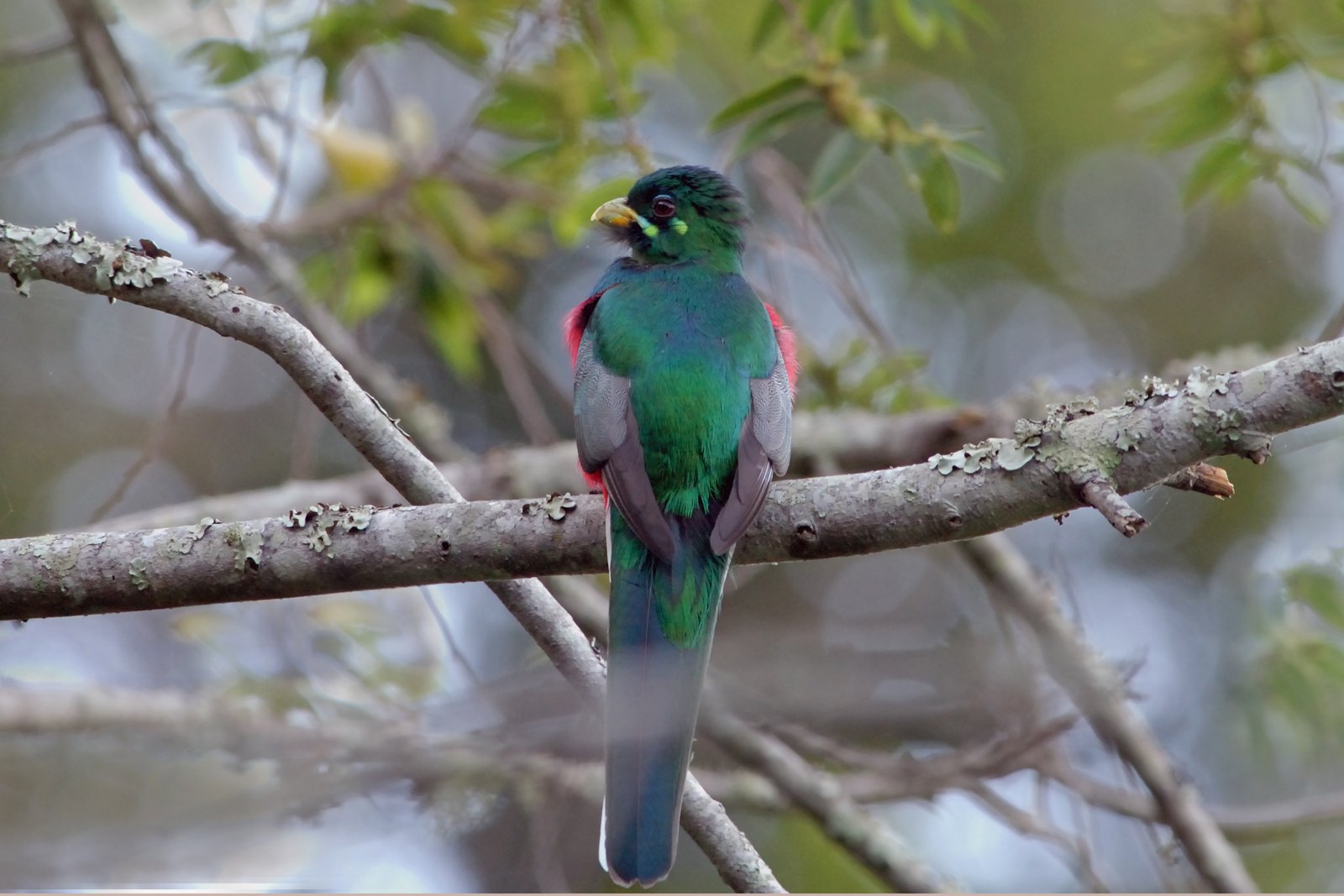
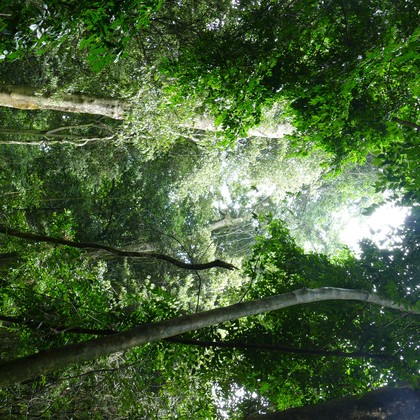
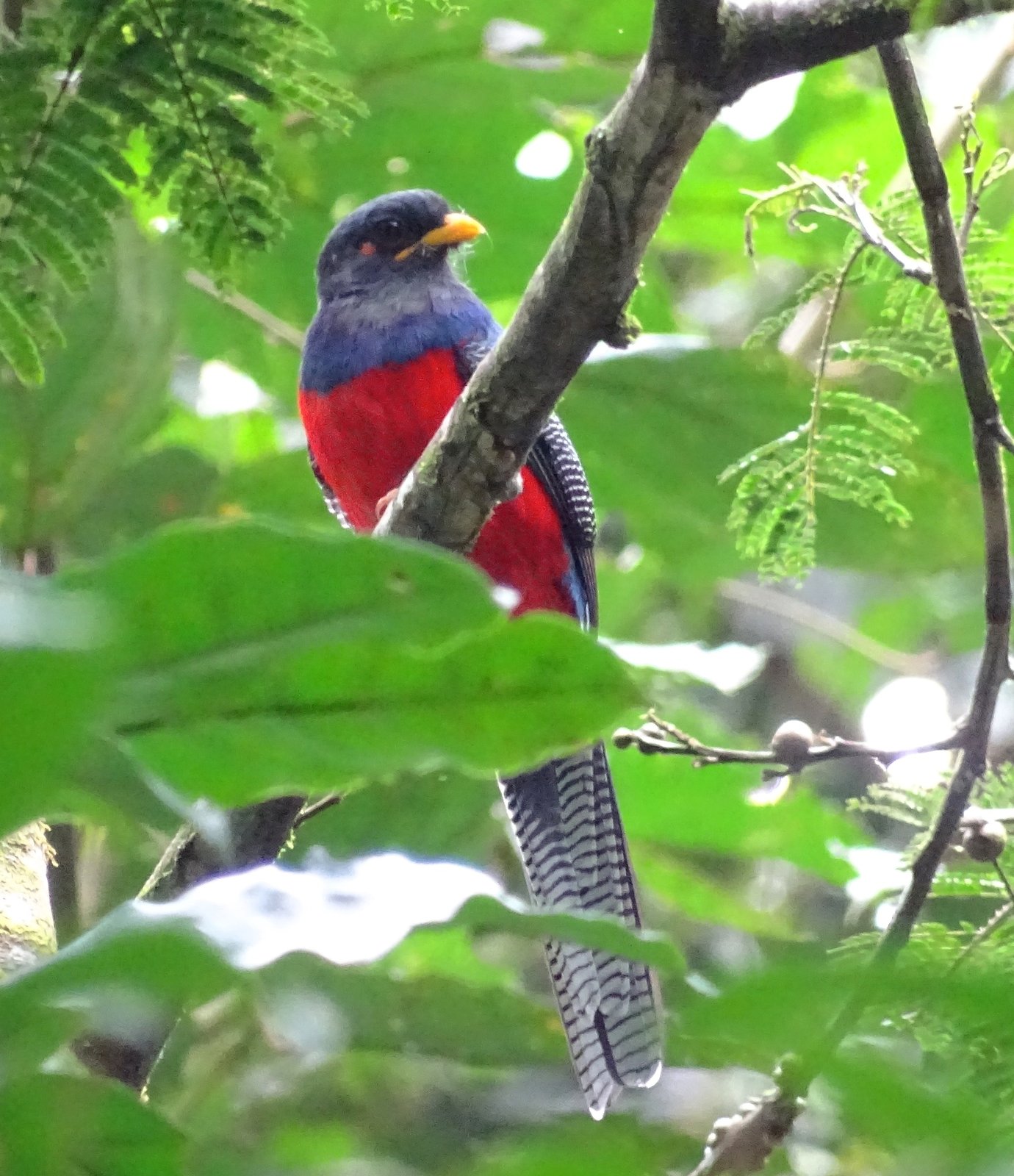
In southern Africa the family is represented by a single genus, with species of dense coastal forest, montane forest and wooded ravines. The body is compact, the head large and the neck short, and the bird sits upright and all but motionless for hours on a branch halfway up the canopy, turning only its head; it is therefore the deep, rising series of hollow notes rather than the bird itself that betrays its presence. The bill is short and wide with a large gape and finely serrated cutting edges, surrounded by bristles, and the large eye is ringed by bare coloured skin that swells while the bird calls. The heterodactyl foot, with the first and second toes directed backwards, is weak and serves only for perching. The male is metallic green on head, breast and back with a red belly; the sheen comes from the structure of the feather rather than from pigment, so a perched bird with its back to the observer is hard to separate from the foliage and lights up only as it turns away. The skin is thin and the feathers are so loosely set that they come away if the bird is seized. The nest is a cavity gnawed out by the bird in rotten wood or in an arboreal termite nest, unlined, with two to four round unmarked eggs.
Native species 2 species
Species that occur here by nature: breeding birds, winter visitors and passage migrants. They are arranged by genus, in the sequence of the list.