All species › Waders, gulls and terns › Plovers and lapwings › African Wattled Lapwing
African Wattled Lapwing | Vanellus senegallus
Lelkievit | Avefría Senegalesa
The African Wattled Lapwing is the largest lapwing in the region: a tall, grey-brown bird with red-and-yellow wattles at the bill and long yellow legs. It often stands upright in wet grassland or at the edge of a vlei, and its high call carries across the whole floodplain.

Voice
A high keep-keep or peep-peep-peep, loud and often repeated, mainly when disturbed and in flight; at the nest a rapid, sustained series. Pairs call together.
Recording: Ehren Eksteen — CC BY-NC-SA 4.0 · converted to mono · xeno-canto
Identification
34–35 cm. The plumage is largely grey-brown; head and neck are finely streaked dark, the forehead has a white patch and the chin is black. Wattles hang from the bill base, red above and yellow below. The belly is paler brown with a blackish patch or streak on the lower belly. The bill is yellow with a black tip, the eye yellow and the legs long and yellow. In flight the wing shows a white band across the coverts and black flight feathers; the tail is white with a black terminal band. The sexes are alike; juveniles have smaller wattles and no black chin.
Confusion species
White-Crowned Lapwing Vanellus albiceps also has yellow wattles and legs, but a grey head with a white crown stripe, clean white underparts and an almost entirely white wing; it lives on sandbars of the large rivers. Blacksmith Lapwing Vanellus armatus is black, white and grey with black legs. Crowned Lapwing Vanellus coronatus is smaller and sandy brown, with a black cap ringed in white and red legs.
Habitat
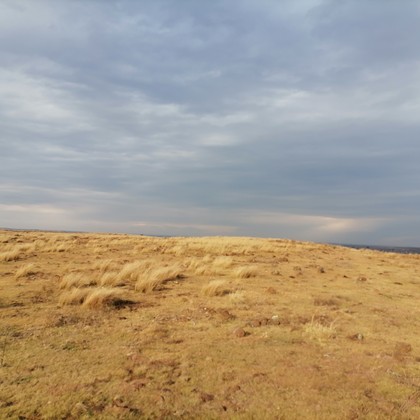
Wet grassland, vleis, the edges of marshes, dams and rivers, floodplains and wet pasture, and also open woodland with marshy hollows. It forages walking in short, damp grass and on mud. The nest is a scrape on bare or sparsely vegetated ground, often close to water.
Where the bird is most at home, classified by the vegetation units of southern Africa.

Range and movements
In the north and east of the region: Angola, Zambia, Malawi, Mozambique, Zimbabwe, northern Botswana and north-eastern Namibia, and in South Africa in eastern Limpopo, Mpumalanga and KwaZulu-Natal, together with Eswatini; locally south to the Eastern Cape. Absent from the arid west. Beyond the region across much of Africa south of the Sahara, from Senegal to Ethiopia.
- Resident
- Summer visitor (c. Oct–Mar)
- Winter visitor (c. Apr–Sep)
- Passage (Mar–Apr, Oct–Nov)
- dark = core range, pale = thinly spread
How and when to look
Search in the wet summer months along vleis and wet pasture in the east of the region, for example in the KwaZulu-Natal midlands, the Kruger National Park or the Zambezi Region. The bird stands out by its height and upright stance; check the two-coloured wattles through binoculars.
Conservation status
Not threatened; widespread and locally common. Drainage of vleis and conversion of wet grassland to farmland reduce its habitat locally.
Scientific name
Vanellus senegallus | (Linnaeus, 1766)
Linnaeus described the species in 1766 as Parra senegalla; because it was later moved to another genus, the author and year stand in brackets. The genus Vanellus was introduced in 1760 by Brisson. Vanellus is the diminutive of the Latin vannus, 'winnowing fan' — for the sound and shape of the broad, rounded wings in flight, which recall a fan being winnowed. senegallus refers to Senegal, where the first described specimen came from. The specimen the first description was based on came from Senegal.