All species › Swifts › Swifts › Bradfield's Swift
Bradfield's Swift | Apus bradfieldi
Damaragierzwaluw | Vencejo de Namibia
Bradfield's Swift is a large, pale swift of the dry mountains and gorges of south-western Africa. It is almost endemic to Namibia and the adjoining west of South Africa and breeds in crevices in cliff faces.
Voice
High, thin screaming runs, sriiiii, mainly at the breeding colony, where parties race along the rock face. Away from the colony usually silent.
Recording: Craig Robertson — CC BY-NC-SA 4.0 · converted to mono · xeno-canto
Identification
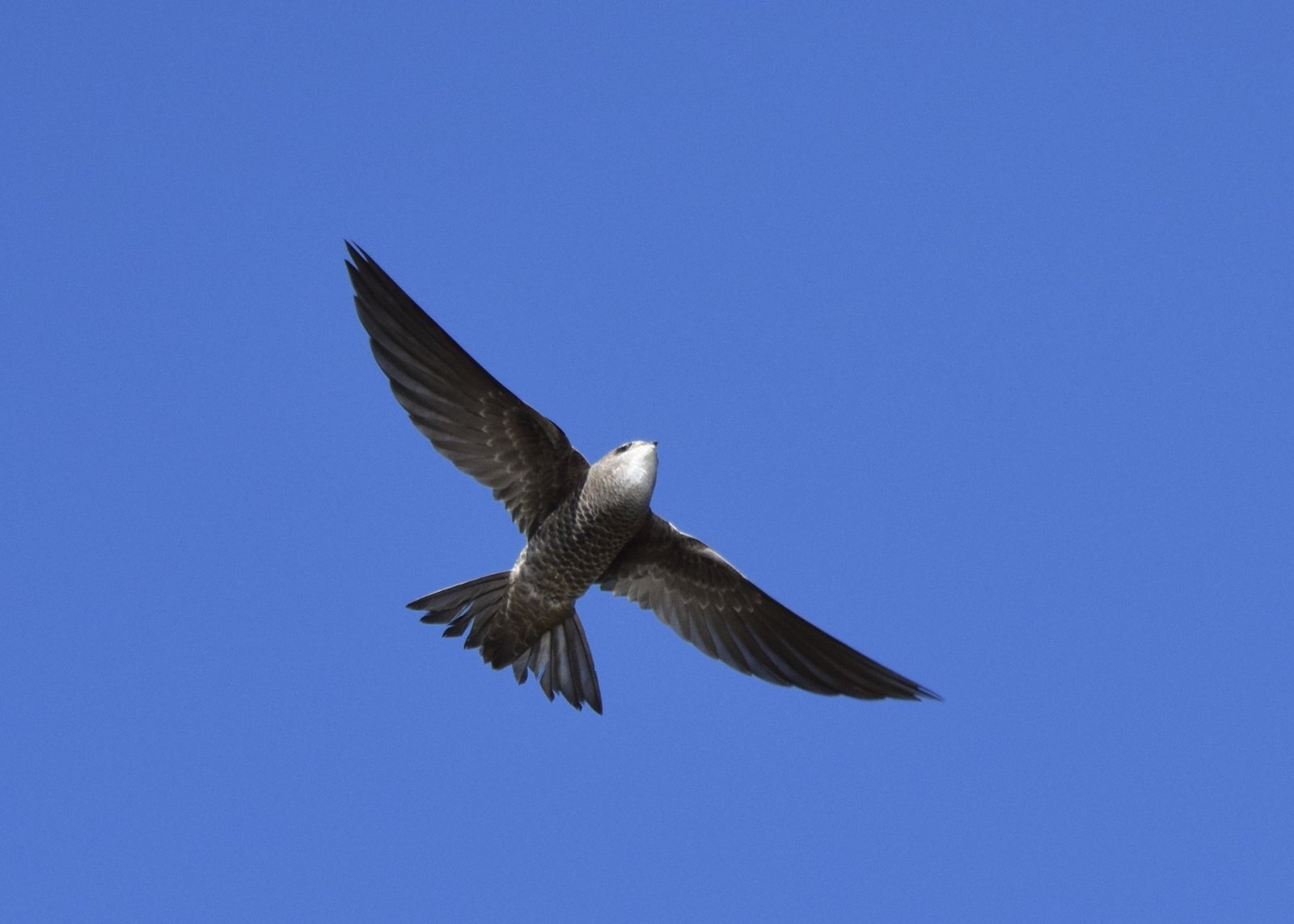
17–18 cm, wingspan 40–44 cm. Fairly pale grey-brown, with a small dirty-white throat and pale fringes to the feathers of the belly and undertail coverts, so that the underparts look scaly in good light. The inner wing is paler below than the outer primaries, and from above the paler secondaries contrast with the darker back. The tail is moderately forked. The sexes are alike. It flies powerfully and fast, with long glides along cliffs and gorges.
Confusion species
The African Black Swift Apus barbatus is darker, almost black, with less contrast in the wing and a less scaly belly; the two ranges meet in western South Africa. The Common Swift Apus apus is also present in Namibia as a summer visitor, and is darker and more uniform with a more sharply defined white throat. Field marks are subtle; paleness and breeding in dry rocky country help most.
Habitat
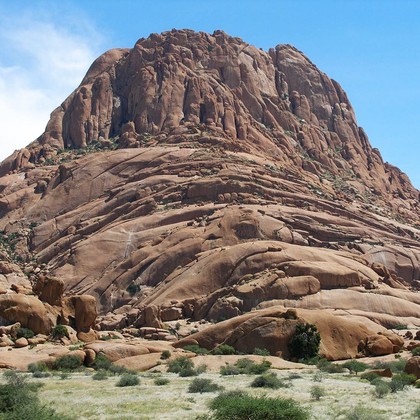
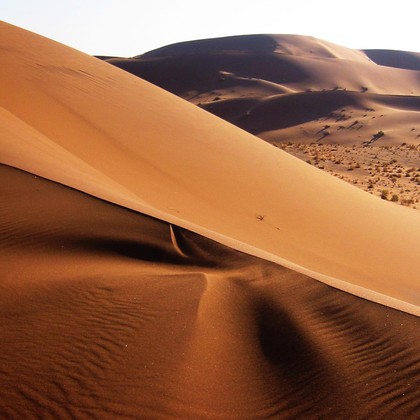
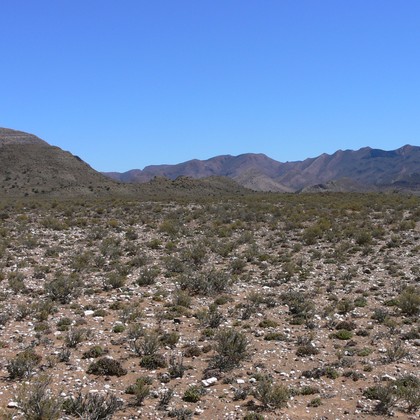
Dry, rocky mountains, gorges and cliffs of the escarpment and semi-desert, from the edge of the Namib to the Karoo; it hunts over open plains, river beds and desert. It breeds in narrow crevices in rock faces, occasionally in buildings. It feeds on flying insects and follows thunderstorms over long distances.
Where the bird is most at home, classified by the vegetation units of southern Africa.
Range and movements
Mainly in Namibia, from the Kaokoveld across the central highlands to the south, and also in south-western Angola and western South Africa (Namaqualand, Bushmanland and the western Karoo into the Northern Cape). Outside the breeding season it wanders to south-western Botswana. It does not occur outside the region.
- Resident
- Summer visitor (c. Oct–Mar)
- Winter visitor (c. Apr–Sep)
- Passage (Mar–Apr, Oct–Nov)
- dark = core range, pale = thinly spread
How and when to look
Look for it at cliffs and gorges in the central highlands of Namibia, for instance round Windhoek, the Naukluft and Spitzkoppe, in the early morning or just before a thunderstorm when parties hunt low. In good light watch for the pale grey-brown tone and the contrasting inner wing.
Conservation status
Not threatened; locally common within its small range. No clear threats are known; the dry rocky habitat is under little pressure.
Scientific name
Apus bradfieldi | (Roberts, 1926)
Roberts described the species in 1926 as Micropus bradfieldi; because it was later moved to another genus, the author and year stand in brackets. The genus Apus was introduced in 1777 by Scopoli. Apus is Latin for a swift, from Greek a- 'without' and pous 'foot', the ancients taking it for a kind of swallow without feet. bradfieldi honours Rupert Dudley Bradfield (1882–1949), South African farmer, naturalist and collector in present-day Namibia. The specimen the first description was based on came from Quickborn, north of Okahandja, Namibia.