All species › Passerines › Cisticolas › Bubbling Cisticola
Bubbling Cisticola | Cisticola bulliens
Angolagraszanger | Cistícola Murmurador
The Bubbling Cisticola is the western counterpart of the Rattling Cisticola, restricted to the coastal plain and lower escarpment of Angola and the adjacent lowlands near the mouth of the Congo. It closely resembles Rattling Cisticola and is sometimes lumped with it, but its song ends in a liquid, bubbling trill instead of a dry rattle.

Voice
The song starts with a few short che notes and ends in a long, liquid, bubbling trill: che-che-churrrrrrl, from a bush or tall grass tuft. There are also squeaky whistles and grating scolding calls when agitated. The structure resembles that of Rattling Cisticola, but the ending sounds wet and bubbling rather than dry.
Recording: Pritam Baruah — CC BY-NC-SA 4.0 · converted to mono · xeno-canto
Identification
14–15 cm; the male is larger than the female. The upperparts are grey-brown with dark streaking on mantle and back; the crown is rufous and finely streaked, the flight feathers are edged rufous and there is a narrow pale supercilium. The underparts are white to pale buff with ochre flanks. The tail has a dark subterminal band and pale tips. In the field it is virtually inseparable from Rattling Cisticola, on average slightly warmer and more rufous. The sexes are otherwise alike and seasonal change in plumage is slight.
Confusion species
Rattling Cisticola Cisticola chiniana replaces it inland on the plateau; the two look almost identical and are best separated by song: a dry rattle against a bubbling trill. Chattering Cisticola Cisticola anonymus of the north lives in rank growth at forest edges, has an unstreaked back and chatters loudly in duet. Red-Faced Cisticola Cisticola erythrops has an unstreaked back and a reddish face and lives in rank growth near water. Singing Cisticola Cisticola cantans is unstreaked, with a rufous wing panel. Zitting Cisticola Cisticola juncidis is smaller and shorter-tailed and sings a repeated zip in a high, undulating song flight.
Habitat
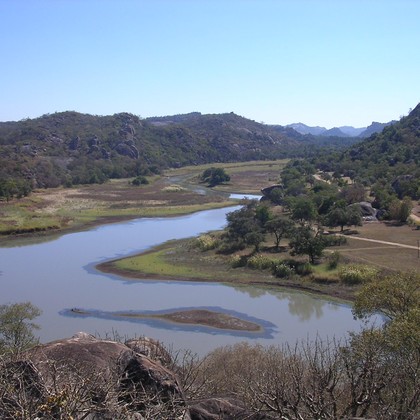
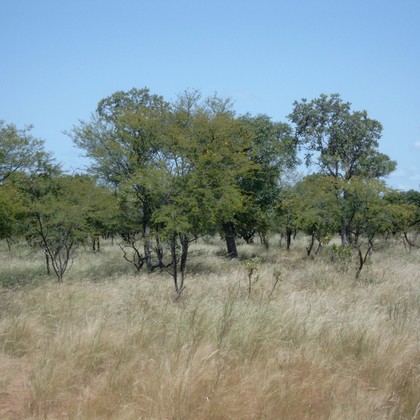
Dry savanna and grassy plains with bushes, thickets and baobabs on the coastal plain, fallow land and rank field edges, up to the lower slopes of the escarpment. It forages low in bushes and grass for insects.
Where the bird is most at home, classified by the vegetation units of southern Africa.
Range and movements
Within the region only in western Angola: the coastal plain and lower escarpment from Cabinda and the Congo mouth south through Luanda and Cuanza Sul to about Benguela. Beyond the region only in the adjacent lowlands of extreme western DR Congo.
- Resident
- dark = core range, pale = thinly spread
How and when to look
All year; for example around Luanda, in Kissama National Park and along the roads from the coast to the escarpment. Listen for the bubbling end of the song. On the escarpment, where this species and Rattling Cisticola may meet, identify on song only.
Conservation status
Not threatened. Common within its small range and benefits from open, cleared savanna and fallow land. Its taxonomic status is debated; some authors include it in Rattling Cisticola.
Scientific name
Cisticola bulliens | Lynes, 1930
Lynes described the species in 1930 and placed it straight away in the genus where it still stands. The genus Cisticola was introduced in 1829 by Kaup. Cisticola combines the Ancient Greek kisthos 'rock-rose' with the Latin colere 'to dwell'. bulliens is Latin for 'bubbling', from bullire, 'to bubble' — for the bubbling song. The specimen the first description was based on came from Lobito, Angola.