All species › Passerines › Larks › Fischer's Sparrow-Lark
Fischer's Sparrow-Lark | Eremopterix leucopareia
Bruinkapvinkleeuwerik | Terrera Cariblanca
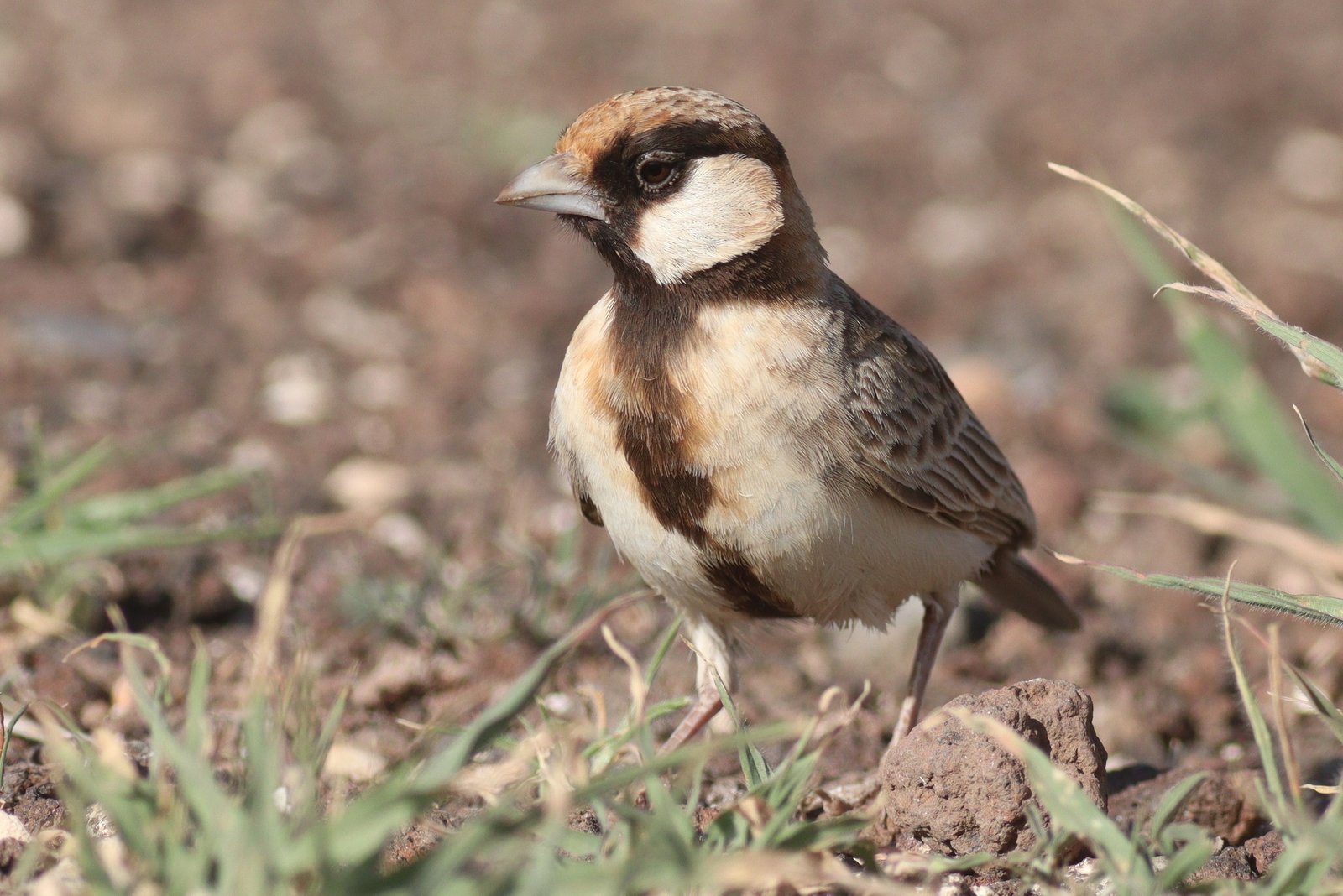
Fischer's Sparrow-Lark is an East African sparrow-lark that just reaches the region in the extreme north-east. The male resembles Chestnut-Backed Sparrow-Lark but has a brown rather than black crown and a grey-brown rather than chestnut back. In southern Africa every record is worth documenting.
Voice
A short, dry chip and a soft prrrp in flight. The song is a simple, repeated series of whistled notes, given in an undulating song flight, similar to that of Chestnut-Backed Sparrow-Lark.
Recording: Thibaut Chansac — CC BY-NC-SA 4.0 · converted to mono · xeno-canto
Identification
11–12 cm. The smallest sparrow-lark, with a thick, pale bill. The male has a warm brown crown and nape, a black face with a large white cheek, a black throat and a black stripe down the centre of the breast and belly; the flanks are pale brown. The back and wings are grey-brown with pale fringes, without chestnut. The female is paler, sandy brown with a brown crown, a white cheek bordered by dark lines and a small dark belly patch.
Confusion species
Chestnut-Backed Sparrow-Lark Eremopterix leucotis is slightly larger, with an all-black crown, a white nape patch and a bright chestnut back and wings; it is the expected species in the north of the region. Grey-Backed Sparrow-Lark Eremopterix verticalis has a white crown spot and occurs only far to the south-west. Females may be confused with Red-Capped Lark Calandrella cinerea, which has a slender bill and no belly patch.
Habitat
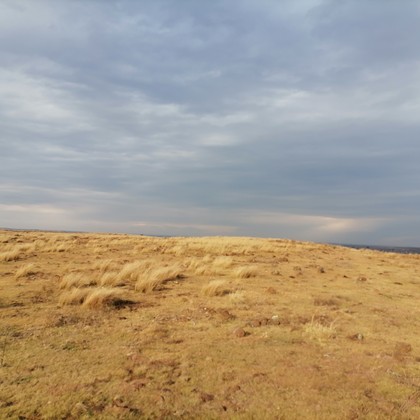
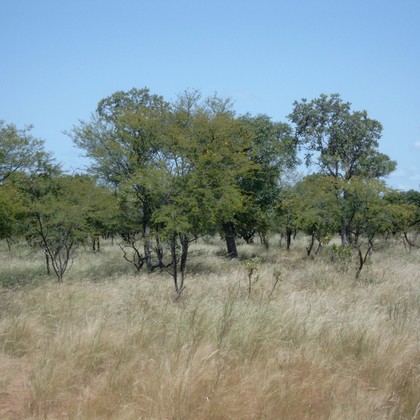
Short, dry grassland and open plains with plenty of bare ground, overgrazed pasture, the edges of salt pans and cultivation. In East Africa often on black-cotton soil and in open acacia savanna, usually in small groups or flocks.
Where the bird is most at home, classified by the vegetation units of southern Africa.
Range and movements
Within the region known only as a vagrant or rare borderline visitor in the extreme north-east of Zambia and northern Malawi, adjoining the Tanzanian population. Beyond, in Kenya, Tanzania and eastern Uganda, north to southern Ethiopia.
How and when to look
Only to be expected on dry, open plains in the far north of Malawi and Zambia, especially near the Tanzanian border. Check groups of sparrow-larks there for a brown crown and a grey-brown back; describe and photograph any bird, as the species is barely documented in the region.
Conservation status
Not threatened; common in East Africa, where it benefits from short-grazed grassland. For the area covered by this guide the species is significant only as a rare visitor.
Scientific name
Eremopterix leucopareia | (Fischer & Reichenow, 1884)
Fischer & Reichenow described the species in 1884 as Coraphites leucopareia; because it was later moved to another genus, the author and year stand in brackets. The genus Eremopterix was introduced in 1836 by Kaup. Eremopterix comes from the Greek erēmos, 'desert', and pterux, 'wing' — birds of dry, open country. leucopareia comes from the Greek leukos, 'white', and pareia, 'cheek' — for the male's white cheeks. The specimen the first description was based on came from Little Arusha, northern Tanzania.