All species › Passerines › Bushshrikes › Gabela Bushshrike
Gabela Bushshrike | Laniarius amboimensis
Gabelafiskaal | Bubú Angoleño
Gabela Bushshrike is one of the endemics of the Angolan escarpment: a bushshrike with a chestnut crown, blackish upperparts and bright white underparts. It lives in the wooded hills around Gabela and Kumbira, where most of the original forest has disappeared under coffee and farming. Its status as a species is still debated; it is sometimes treated as a subspecies of Lühder’s Bushshrike.
No photograph of a living wild bird of this species with a suitable Creative Commons licence exists. Do you have one that meets the rules? Send it in.
Voice
Its best-known sound is a haunting, reverberating whorrrrr, low and vibrating, coming from dense cover. It also has a range of clear whistles, nasal calls and hard clicks, often in duet between the pair. The repertoire overlaps widely with that of Braun’s Bushshrike.
Recording: Ken Behrens — CC BY-NC-SA 4.0 · converted to mono · xeno-canto
Identification
17–19 cm. The crown and nape are warm chestnut; the back, wings and tail are blackish, with a prominent white stripe along the wing. The entire underparts are white, at most with a faint creamy tinge on the flanks and undertail coverts. The bill is heavy, black and hooked, and the eye is dark. The sexes are nearly alike. Juveniles are browner above and finely barred below. It moves low and skulking through dense undergrowth.
Confusion species
Braun’s Bushshrike Laniarius brauni of Cuanza Norte and Uíge, further north, also has a chestnut crown but a vivid orange throat and breast. Tropical Boubou Laniarius major has a black crown and often a soft pink wash on the breast. Black-Backed Puffback Dryoscopus cubla is smaller, with a red eye, a black crown and a white rump pad.
Habitat
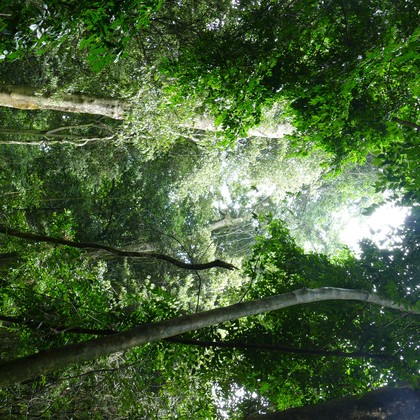
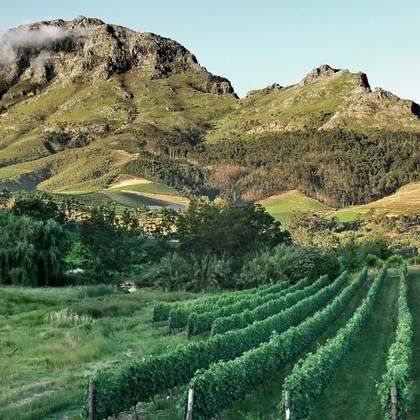
Moist evergreen and secondary forest on the escarpment, roughly between 700 and 1,100 m, including forest edge, overgrown farmland and shaded coffee plantations where a dense understorey remains. It forages on or just above the ground, mainly for insects.
Where the bird is most at home, classified by the vegetation units of southern Africa.
Range and movements
Endemic to western Angola: the Cuanza Sul escarpment, especially around Gabela, Kumbira, Conda and Seles in the old Amboim district, with a few sites slightly further south. It does not occur outside Angola.
- Resident
- dark = core range, pale = thinly spread
How and when to look
Year-round. Kumbira Forest near Conda is the best-known site, together with other escarpment endemics. Listen in the early morning for the reverberating call and wait by a dense patch of undergrowth beside a track; the white underparts stand out well in the gloom once the bird shows itself.
Conservation status
Endangered. The range is small and the escarpment forest is disappearing fast through clearance for farming, charcoal and the removal of undergrowth in old coffee plantations. The species tolerates some disturbance, but not complete clearance of the shrub layer. There is no formal protected area.
Scientific name
Laniarius amboimensis | Moltoni, 1932
Moltoni described the species in 1932 and placed it straight away in the genus where it still stands. The genus Laniarius was introduced in 1816 by Vieillot. Laniarius comes from the Latin lanius, 'butcher', the same root as for the true shrikes — for the hooked bill and the habit of impaling prey on thorns. amboimensis refers to Amboim, the district in western Angola where the species occurs. The specimen the first description was based on came from Amboim, Angola.