All species › Passerines › Sparrows › Great Sparrow
Great Sparrow | Passer motitensis
Roestmus | Gorrión Grande
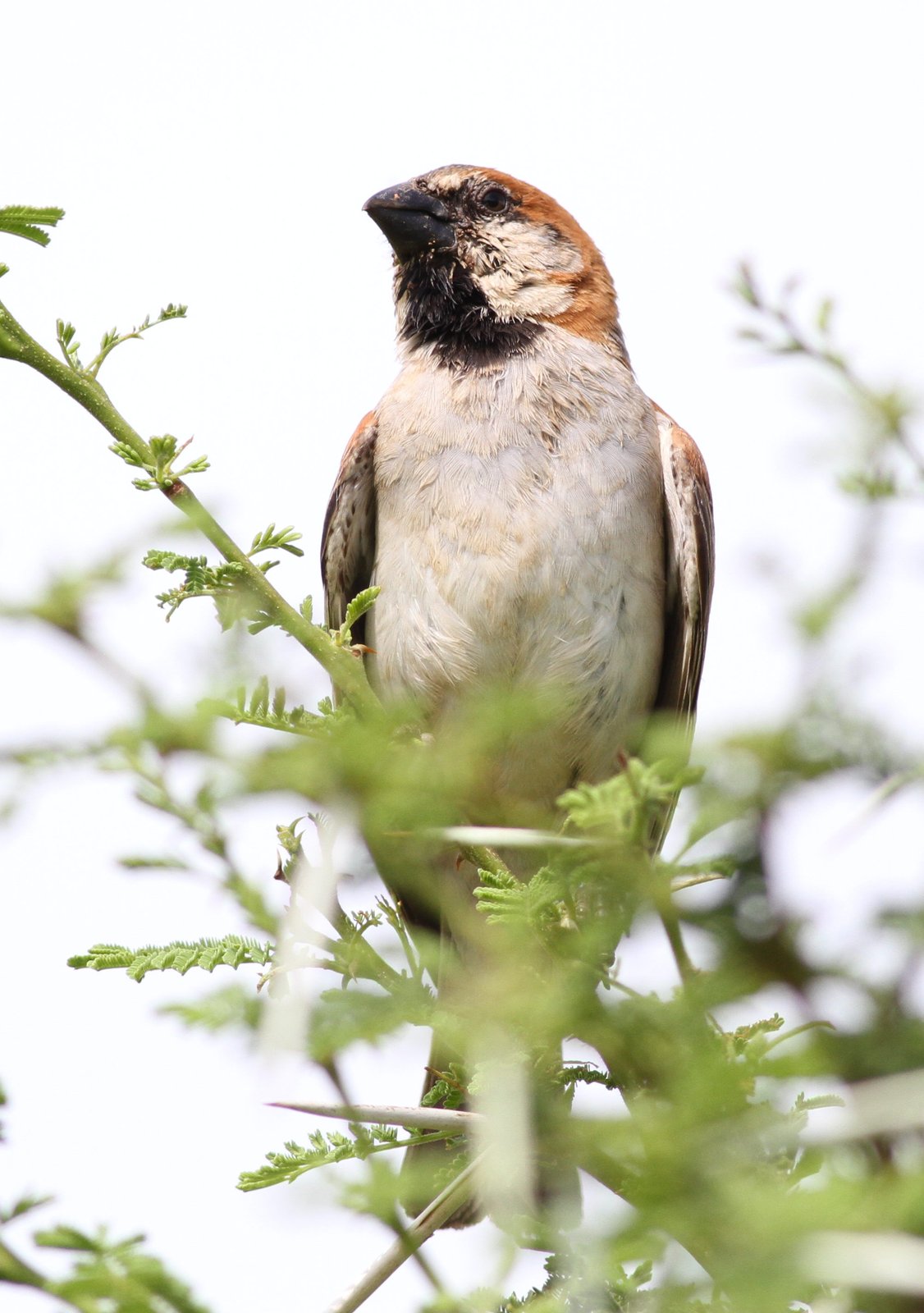
The Great Sparrow is a large, shy sparrow of dry acacia savanna, the male with a grey crown, a rufous band from eye to nape and a chestnut back. It resembles a big, brightly coloured House Sparrow, but mostly avoids human habitation and lives in pairs in open thornveld.
Click a thumbnail to switch the photo above.
Voice
A deep, full chirrup and cheerp-cheerp, lower and fuller than in House Sparrow, repeated slowly as song from a bush. Alarm is a churring churrrr.
Recording: Niall Perrins — CC BY-NC-SA 4.0 · shortened to the first 60 s, mono · xeno-canto
Identification
15 to 16 cm, larger and heavier-billed than House Sparrow. The male has a grey crown and nape, a broad rufous band running from behind the eye to the nape and over mantle and shoulders, black lores and a small black throat patch. The cheeks are greyish-white, the underparts pale grey to white. The back is bright chestnut streaked black, the rump rufous, the wing with a white wingbar. The female has a grey crown, a paler rufous band behind the eye, a pale eyebrow and a grey rather than black throat. The bill is black in the male, horn-coloured in the female. Juveniles resemble the female.
Confusion species
Male House Sparrow (Passer domesticus), an introduced species, is smaller, with a browner band behind the eye, a duller brown back and a larger black bib, and is tied to buildings. Cape Sparrow (Passer melanurus) has a black head with a white C-band in the male and, in the female, a grey head without a rufous band. Southern Grey-Headed Sparrow (Passer diffusus) has a wholly grey head without black. Size, the bright rufous head band and open savanna habitat together are decisive.
Habitat
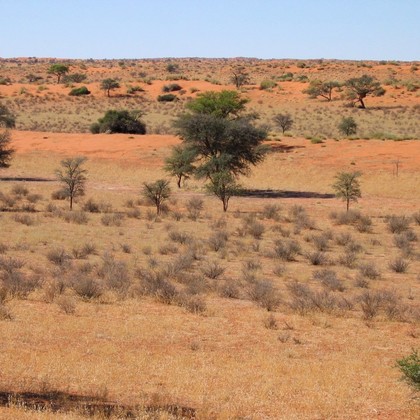
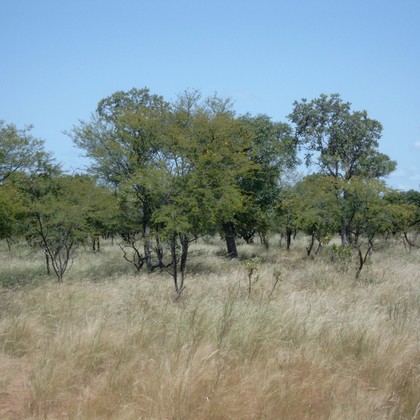
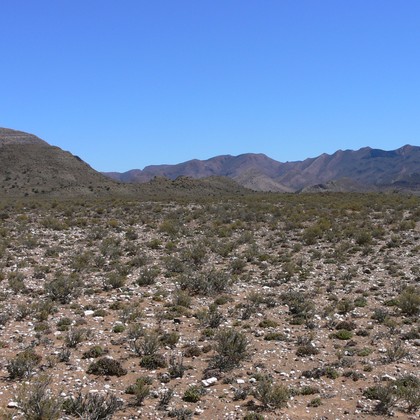
Dry acacia savanna and Kalahari thornveld with scattered trees, often near waterholes and dry riverbeds, also Nama Karoo with thorn trees. It lives in pairs or small groups and forages on the ground for seeds and insects; it sometimes visits camps and farmyards, but far less than other sparrows. It builds a large, untidy ball of grass with a side entrance in a thorn tree.
Where the bird is most at home, classified by the vegetation units of southern Africa.
Range and movements
Within the region in south-western Angola, northern and central Namibia, most of Botswana except the north and north-east, south-western Zimbabwe, and in South Africa in the Northern Cape, North West Province, western Limpopo and the north-western Free State. Not found outside the region: closely related sparrows of East and north-east Africa are usually treated as separate species.
- Resident
- Summer visitor (c. Oct–Mar)
- Winter visitor (c. Apr–Sep)
- Passage (Mar–Apr, Oct–Nov)
- dark = core range, pale = thinly spread
How and when to look
Best at waterholes in the Kgalagadi Transfrontier Park, the Central Kalahari and Etosha, where pairs come to drink in the hottest hours. A ‘House Sparrow’ far from buildings in open thornveld always deserves a second look. Check the grey crown, the broad bright rufous band and the larger size.
Conservation status
Not threatened. Fairly common in dry savanna, but scarcer than Cape and Southern Grey-Headed Sparrows. There is no evidence of decline; at waterholes in protected areas it is locally common.
Scientific name
Passer motitensis | Smith, 1836
Smith described the species in 1836 and placed it straight away in the genus where it still stands. The genus Passer was introduced in 1760 by Brisson. Passer is the Latin word for 'sparrow'. motitensis refers to Motito, a mission station near Kuruman in the Northern Cape. The specimen the first description was based on came from near Hopetown, Northern Cape, South Africa.