All species › Pelicans, herons and ibises › Ibises and spoonbills › Hadada Ibis
Hadada Ibis | Bostrychia hagedash
Hadada-ibis | Ibis Hadada
The Hadada Ibis is a large, grey-brown ibis best known for its deafening call, from which it takes its name. Originally a bird of wooded riverbanks, over the past century it has spread across much of South Africa and is now a familiar resident of lawns, parks and gardens in towns and cities.
Voice
A loud, harsh, nasal ha-ha-ha-hadada or haa-haa-haa, especially on take-off, early in the morning when leaving the roost and in the evening; in towns one of the best-known sounds. Also a single loud haa in alarm.
Recording: Walter Wallner — CC BY-NC-SA 4.0 · converted to mono · xeno-canto
Identification
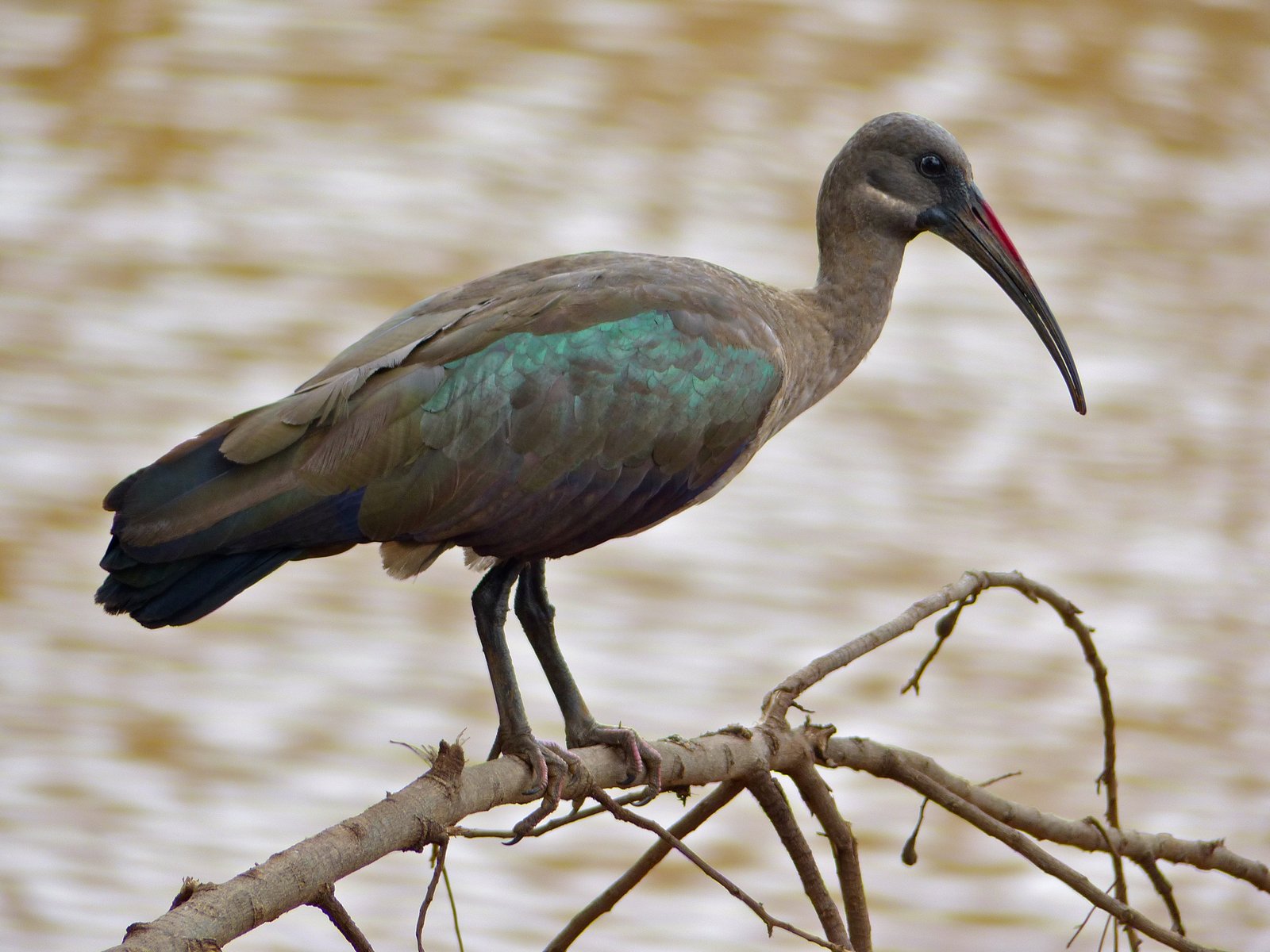
About 76 cm, heavily built with a rather short neck and short legs. The plumage is grey-brown, with a strong green to bronze and purple gloss on the wing coverts. A narrow white stripe runs from the bill base below the eye across the cheek. The bill is long, decurved and dark, with a red ridge along the base of the upper mandible. The legs are dark, with reddish toes in the breeding season. The sexes are alike; juveniles are duller, less glossy and shorter-billed. It flies with fast, stiff wingbeats; the feet do not reach beyond the tail and the broad wings give a stocky silhouette.
Confusion species
The Glossy Ibis Plegadis falcinellus is slimmer and longer-legged, darker chestnut and usually silent. The Southern Bald Ibis Geronticus calvus has a bare red crown, a whitish face and a red bill, and lives in short grassland. In northern Angola the Spot-Breasted Ibis Bostrychia rara is similar, but it is smaller, densely spotted and lives in forest.
Habitat
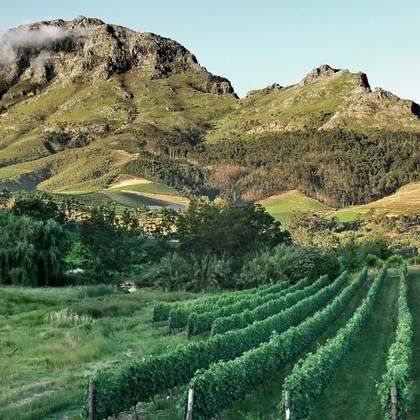
Moist grassland, wooded river and stream banks, marsh edges, lawns, sports fields, parks, gardens, farmland and irrigated land. Forages alone, in pairs or in small groups, probing soft soil for insect larvae, worms, snails and spiders. Roosts and nests in trees; the nest is a flimsy stick platform, often in a tree over water or in a garden.
Where the bird is most at home, classified by the vegetation units of southern Africa.


Range and movements
Widespread in the east and north of the region: South Africa, Eswatini, Lesotho (locally), Mozambique, Zimbabwe, Malawi, Zambia, northern Botswana, north-eastern Namibia and Angola. Since the twentieth century it has spread far to the west, into the Western Cape and parts of the Karoo along rivers and in built-up areas; absent from the driest parts of Namibia and the Kalahari. Beyond the region across much of sub-Saharan Africa, from Senegal to Ethiopia and East Africa.
- Resident
- Summer visitor (c. Oct–Mar)
- Winter visitor (c. Apr–Sep)
- Passage (Mar–Apr, Oct–Nov)
- dark = core range, pale = thinly spread
How and when to look
In cities such as Johannesburg, Durban and Cape Town it is hard to miss: birds call over the rooftops at sunrise. On lawns it allows close views; look in sunlight for the glossy wing patch and the red ridge on the bill.
Conservation status
Not threatened and increasing. It has benefited greatly from tree planting, irrigation and lawns, which have substantially enlarged its range in South Africa. Locally a victim of poisoning and road traffic.
Scientific name
Bostrychia hagedash | (Latham, 1790)
Latham described the species in 1790 as Tantalus Hagedash; because it was later moved to another genus, the author and year stand in brackets. The genus Bostrychia was introduced in 1847 by Gray. Bostrychia comes from the Greek bostrukhion, 'little curl, ornament', a diminutive of bostrukhos, 'curl, tendril'. The name refers to the thin, pendant wattle on the throat of the Olive Ibis. hagedash is the onomatopoeic name that, according to Sparrman, the Cape colonists gave this ibis, after its loud 'haa-haa-haa-de-dah' call. The specimen the first description was based on came from Cape of Good Hope.