All species › Passerines › Cisticolas › Huambo Cisticola
Huambo Cisticola | Cisticola bailunduensis
Huambograszanger | Cistícola de Huambo
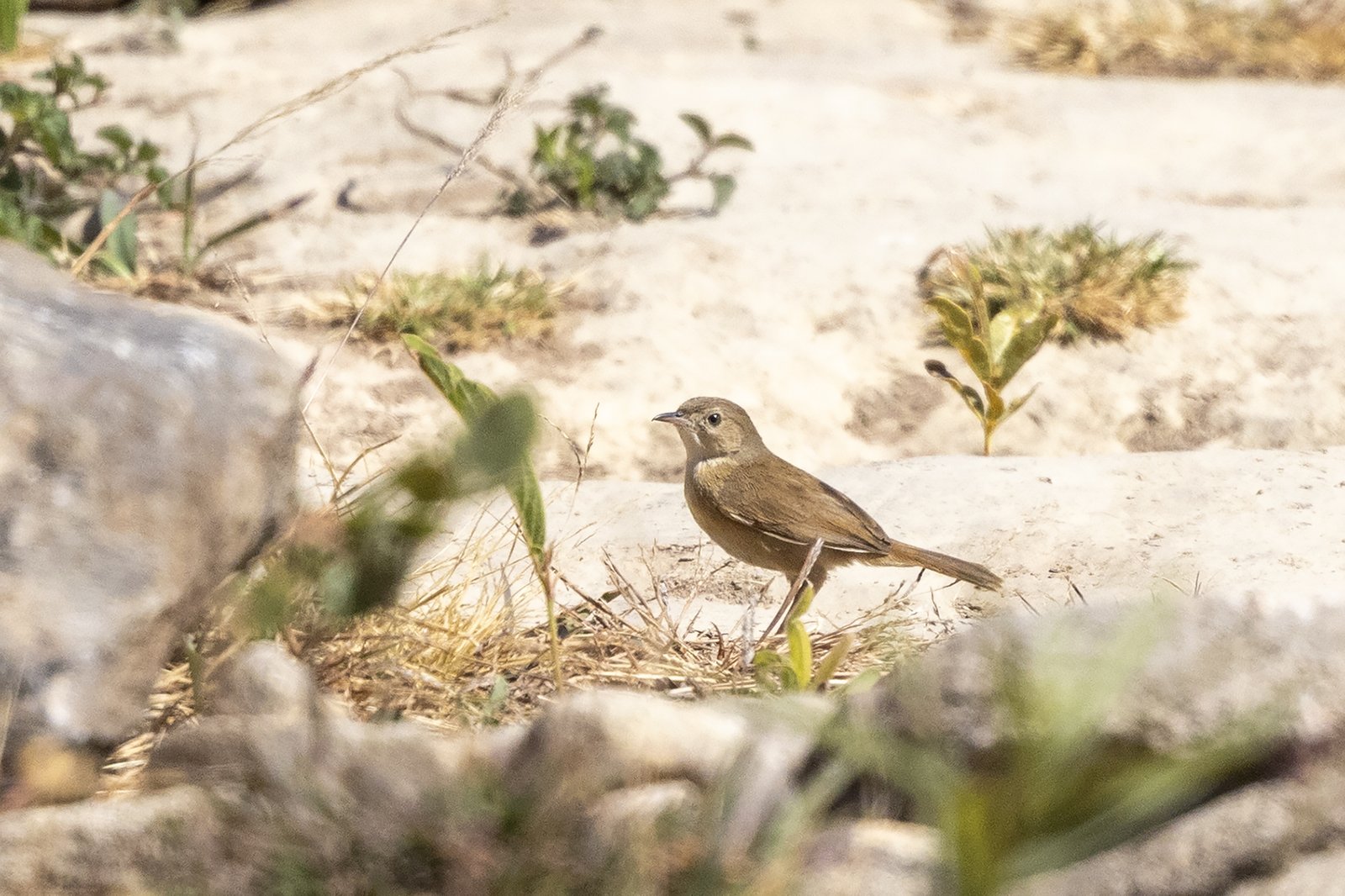
The Huambo Cisticola is a little-known cisticola of rocky, grassy hillsides in the highlands of Angola, where it is endemic. It was long treated as a subspecies of Rock-Loving Cisticola, but differs in song, plumage and ecology and is now recognised as a separate species.
Voice
The voice is poorly documented. The song, from a boulder or grass tuft, consists of repeated whistled and rattling notes that differ clearly from those of Rock-Loving Cisticola; that difference was one of the reasons for the split. When disturbed, a grating cher.
Recording: Derek Engelbrecht — CC BY-NC-SA 4.0 · shortened to the first 60 s, mono · xeno-canto
Identification
13–14 cm, with a long tail often held cocked. Crown and face are rufous, the supercilium pale, the upperparts dark brown and virtually unstreaked, the underparts warm buff to ochre. The tail has a dark subterminal band and pale tips. Compared with Rock-Loving Cisticola it is darker above and redder on the head and face. The sexes are alike. Its behaviour is like that of Rock-Loving Cisticola: sluggish, often in the open on rocks or grass tufts.
Confusion species
Rock-Loving Cisticola Cisticola aberrans does not occur in Angola, so confusion within the range is limited to other cisticolas. Rattling Cisticola Cisticola chiniana has a clearly streaked back, a shorter tail and a rattling song, and lives in woodland rather than on rocks. Neddicky Cisticola fulvicapilla is smaller, with a shorter tail and a plain rufous head without a supercilium. Tawny-Flanked Prinia Prinia subflava is slimmer and greyer, with a yellowish belly, and lives in rank growth. A long-tailed, unstreaked cisticola with a red head on a rocky slope in the Angolan highlands is almost certainly this species.
Habitat
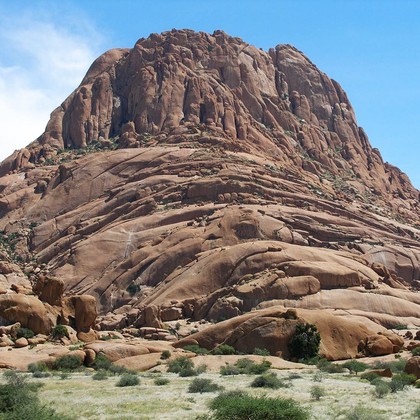
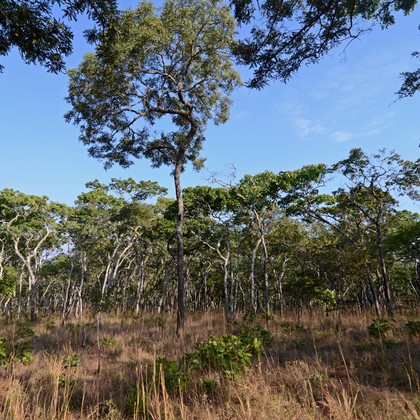
Rocky hillsides, granite outcrops and grassy patches with scattered bushes and trees in the highlands, often at the edges of miombo. Usually in pairs, low among rocks and grass tufts.
Where the bird is most at home, classified by the vegetation units of southern Africa.
Range and movements
Endemic to Angola, in the western and central highlands around Huambo and Bailundo and adjacent parts of the plateau. Found nowhere else.
- Resident
- dark = core range, pale = thinly spread
How and when to look
All year; search rocky hills and granite outcrops around Huambo and Bailundo. As the species was only recently recognised and is little known, sound recordings and photographs with place and date are valuable; report sightings.
Conservation status
Not threatened according to the IUCN. Little is known of numbers and trends; its rocky habitat is little altered, although agriculture is expanding in the Angolan highlands.
Scientific name
Cisticola bailunduensis | Neumann, 1931
Neumann described the species in 1931 and placed it straight away in the genus where it still stands. The genus Cisticola was introduced in 1829 by Kaup. Cisticola combines the Ancient Greek kisthos 'rock-rose' with the Latin colere 'to dwell'. bailunduensis refers to Bailundo in the Angolan highlands, where the first specimen was collected. The specimen the first description was based on came from Chipepe near Bailundo, Angola.