All species › Passerines › Chats and flycatchers › Marico Flycatcher
Marico Flycatcher | Bradornis mariquensis
Maricovliegenvanger | Papamoscas del Marico
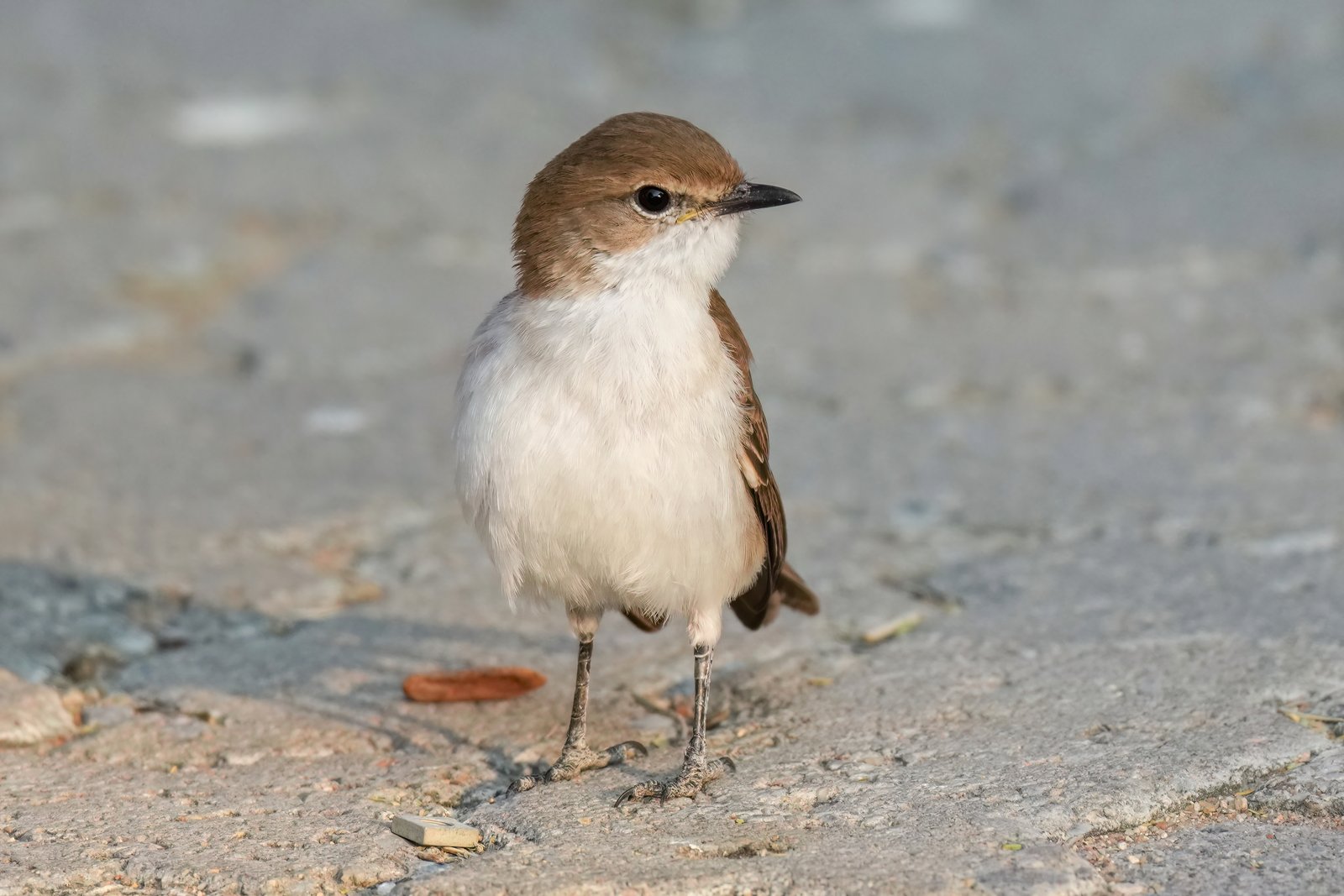
The Marico Flycatcher is the brown-and-white flycatcher of dry acacia country, almost confined to southern Africa. With its sandy-brown upperparts and pure white underparts it is one of the most easily recognised flycatchers of the Kalahari.
Voice
A soft, thin tseep as a contact call, and a short, twittering song of high sibilant notes, tsee-chip-chip-tsee. A dry chrr when disturbed. Not very vocal; mates often sing in alternation.
No recording with a suitable Creative Commons licence is available for this species yet.
Identification
17–18 cm, a fairly large, upright flycatcher. The upperparts are plain sandy to warm pale brown, the underparts pure white from chin to undertail-coverts, sharply demarcated from the brown of head and flanks. Bill and legs are black. The sexes are alike. Juveniles are lightly spotted above and dark-streaked below. It perches on the outer branches of a bush or on a post and drops to the ground to take an insect; often in pairs or family groups.
Confusion species
Pale Flycatcher (Agricola pallidus) is duller grey-brown, with dull white to pale brownish underparts lacking a sharp border, and lives in moister broad-leaved woodland. Chat Flycatcher (Agricola infuscatus) is larger and darker brown overall with a pale wing panel. Spotted Flycatcher (Muscicapa striata) is smaller, greyer and finely streaked on breast and crown, and is only a summer visitor. Young Marico Flycatchers are streaked, but usually stay with their parents.
Habitat
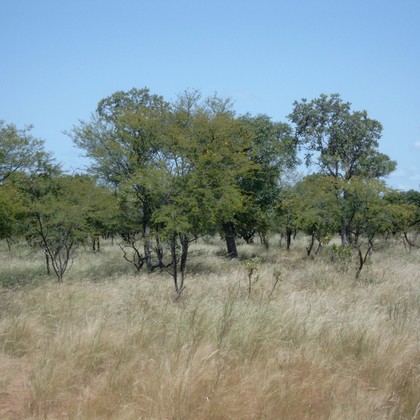
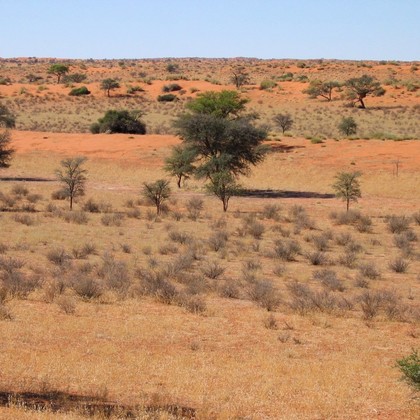
Dry acacia savanna, Kalahari thornveld, open bush savanna and the edges of fields and pasture with scattered thorn trees. It forages mainly on the ground for insects caught from a low lookout perch. The nest is an untidy cup in a thorny tree or bush.
Where the bird is most at home, classified by the vegetation units of southern Africa.
Range and movements
Virtually endemic to the region. Distributed across most of Botswana and Namibia (except the Namib Desert and the moist Zambezi Region), western and northern South Africa (Northern Cape, North West, Limpopo and the western Free State), south-western Zimbabwe and southern Angola. It does not occur outside the region.
- Resident
- Winter visitor (c. Apr–Sep)
- Passage (Mar–Apr, Oct–Nov)
- dark = core range, pale = thinly spread
How and when to look
Common in the Kgalagadi, the Central Kalahari Game Reserve and the Etosha area. Drive slowly through acacia country and watch for brown birds with brilliant white underparts on the outer branches of bushes; there are often two or three together.
Conservation status
Not threatened. Common and widespread, and numbers are stable; locally the species benefits from bush encroachment in overgrazed rangeland.
Scientific name
Bradornis mariquensis | Smith, 1847
Smith described the species in 1847 and placed it straight away in the genus where it still stands. He introduced the genus Bradornis in that same work. Bradornis combines the Greek bradus, 'slow', with ornis, 'bird' — for the unhurried way these flycatchers sit for long periods on a perch. mariquensis refers to the Marico River in north-western South Africa, where the first specimen was collected. The specimen the first description was based on came from Marico River, North West, South Africa.