All species › Passerines › Larks › Melodious Lark
Melodious Lark | Mirafra cheniana
Spotleeuwerik | Alondra Melodiosa
Melodious Lark is a small, short-tailed highveld lark that is noticed almost only by its song. High above the grassland the male flutters on the spot for minutes, filling the air with a stream of imitations of other birds. It is a near-endemic of South Africa.
Voice
A long, rapid stream of chirping notes and imitations of calls and song fragments of other birds, such as pipits, cisticolas, widowbirds and other larks, interspersed with its own chee-chee-chee. The song is given in a high fluttering flight that can last for minutes, sometimes also from a grass tuft or a low post.
Recording: Dawie de Swardt — CC BY-NC-SA 4.0 · converted to mono · xeno-canto
Identification
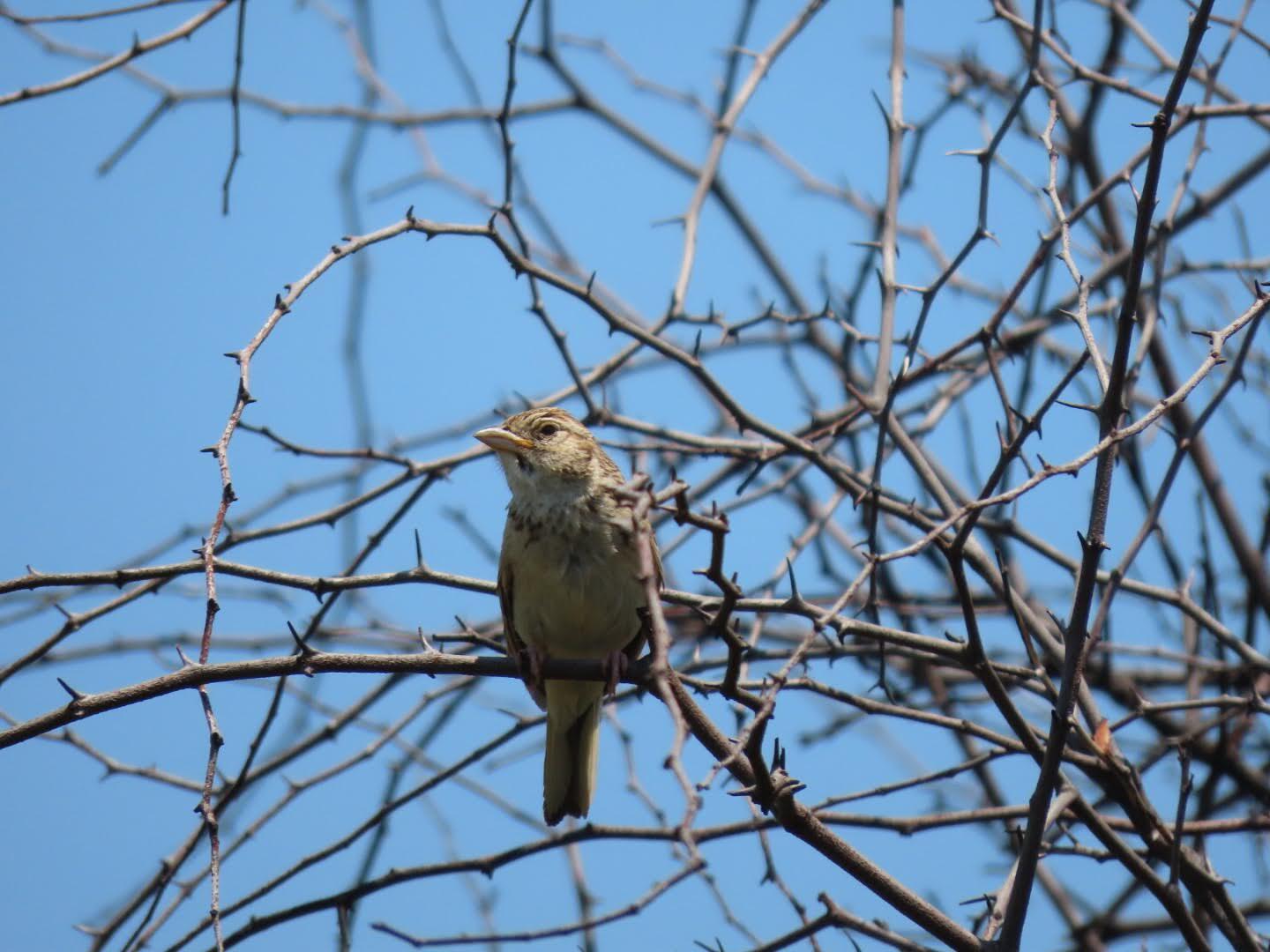
12 cm. Small and stocky, with a short, stout bill and a short tail. The upperparts are brown with black streaking and pale feather edges; the supercilium is broad and white to pale buff. The throat is white, the breast buff with fine dark streaks on the sides, the belly whitish. The wings show a rufous panel, and the outer tail feathers are white, which is unusual among the Mirafra-type larks. The sexes are alike.
Confusion species
Monotonous Lark Mirafra passerina is larger, lives in savanna and sings a monotonous, constantly repeated ditty rather than a varied stream of mimicry. Rudd's Lark Heteromirafra ruddi has a pale crown stripe, an even shorter tail without white, and sings a short whistled phrase. Flappet Lark Amirafra rufocinnamomea and Eastern Clapper Lark Corypha fasciolata clap their wings in display. Cloud Cisticola Cisticola textrix and Wing-Snapping Cisticola Cisticola ayresii also sing high above the same grassland, but are much smaller with thin bills.
Habitat
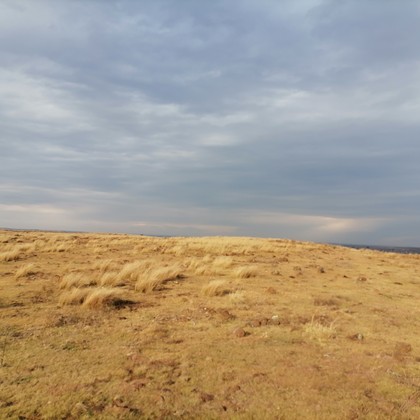
Open, well-developed highveld grassland, especially with red grass (Themeda triandra) and a mix of taller and shorter tufts; also old, overgrown fields and lightly grazed pasture. It avoids heavily grazed and bush-encroached ground.
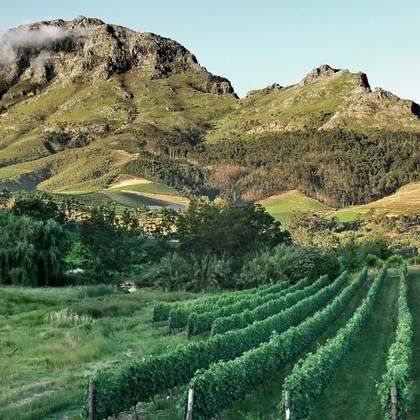
Where the bird is most at home, classified by the vegetation units of southern Africa.
Range and movements
Near-endemic to South Africa: the grasslands of the Free State, Gauteng, Mpumalanga, North West, inland KwaZulu-Natal and the north-east of the Eastern Cape, extending into the Northern Cape. It also occurs in Lesotho, south-eastern Botswana and locally in Zimbabwe.
- Resident
- Summer visitor (c. Oct–Mar)
- dark = core range, pale = thinly spread
How and when to look
From October to February, visit undisturbed highveld grassland in the morning and listen high in the sky. The song sounds like a collection of other birds but comes from a single speck fluttering for a long time in one spot. When it lands, look for the white outer tail feathers and the broad white supercilium.
Conservation status
Not threatened, having previously been listed as Near Threatened. The species is locally common, but highveld grassland is being lost to crop farming, forestry, mining and urbanisation, and overgrazing also makes ground unsuitable.
Scientific name
Mirafra cheniana | Smith, 1843
Smith described the species in 1843 and placed it straight away in the genus where it still stands. The genus Mirafra was introduced in 1821 by Horsfield. The origin of Mirafra is unknown; Horsfield gave no explanation, and according to Jobling it is probably a word from a native language, though not a known Javanese name. cheniana may, according to Jobling, be a place name, after the Chenyane or Tshwênyane Hills north of Zeerust (South Africa); this is not certain. The specimen the first description was based on came from not stated; later given as Latakoo (near Kuruman), South Africa.