All species › Birds of prey › Hawks, eagles and kites › Rufous-Breasted Sparrowhawk
Rufous-Breasted Sparrowhawk | Accipiter rufiventris
Afrikaanse sperwer | Gavilán Papirrufo
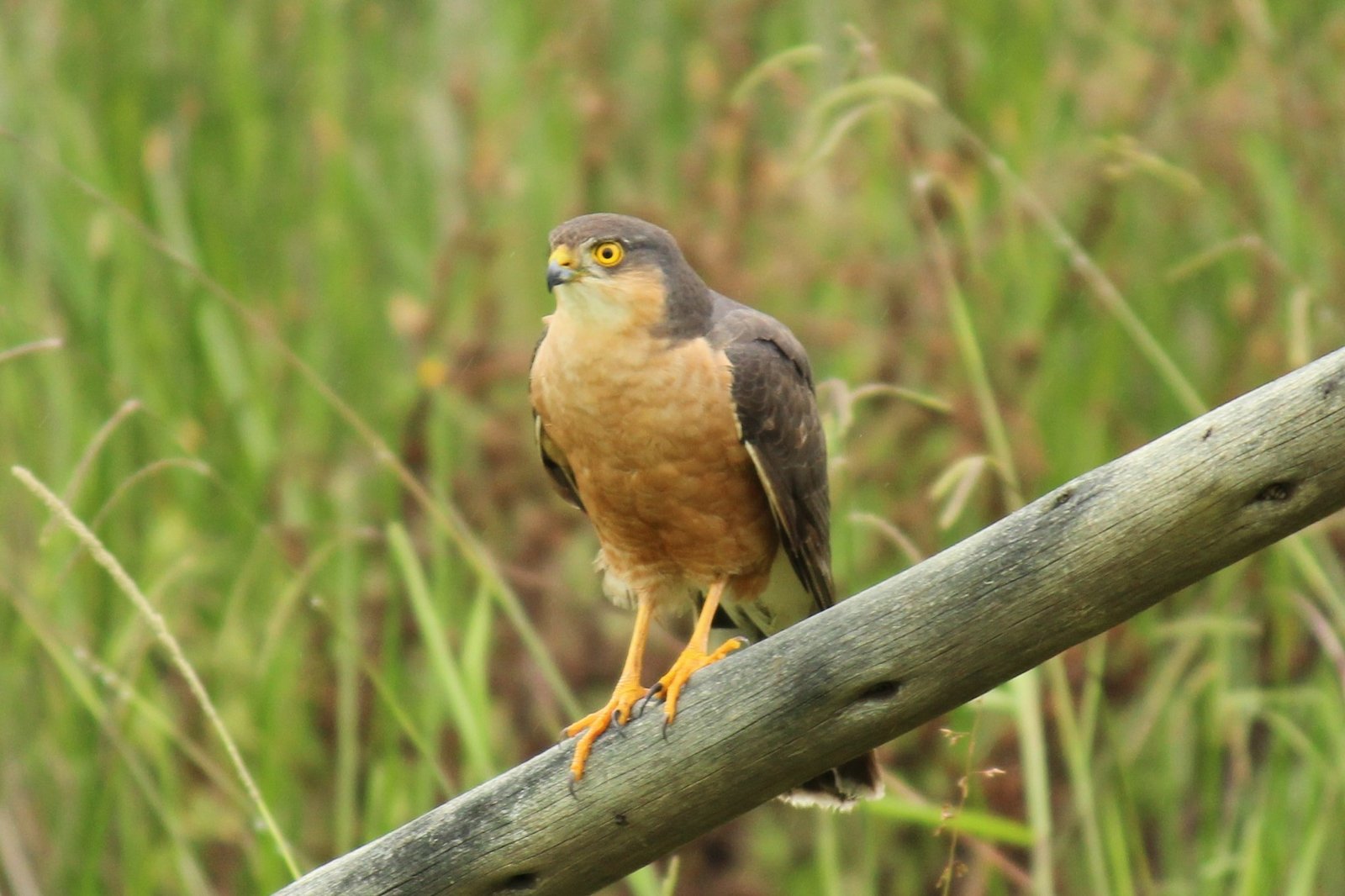
The Rufous-Breasted Sparrowhawk is the southern counterpart of the Eurasian Sparrowhawk: a slim, dark grey bird-hunter with rufous underparts. It belongs to grassland with copses and forest edges in the highlands and has adapted well to pine and eucalyptus plantations.
Voice
Mostly silent. In the breeding season a sharp, repeated kew-kew-kew or chek-chek-chek, often in flight over the nest wood; at the nest the female gives a plaintive weep.
No recording with a suitable Creative Commons licence is available for this species yet.
Identification
33–40 cm, wingspan 58–77 cm. Adults are dark slate-grey above and, including cheeks and throat, plain rufous below, sometimes with faint paler barring; the undertail coverts are paler. The tail is grey with dark bars. Iris, cere and legs are yellow. The female is clearly larger than the male. Juveniles are dark brown above and cream to rufous below with brown streaks on the breast and barring on the flanks, with a pale brown to yellow iris. It flies with fast wingbeats interspersed with short glides, typical of a sparrowhawk.
Confusion species
African Goshawk Aerospiza tachiro is bulkier, white below with rufous bars, has a grey face and lives in dense forest. The rufous juvenile Ovambo Sparrowhawk Accipiter ovampensis has a pale supercilium, a dark eye-stripe and white spots on the tail. Little Sparrowhawk Tachyspiza minulla is much smaller, with a white rump band and white tail spots. Shikra Tachyspiza badia is pale grey with fine rufous bars on a white ground and lives in dry savanna.
Habitat
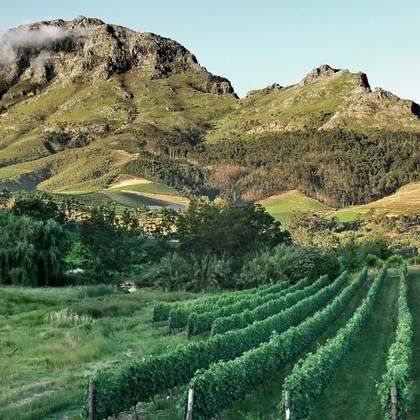
Montane and highveld grassland with copses, forest edges and ravines, fynbos with trees and above all plantations of pine, eucalyptus and poplar, extending into parks and gardens of cities such as Johannesburg and Cape Town. It hunts small birds up to dove size, low along forest edges and hedges or with surprise attacks from cover. It nests high in a tree, often an alien conifer.
Where the bird is most at home, classified by the vegetation units of southern Africa.


Range and movements
In the south and east of the region: South Africa from the Western Cape along the south coast and the Eastern Cape to KwaZulu-Natal, the Free State, Gauteng and Mpumalanga, as well as Lesotho and Eswatini, the Eastern Highlands of Zimbabwe and adjacent Mozambique, the highlands of Malawi and north-eastern Zambia, and the western highlands of Angola. Beyond the region in the highlands of East Africa to Ethiopia and locally in Central Africa.
- Resident
- Summer visitor (c. Oct–Mar)
- Winter visitor (c. Apr–Sep)
- Passage (Mar–Apr, Oct–Nov)
- dark = core range, pale = thinly spread
How and when to look
Search along the edges of plantations and copses in the Drakensberg, the Eastern Cape or the Cape mountains; birds hunt low along the edge and suddenly plunge into a flock of finches or sparrows. In towns, alarm-calling doves and pigeons often betray a hunting sparrowhawk. The combination of dark grey upperparts, plain rufous underparts and yellow eyes is diagnostic.
Conservation status
Not threatened. The planting of alien trees has, if anything, enlarged its habitat in South Africa; locally, felling of plantations during the breeding season causes the loss of nests.
Scientific name
Accipiter rufiventris | Smith, 1830
Smith described the species in 1830 and placed it straight away in the genus where it still stands. The genus Accipiter was introduced in 1760 by Brisson. Accipiter is the Latin word for 'hawk', from accipere, 'to grasp'. rufiventris comes from the Latin rufus, 'rufous', and venter, 'belly' — for the plain rufous underparts. The specimen the first description was based on came from South Africa (no locality stated).