All species › Birds of prey › Hawks, eagles and kites › Ovambo Sparrowhawk
Ovambo Sparrowhawk | Accipiter ovampensis
Ovambosperwer | Gavilán del Ovampo
The Ovambo Sparrowhawk is a medium-sized, rather long-winged sparrowhawk of tall woodland and well-wooded savanna. It hunts almost exclusively small birds, taken in fast pursuit or by a stoop from a great height, and is scarce and unobtrusive everywhere.

Voice
Silent outside the breeding season. Near the nest a series of soft, rising kee-kee-kee-kee calls and a plaintive keep; when disturbed a fast kek-kek-kek.
Recording: Tony Archer — CC BY-NC-SA 4.0 · converted to mono · xeno-canto
Identification
33–40 cm, wingspan 60–75 cm. Adults are dark blue-grey above and, including the throat, finely barred grey and white throughout below, with no rufous. On the upper tail there are short white spots along the shafts of the central feathers, and the uppertail coverts often form a narrow white rump band. The iris is deep red to red-brown, cere and legs orange-yellow to orange-red. There is a rare dark morph, wholly blackish with the same white tail spots and orange legs. Juveniles occur in a pale morph with whitish, finely streaked underparts and a rufous morph with rusty underparts, both with a pale supercilium and a brown iris. The wings are long and rather pointed for a sparrowhawk.
Confusion species
Shikra Tachyspiza badia is smaller, paler grey, barred rufous below and has unbarred central tail feathers. Gabar Goshawk Micronisus gabar has a broad white rump, a plain grey breast and red legs; the black form of Gabar Goshawk has red legs and no white tail spots. Little Sparrowhawk Tachyspiza minulla is much smaller, with rufous flanks and a yellow iris. Juveniles of the rufous morph resemble Rufous-Breasted Sparrowhawk Accipiter rufiventris, which has a plain rufous breast and a yellow iris and lives in highland areas.
Habitat
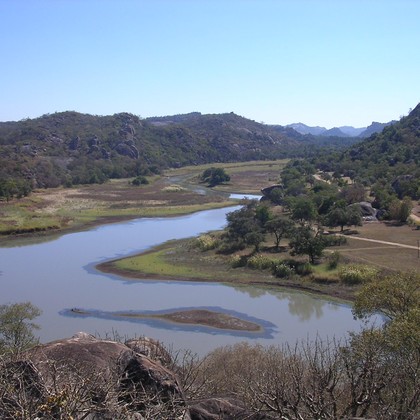
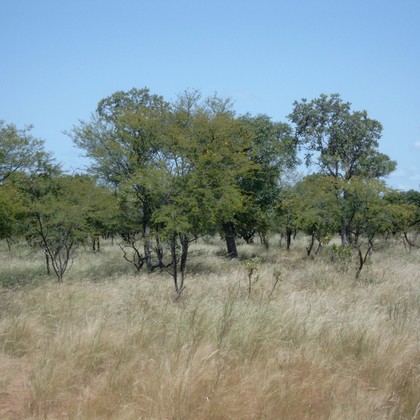
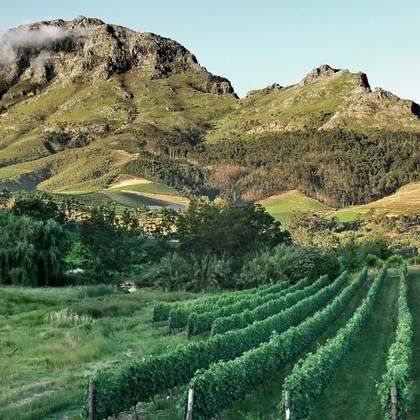
Tall, open woodland and well-wooded savanna, especially where tall trees line rivers; in South Africa increasingly in stands of poplars and eucalyptus on the highveld and around farmsteads. It hunts small birds up to the size of a dove, often from the air after soaring high, sometimes from a concealed perch. It nests in a tall tree, frequently high in an alien eucalyptus or poplar.
Where the bird is most at home, classified by the vegetation units of southern Africa.
Range and movements
Scarce and scattered over much of the region: Angola, Zambia, Malawi, Zimbabwe, western Mozambique, northern and eastern Botswana, northern and central Namibia and, in South Africa, mainly Limpopo, Gauteng, North West, Free State and Mpumalanga. Southern breeders partly move north in winter. Beyond the region scarce and local through sub-Saharan Africa, from Senegal and Ethiopia to Kenya and Tanzania.
- Resident
- Summer visitor (c. Oct–Mar)
- Winter visitor (c. Apr–Sep)
- Passage (Mar–Apr, Oct–Nov)
- dark = core range, pale = thinly spread
How and when to look
The best chance is in the breeding season, August–December, when birds call in low circles above a stand of poplars or eucalyptus. In flight the long, pointed wings for a sparrowhawk and the finely barred grey underparts stand out. At close range the white spots in the centre of the tail and the orange legs give the species away.
Conservation status
Not threatened. Scarce everywhere but stable; in South Africa the planting of alien trees has even extended its breeding range. Poisoning through prey birds and the felling of nest trees are local risks.
Scientific name
Accipiter ovampensis | Gurney, 1875
Gurney described the species in 1875 and placed it straight away in the genus where it still stands. The genus Accipiter was introduced in 1760 by Brisson. Accipiter is the Latin word for 'hawk', from accipere, 'to grasp'. ovampensis refers to Ovamboland in northern Namibia, the land of the Ovambo people, near the type locality on the Okavango. The specimen the first description was based on came from the Okavango River, Namibia.