All species › Passerines › Larks › Rufous-Naped Lark
Rufous-Naped Lark | Corypha africana
Roodnekleeuwerik | Alondra Nuquirrufa
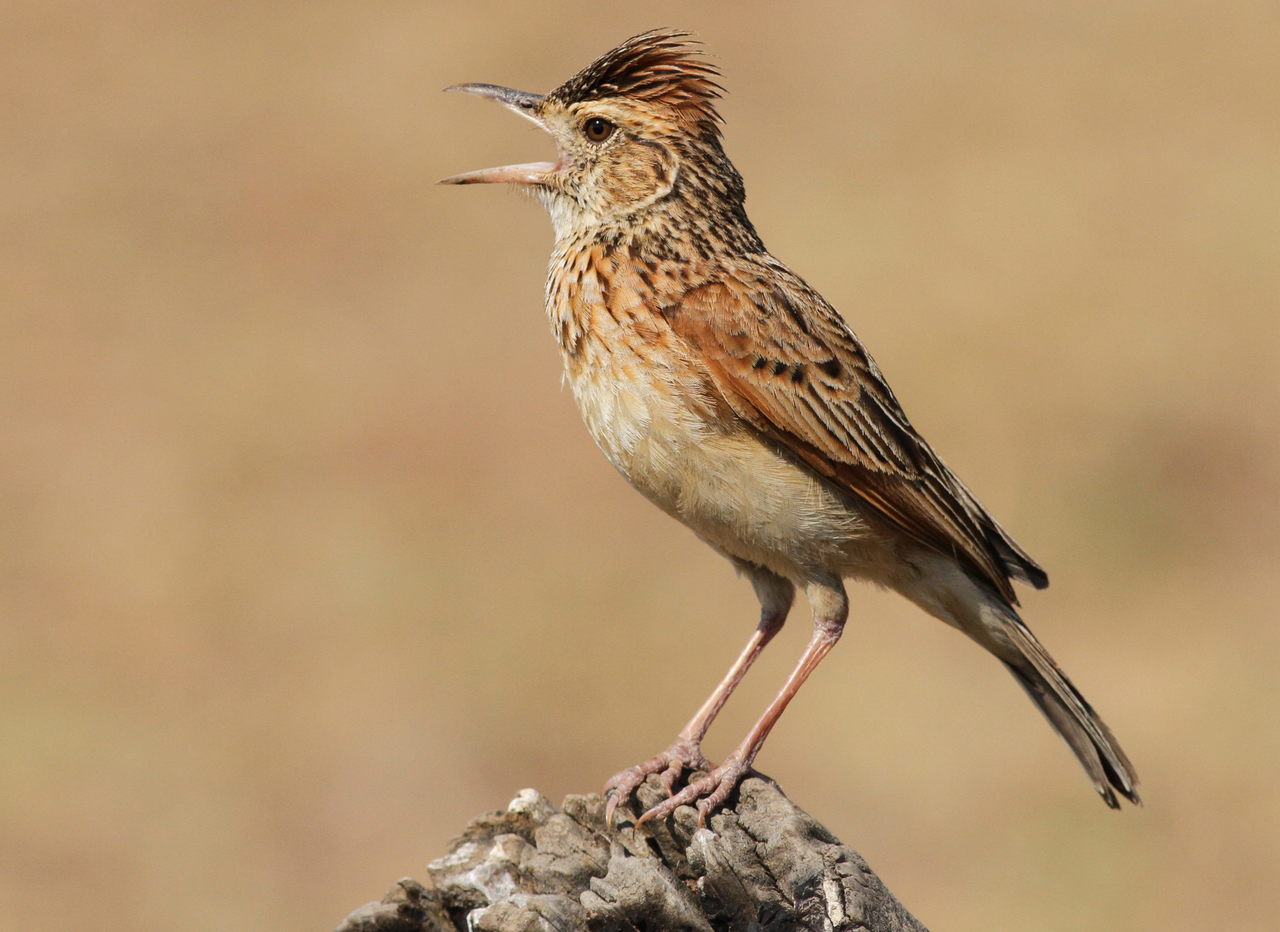
Rufous-Naped Lark is the large, crested lark that in spring sits on a post, termite mound or small bush and endlessly repeats a clear, plaintive whistle. It is one of the most widespread larks in Africa, with many subspecies that differ in colour from region to region.
Voice
The song is a clear, liquid whistle of two or three notes, tsee-tseeoo or tee-tiyoo, repeated at short intervals from a raised perch, often all morning. It is frequently interspersed with a short, dry wing-rattle, prrrt, on take-off or in a brief display flight. It sometimes mimics other species.
No recording with a suitable Creative Commons licence is available for this species yet.
Identification
17–19 cm. A large, stocky lark with a short tail, a strong, slightly curved bill and a short crest raised when singing or excited. The upperparts are brown with heavy dark streaks and pale edges; the nape is rufous, strongly coloured in many subspecies but paler and greyer in the west (Kalahari, Namibia). There is a clear pale supercilium and a dark eye-stripe. The flight feathers are bright rufous, giving a conspicuous red wing in flight. The underparts are buff with a band of dark streaks and spots across the breast. Sexes alike.
Confusion species
Flappet Lark Amirafra rufocinnamomea is smaller, lacks an obvious crest, and does not sing from a post but displays high in the air with bursts of wing-rattling. Eastern Clapper Lark Corypha fasciolata is smaller, finely barred above, and displays with wing-clapping and a rising whistle. Sabota Lark Calendulauda sabota lacks a red wing, has a bold white supercilium and a varied, mimetic song. Angola Lark Amirafra angolensis of the wet grasslands of Angola and north-western Zambia is very similar but darker above and sings in flight.
Habitat
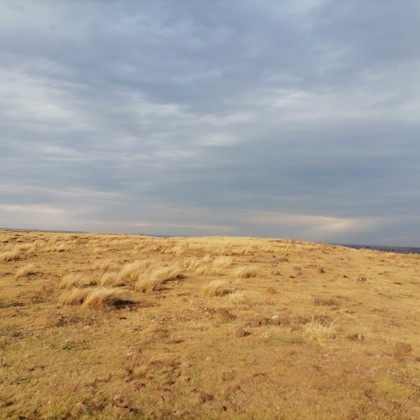
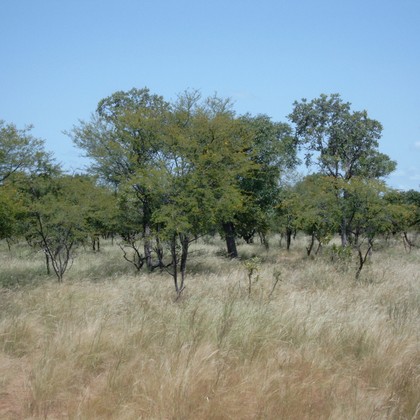
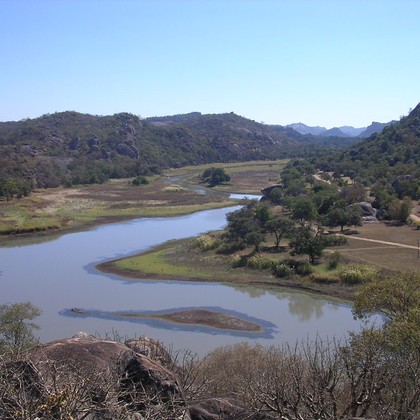
Open grassland with scattered bushes, termite mounds or posts as song perches, grassy clearings in acacia savanna and mixed woodland, and the margins of vleis and farmland. It avoids true desert and dense woodland. It forages on the ground for insects and seeds.
Where the bird is most at home, classified by the vegetation units of southern Africa.
Range and movements
Widespread in the north and east of the region: Angola, Zambia, Malawi, Mozambique, Zimbabwe, northern and eastern Botswana, northern and central Namibia, and in South Africa in Limpopo, Mpumalanga, Gauteng, North West Province, the eastern Free State, KwaZulu-Natal and the north-eastern Eastern Cape; also in Eswatini. Absent from the dry west and south-west. Beyond the region across much of sub-Saharan Africa, from West Africa to East Africa.
- Resident
- Summer visitor (c. Oct–Mar)
- Winter visitor (c. Apr–Sep)
- Passage (Mar–Apr, Oct–Nov)
- dark = core range, pale = thinly spread
How and when to look
In spring and early summer, drive slowly past grassland or open savanna and scan posts, bush tops and termite mounds; the bird sits upright with its crest raised and often stays long on the same perch. The red wing as it flies off confirms the identification. In Angola and north-western Zambia, on grassy floodplains along rivers, watch out for Angola Lark.
Conservation status
Not threatened; common and widespread. Locally declining through conversion of grassland to cropland, afforestation and bush encroachment, but stable overall.
Scientific name
Corypha africana | (Smith, 1836) (GBIF: Hyphaene coriacea)
Smith described the species in 1836 as Mirafra africana; because it was later moved to another genus, the author and year stand in brackets. The genus Corypha was introduced in 1840 by Gray. Corypha derives from the Greek koruphos, an unidentified bird mentioned by Hesychius of Alexandria and usually assumed to be a lark. africana is Latin for 'African', 'from Africa'. The specimen the first description was based on came from eastern Cape Province and the country as far as Latakoo, South Africa.