All species › Passerines › Swallows and martins › Sand Martin
Sand Martin | Riparia riparia
Oeverzwaluw | Avión Zapador
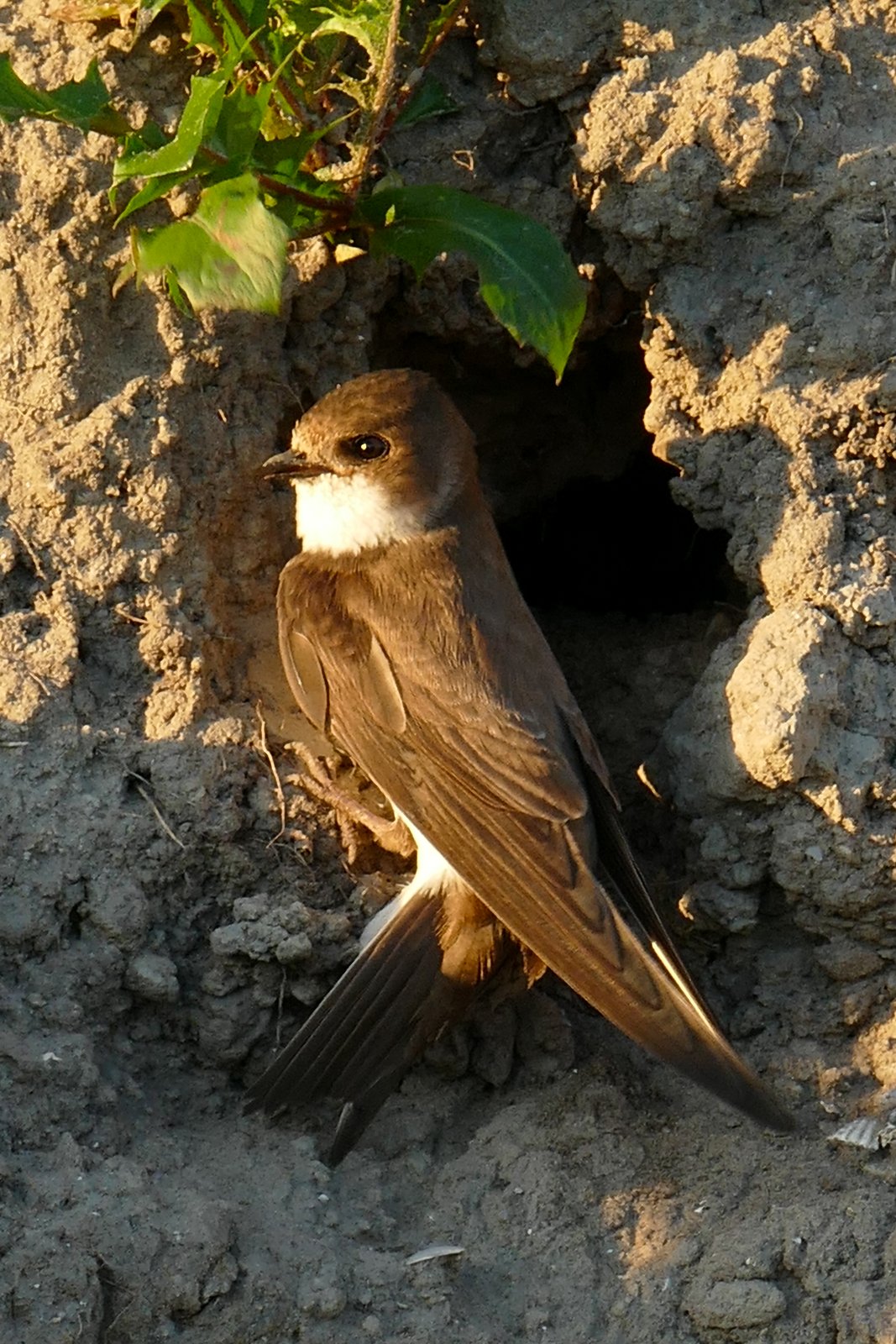
The Sand Martin is a small, brown-and-white Palearctic swallow that spends October to April in the region. Here it is fairly scarce and inconspicuous, usually hunting in loose groups over water and damp grassland, often among Barn Swallows.
Voice
A dry, rasping trrrt or chrr, especially in groups and when gathering at roosts; the call is harsher than the clear twitter of the Barn Swallow.
Recording: Esperanza Poveda — CC BY-NC-SA 4.0 · shortened to the first 60 s, mono · xeno-canto
Identification
12 cm, a small, compact swallow with a short, shallowly forked tail. The upperparts are plain earth-brown, with no pale rump. The throat and underparts are white, with a sharply defined brown breast band that often extends slightly downwards in the centre. The underwing is dark brown and contrasts with the white belly. The sexes are alike; juveniles have pale fringes on the upperparts. The flight is fast and fluttering, with short, stiff wingbeats and much jinking low over water.
Confusion species
Brown-Throated Martin Riparia paludicola lacks a breast band: the throat and breast are plain grey-brown and merge gradually into the white belly, or the whole underside is brown. Banded Martin Neophedina cincta is clearly larger, with a short white supercilium, a white underwing and a broad breast band, and flies more slowly. Large Rock Martin Ptyonoprogne fuligula is larger and plain brown below, with white spots in the spread tail. Juvenile Barn Swallows Hirundo rustica have a dark breast band but blue-black upperparts and a pale buffy throat.
Habitat
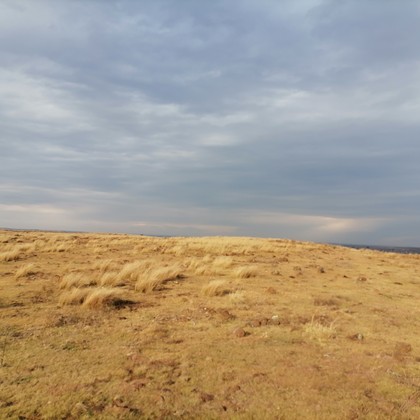
Over rivers, dams, pans, vleis and flooded grassland, and over fields and pastures near water. It often roosts with Barn Swallows in reedbeds. It hunts low for small flying insects, especially midges and flies emerging over the water. It does not breed in the region.
Where the bird is most at home, classified by the vegetation units of southern Africa.

Range and movements
Widespread but scarce across the north and east of the region: Angola, Zambia, Malawi, Mozambique, Zimbabwe, northern Botswana (Okavango and Chobe) and north-eastern Namibia; in South Africa mainly in Limpopo, Mpumalanga, Gauteng, KwaZulu-Natal and the eastern Free State, rare in the west and south-west. It breeds in Europe, Asia and North America and winters in sub-Saharan Africa, South America and southern Asia.
- Resident
- Summer visitor (c. Oct–Mar)
- Passage (Mar–Apr, Oct–Nov)
- dark = core range, pale = thinly spread
How and when to look
From November to March; look for it in the evening among the Barn Swallows that gather over reedbeds and dams, for example on the Nyl floodplain, along the Zambezi or in the Okavango. Look for a small brown swallow with a white throat and a clean breast band: that combination rules out every other brown martin in the region.
Conservation status
Not threatened. The world population is very large, although European numbers fluctuate strongly with conditions in the Sahel. Numbers in the region are small and variable; the loss of vleis and reedbed roosts may play a local role.
Scientific name
Riparia riparia | (Linnaeus, 1758)
Linnaeus described the species in 1758 as Hirundo riparia; because it was later moved to another genus, the author and year stand in brackets. The genus Riparia was introduced in 1817 by Forster. Riparia comes from Latin riparius 'of the riverbank', from ripa 'riverbank', after the nest burrows these martins dig in steep banks. The specific name repeats the genus name. The specimen the first description was based on came from Sweden.