All species › Pelicans, herons and ibises › Herons and bitterns › Western Cattle Egret
Western Cattle Egret | Ardea ibis
Koereiger | Garcilla Bueyera
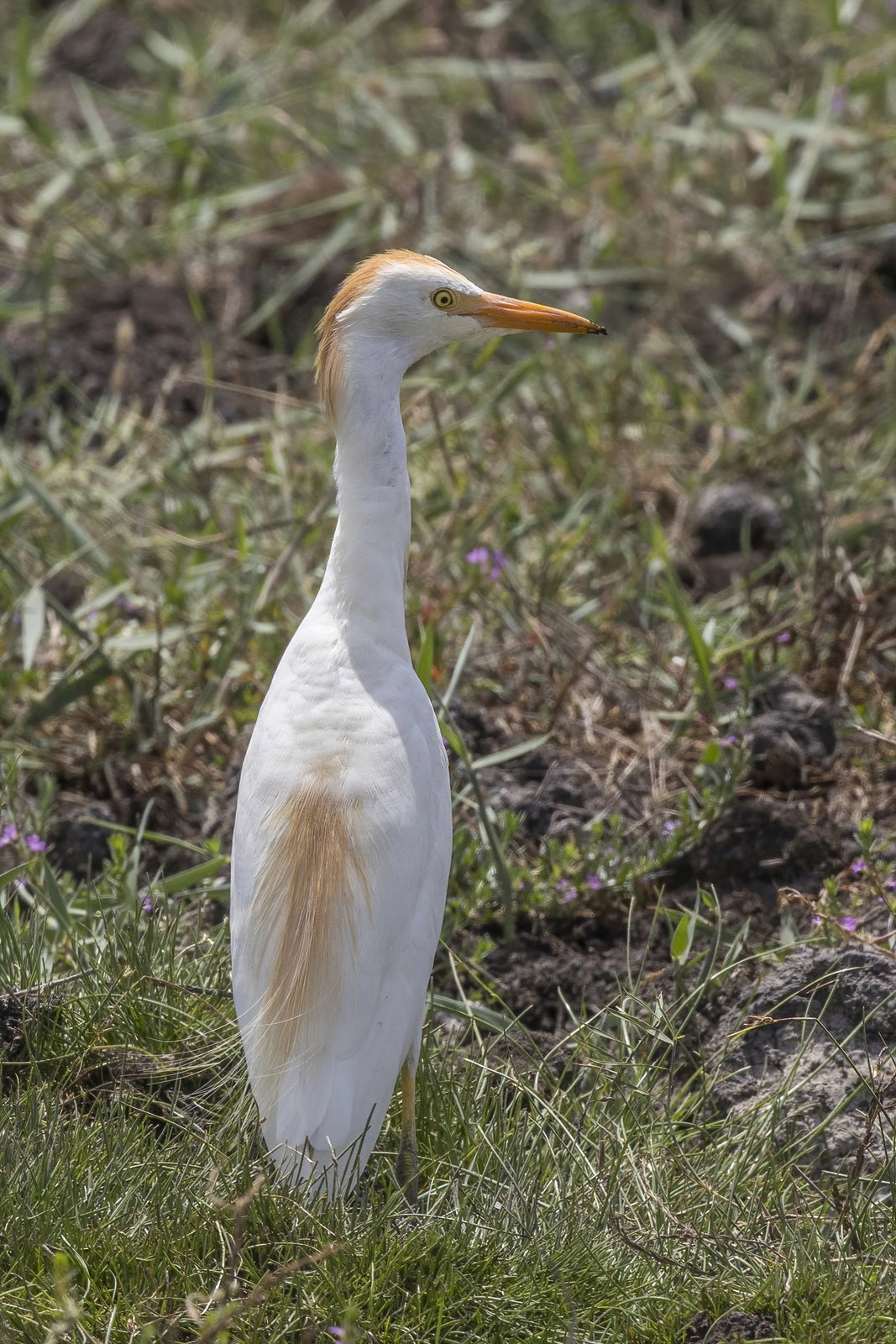
The Western Cattle Egret is a small, stocky white egret that finds most of its food on dry land, beside grazing cattle and game, behind tractors and on lawns. Originally an African bird, it colonised South Africa and the Cape on its own during the twentieth century, and later the Americas as well.
Voice
Usually silent away from colonies. At colonies and roosts a hoarse, cackling rik-rak or kok and various croaking sounds.
No recording with a suitable Creative Commons licence is available for this species yet.
Identification
About 54 cm, white, with a short neck, rounded head and a short, thick yellow bill with a feathered jowl beneath the jaw. The legs are yellowish to greenish brown, black in juveniles. In breeding plumage the crown, breast and mantle are washed warm buff, and bill, lores and legs are briefly red or orange-red. The sexes are alike. It flies in tight flocks with quick wingbeats and retracted neck, and in the evening in long lines to the roost.
Confusion species
Yellow-Billed Egret Ardea brachyrhyncha is much larger, with a longer neck and a longer, slimmer bill. Little Egret Egretta garzetta is slimmer, with a thin black bill and yellow toes. Squacco Heron Ardeola ralloides looks brownish at rest but shows white wings in flight; note the brown back and black-tipped bill.
Habitat
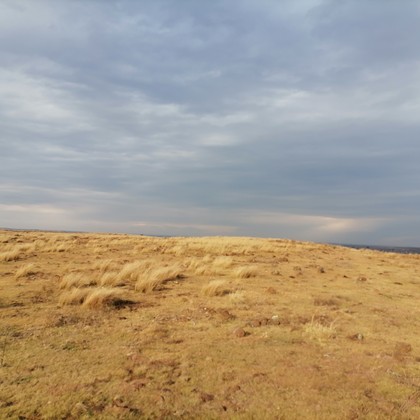
Grassland, pasture, farmland, lawns, sports fields and rubbish dumps, wherever large grazers or machinery flush insects; also with elephants and buffalo in game reserves. It eats mainly grasshoppers and other insects, as well as frogs and lizards. It breeds and roosts colonially in trees or reeds over water, sometimes in the middle of towns and villages.
Where the bird is most at home, classified by the vegetation units of southern Africa.


Range and movements
Common throughout almost the entire region, from Angola and Zambia to the Cape, including Lesotho and Eswatini; scarce in the Namib and the driest parts of the Karoo. After breeding, some birds from the south and the Highveld move to Central Africa. Beyond the region throughout Africa, southern Europe and the Middle East, and since the nineteenth and twentieth centuries in North and South America.
- Resident
- Summer visitor (c. Oct–Mar)
- Winter visitor (c. Apr–Sep)
- Passage (Mar–Apr, Oct–Nov)
- dark = core range, pale = thinly spread
How and when to look
Easy to find beside grazing cattle or a tractor ploughing a field. The most conspicuous sight is the evening flight, when hundreds to thousands of birds stream in lines to a regular roost tree. In spring look for the buff breeding plumes.
Conservation status
Not threatened; one of the commonest herons in the world. In southern Africa it has increased greatly with the spread of livestock farming and agriculture. It suffers locally from pesticides used against locusts.
Scientific name
Ardea ibis | Linnaeus, 1758
Linnaeus described the species in 1758 and placed it straight away in the genus where it still stands. He introduced the genus Ardea in that same work. Ardea is the Latin word for 'heron'. ibis is a Latin and Greek word that originally referred to the sacred ibis and was applied to this egret in error. The specimen the first description was based on came from Egypt.