All species › Passerines › Bulbuls › Yellow-Bellied Greenbul
Yellow-Bellied Greenbul | Chlorocichla flaviventris
Geelborstbuulbuul | Bulbul Pechiamarillo
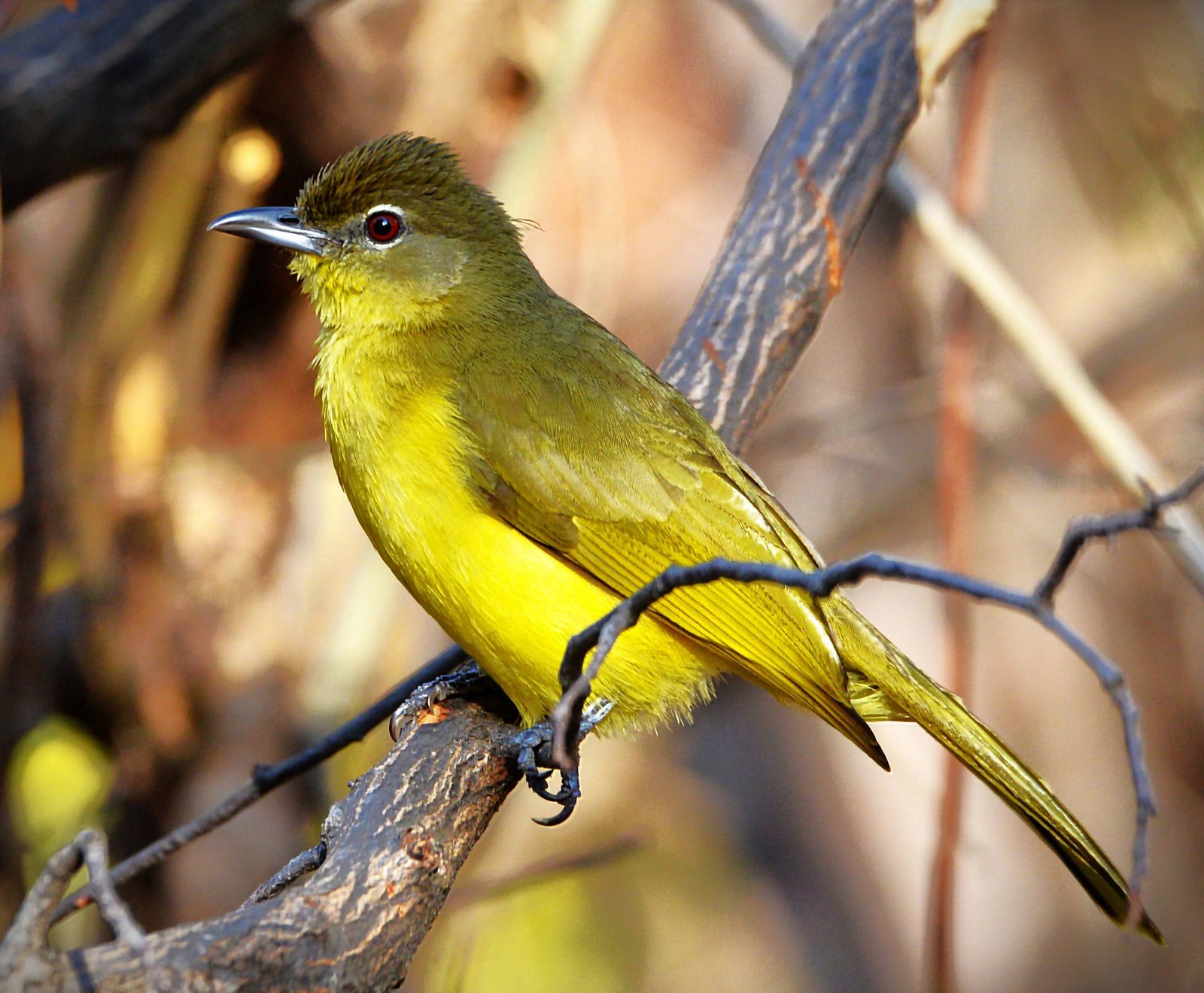
Yellow-Bellied Greenbul is the most widespread and best-known large greenbul in the region: a brownish-olive bird with bright yellow underparts that moves in pairs or family groups through dense riverine forest and thicket. It is heard more often than seen; its nasal, plaintive call belongs to almost every patch of dense bush in the east and north.
Voice
A nasal, plaintive and often repeated nyaah, heard all year round, and a rapid series nyeh-nyeh-nyeh. Groups perform a loud, untidy chorus of nasal and grating notes. The song is a short series of rather stuttering, rising notes, chuk-chuk-chik-churr.
Recording: African Bioacoustics Community — CC BY-NC-SA 4.0 · converted to mono · xeno-canto
Identification
20–23 cm. A fairly large, long-tailed greenbul. The upperparts are brownish olive, the crown slightly darker and greyer. The throat is pale yellow, the rest of the underparts bright yellow with an olive wash on breast and flanks. A conspicuous white half eye-ring above the eye. The eye is reddish brown, the bill blackish, the legs blue-grey. The underwing-coverts are yellow, visible in flight. The sexes are alike; juveniles have a browner eye and duller underparts.
Confusion species
Sombre Greenbul Andropadus importunus is smaller and greener, lacks bright yellow underparts, has a pale eye and keeps higher in the foliage. Terrestrial Brownbul Phyllastrephus terrestris is brown with a white throat and dingy white underparts, and forages on the ground. Yellow-Streaked Greenbul Phyllastrephus flavostriatus is slimmer, with a long thin bill, a grey head and fine yellow streaks on the breast. In north-western Angola, Falkenstein's Greenbul Chlorocichla falkensteini is smaller and greener, with a yellow collar.
Habitat
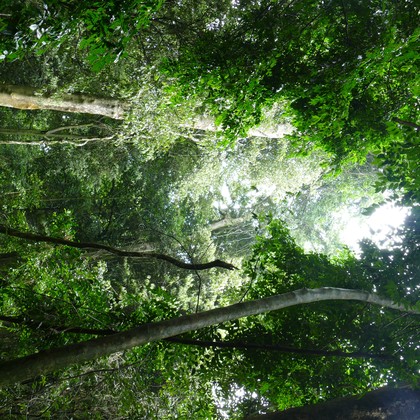
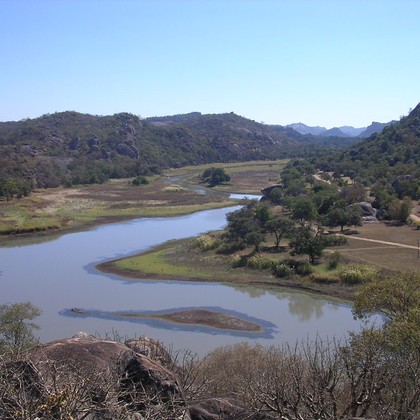
Dense riverine forest, thicket in ravines, coastal and dune forest, dense vegetation on termite mounds, the understorey of dry lowland forest and dense clumps in mixed woodland; also large gardens with thick shrubbery. It keeps to the lower and middle strata, seldom on the ground, and eats mainly insects and fruit.
Where the bird is most at home, classified by the vegetation units of southern Africa.

Range and movements
Widespread in the east and north of the region: in South Africa in Limpopo, Mpumalanga and KwaZulu-Natal south to about the central KwaZulu-Natal coast, further in Eswatini, all of Mozambique, the north, east and Zambezi valley of Zimbabwe, northern Botswana (Okavango, Chobe), north-eastern Namibia (Kavango, Zambezi Region), and widespread in Zambia, Malawi and Angola. Absent from Lesotho and the arid west. Beyond the region north to Tanzania, southern DR Congo and southern Kenya.
- Resident
- Summer visitor (c. Oct–Mar)
- Winter visitor (c. Apr–Sep)
- Passage (Mar–Apr, Oct–Nov)
- dark = core range, pale = thinly spread
How and when to look
All year. The plaintive nyaah from dense riverine forest is usually the first sign; look for the bird in Kruger National Park, in the Zululand dune forests or along the Zambezi. Watch for the white half eye-ring and the yellow underwing as it flies off between the bushes.
Conservation status
Not threatened; common in suitable habitat. It has declined locally through clearing of riverine forest, but holds its own well in gardens and thicket.
Scientific name
Chlorocichla flaviventris | (Smith, 1834)
Smith described the species in 1834 as Trichophorus flaviventris; because it was later moved to another genus, the author and year stand in brackets. The genus Chlorocichla was introduced in 1882 by Sharpe. Chlorocichla comes from the Greek khlōros, 'green, greenish-yellow', and kikhlē, 'thrush' — for the olive-green and yellow plumage. flaviventris comes from the Latin flavus, 'yellow', and venter, 'belly' — for the yellow underparts. The specimen the first description was based on came from near Durban, South Africa.