All species › Passerines › Weavers › Zanzibar Red Bishop
Zanzibar Red Bishop | Euplectes nigroventris
Zwartbuikwever | Obispo de Zanzíbar
The Zanzibar Red Bishop is a small red bishop of the East African coastal lowlands, reaching the region only in the far north-east of Mozambique. The breeding male is the only red bishop with wholly black underparts, from throat to undertail.

Voice
A long, rattling, sizzling song from a grass stem or in display flight, and a hard, dry tek call.
Recording: isaac kilusu — CC BY-NC-SA 4.0 · converted to mono · xeno-canto
Identification
9 to 10 cm, the smallest red bishop. There are no elongated tail feathers: the breeding male is the same length as in non-breeding plumage. The breeding male has an orange-red to scarlet crown, nape, back and rump, a black face and throat, and wholly black underparts including the undertail coverts; wings and tail are dark brown with pale edges, and the bill is black. The female and non-breeding male are streaky brown above and buff below, with fine streaks on breast and flanks, a pale supercilium and a horn-coloured bill.
Confusion species
Southern Red Bishop (Euplectes orix) is larger and has a black forehead, a red throat and upper breast and red undertail coverts. Black-Winged Red Bishop (Euplectes hordeaceus) also has a red crown, but a red throat and breast, black wings and buff undertail coverts. Females and non-breeding birds are practically inseparable in the field from those of other bishops; note the small size and the males in the flock.
Habitat
Marshes, flooded and wet grassland, rank growth and cultivation such as rice fields and sugarcane in the coastal lowlands; outside the breeding season also drier open country, often in mixed flocks with other seedeaters. The breeding male sings from tall grass and puffs out his plumage in display; the nest is a small grass ball woven onto grass stems.
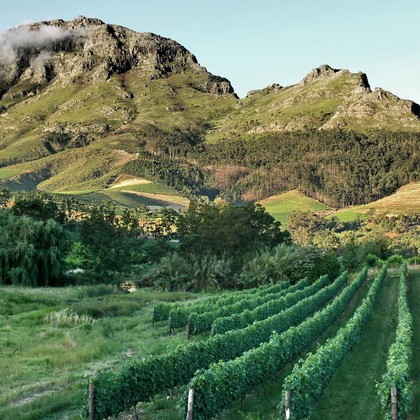
Where the bird is most at home, classified by the vegetation units of southern Africa.

Range and movements
Within the region only in the far north-east of Mozambique, in the coastal lowlands of Cabo Delgado; the southern limit of the range is poorly known. Beyond the region along the coast and in the hinterland of Tanzania and Kenya, including Zanzibar, Pemba and Mafia.
- Resident
- Summer visitor (c. Oct–Mar)
- dark = core range, pale = thinly spread
How and when to look
In north-eastern Mozambique around rice fields and wet grassland near the coast, in the rainy season when the males are in colour. A red bishop with a red crown and black throat and belly is this species; a male with a black forehead and red throat is a Southern Red Bishop.
Conservation status
Not threatened; common in East Africa. In the region a peripheral species with a small and poorly known population.
Scientific name
Euplectes nigroventris | Cassin, 1848
Cassin described the species in 1848 and placed it straight away in the genus where it still stands. The genus Euplectes was introduced in 1829 by Swainson. Euplectes joins Greek eu 'fine, good' to New Latin plectes 'weaver'. nigroventris is Latin for 'black-bellied', from niger, 'black', and venter, 'belly'. The specimen the first description was based on came from Zanzibar (Tanzania).