All species › Primates › Old World monkeys › Barbary macaque
Barbary macaque | Macaca sylvanus
Berberaap | Mona de Berbería
The Barbary Macaque is the only monkey species living wild in Europe and the only macaque outside Asia. It lives in cedar forests and rocky gorges in the Atlas; in addition there is a small population on the Rock of Gibraltar that is strongly influenced by people. The species is listed as Endangered on the Red List.
Tracks
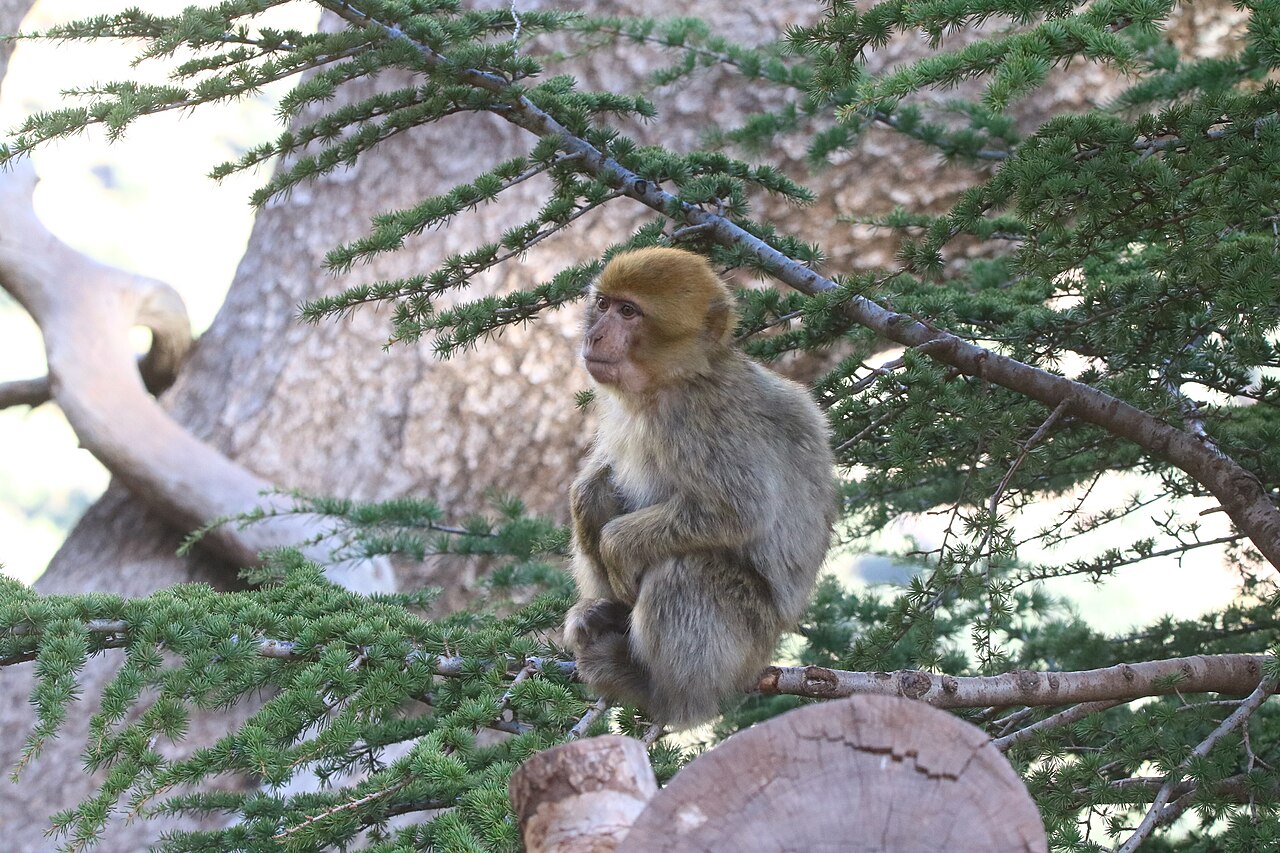
The species leaves signs in the trees. In the cedar forest of the Middle Atlas stripped patches of bark can be found on trunks and heavy branches, up to about two metres above the ground and sometimes all around the trunk, with the bark torn away in strips and tooth grooves in the exposed wood; in winter the monkeys eat the sappy cambium, and a heavily stripped cedar dies. Under the trees lie pulled-apart cedar cones and gnawed acorns, and in clearings overturned stones and small dug pits show where bulbs, roots and insects have been sought. Under a sleeping tree or roost ledge the droppings accumulate: two to three centimetres long, cylindrical and flattened on one side, varying strongly in colour and content with the season: green and fibrous from grass and leaves in spring, granular with acorn cups and seed husks in autumn. On boulders along regular routes lie loose droppings, left while sunbathing. The clearest sign is sound: a troop can be heard at hundreds of metres by shrill alarm barks, grunts and the screams of quarrelling animals, and seen by moving branches in the canopy. In the snow of the Middle Atlas a troop leaves a trail of hand-shaped prints, with four fingers and a clearly divergent thumb, that cannot come from any other animal in the region.
In its habitat
Head close-up

The young
Identification
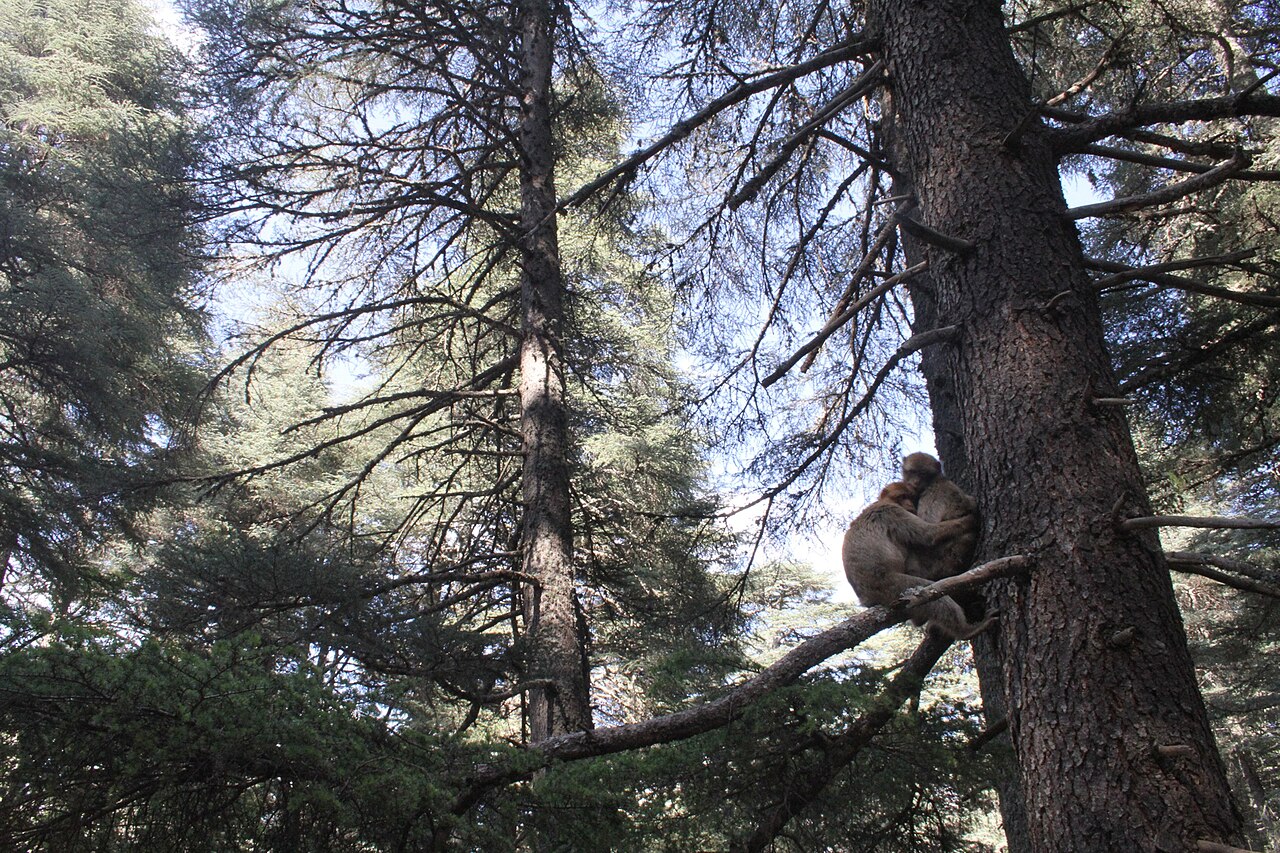
A sturdy, compactly built monkey with a dense, yellowish- to greyish-brown coat, paler on the belly and darker along the back, and a bare pink to flesh-coloured face with forward-facing eyes. The most conspicuous character is the tail: it is reduced to a stump of at most two centimetres and invisible at a distance, so that the animal appears tailless from behind. Males are clearly larger and heavier than females and have a heavier head and shoulders; infants have a darker face and a much woollier coat. In winter, when snow lies in the Middle Atlas, the coat is thick and fluffy and the animal appears more robust; in summer coat it is much slimmer. It walks on all fours with an almost level back, climbs well and spends the night high in a tree or on a rock ledge.
Similar species
No other wild primate occurs in North Africa or Europe; a monkey in Morocco or Algeria is a Barbary Macaque. In Spain, France and North Africa, however, escaped or illegally kept monkeys are regularly found: young Barbary Macaques from smuggling, but also other macaques and guenons. Such animals do not belong to the wild populations; always note the circumstances of a loose monkey outside the known areas. On Gibraltar the species is traditionally called an 'ape' in English, but it is a macaque and not an ape. Other macaques have a distinct tail; only this species is effectively tailless.
Habitat
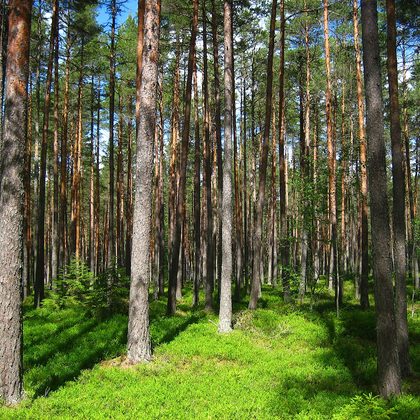
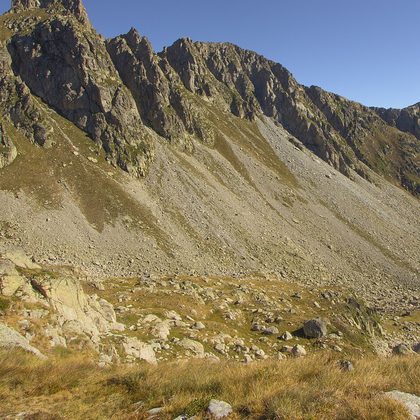
The mountain forest of north-west Africa. The core is the Atlas cedar forest of the Middle Atlas between about 1500 and 2500 metres, with holm oak woodland and mixed oak and fir forest below and alongside, and in the Rif moist broadleaved woodland and maquis. Cliffs, gorges and scree slopes are always part of it, serving as refuge and roost, together with clearings and pastures for foraging. On Gibraltar the species lives in a different habitat: the maquis and rocks of the Upper Rock, with the gardens, walls and viewpoints of the town; this habitat has been shaped by people.
Where the animal is most at home, classified with EUNIS — the European standard for habitats.


Distribution
The species occurs in three places. Most of the population lives in Morocco, with the Middle Atlas as its core area and also the Rif and parts of the High Atlas, and a smaller part in Algeria, mainly in the mountain forests of Kabylia and the Chiffa gorge. In Tunisia the species is extinct. The third place is Gibraltar, where a few hundred animals have lived on the Rock since at least the eighteenth century, in a few troops that are counted, marked and managed by the government. Whether these animals were introduced by people or are the remnant of an old natural population has not been established; genetic research points to Moroccan and Algerian origin. It is the only free-living monkey population in Europe. Spain is the main transit country for the smuggling of young animals to the rest of Europe.
- Native
- dark = core range, pale = thinly spread
Way of life
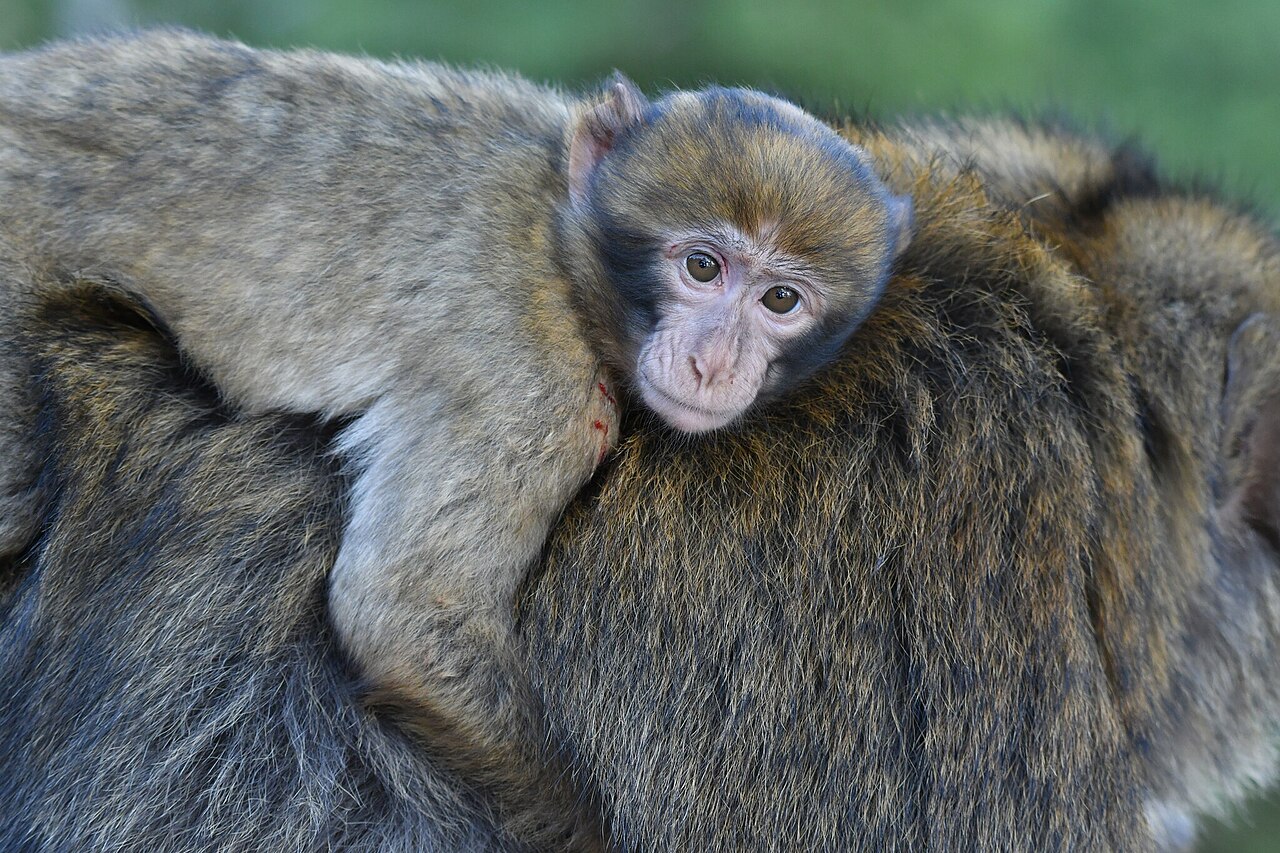
Diurnal and active all year, without hibernation or winter rest; in the Middle Atlas the troops also stay in the snow in January, and among macaques only the Japanese Macaque lives through harsher winters. Barbary Macaques live in troops of ten to a few dozen animals with several adult males and females; females remain for life in the group into which they were born, males change groups. Among monkeys the role of the males with infants is exceptional: they carry, tend and groom infants intensively, including those of other males, and use an infant to reduce tension with other males. The diet varies strongly with the season: grass, herbs, leaves, flowers and young shoots in spring, acorns, cedar seed, berries and fruit in late summer, and roots, bulbs, lichens and bark in winter, supplemented with insects and occasionally a bird's egg. After a gestation of about five and a half months one infant is born in spring and carried for months; in the wild animals reach twenty years and more.
Where and when to look
In the Middle Atlas, around the cedar forest near Azrou and Ifrane, troops can almost always be seen along the road. These animals are used to being fed by tourists, which harms their behaviour, health and survival. Do not feed them, not even once and not even when they come close. To see the species behaving naturally, walk into a stretch of cedar forest in the early morning and search by sound: barking and cracking branches are noticed before the animals themselves. On Gibraltar the Upper Rock is the easiest place in Europe to see monkeys, with the same rule: feeding is prohibited and fined, and bags, glasses and phones must be kept out of reach. Watch for males carrying an infant on their back; this behaviour is characteristic of the species.
Conservation status
Endangered (EN, 2020): an estimated twelve to twenty-one thousand animals remain in Morocco and Algeria, after a decline of more than half within a few decades. The main cause is the decline of the cedar forest: logging, overgrazing by sheep and goats that prevents young trees from establishing, and persistent drought causing Atlas cedar to die over large areas. In addition there is illegal trade: every year young monkeys are taken from the wild and smuggled to Europe as pets, with Spain as the main transit country, and for every infant that arrives several die on the way. Traffic, poisoning and conflicts with herders contribute further. The Gibraltar population is small but stable and actively managed, with contraception, marking and a ban on feeding; it is genetically too small to contribute to the survival of the species, but it is the place where most Europeans see a free-living monkey.
Scientific name
Macaca sylvanus | (Linnaeus, 1758)
Linnaeus described the species in 1758 as Simia Sylvanus; because it was later moved to another genus, the author and year stand in brackets. Macaca comes through Portuguese macaco, 'monkey', from a Bantu language of the Congo region; its further origin is unknown. sylvanus is Latin for 'of the woodland', from silva, 'wood'; it is at the same time the name of Silvanus, the Roman god of woods and fields. The specimen the first description was based on came from Algeria.