All species › Rodents › Mice and rats › Buxton's jird
Buxton's jird | Meriones sacramenti
Meriones sacramenti | Meriones sacramenti
Buxton's Jird (Meriones sacramenti) is a large jird of up to 275 grams, endemic to the narrow belt of dunes and sand fields between northern Sinai and the Negev. The species is tied to loose sand and is listed as Vulnerable on the IUCN Red List. Its habitat is rapidly being built over, cultivated and stabilised.

Tracks
The signs are tied to soft sand. The burrow is dug in loose, deep sandy soil, preferably on the flank of a dune or in a sandy field margin. The entrances lie in clusters, because the animals live in small family groups: an occupied dune can be recognised by several openings within a few metres, each with a fresh spoil fan. In dune sand the trail is easy to follow: a four-footed walking trail with prints two centimetres long, four toes in front and five behind, and at a slow walk a continuous tail drag in the middle. Because of the animal's weight the prints are deep and persist through a still night. Droppings are black, spindle-shaped and four to six millimetres long, in small heaps at the entrances. Feeding signs indicate a leaf-eater: clipped green stems and dug-up roots and bulbs, in spring also gnawed cereal grains along field margins. In Barn Owl pellets the species can be recognised by the large bullae of the skull; because of its weight it occurs more often in Eagle Owl pellets than in those of smaller owls.
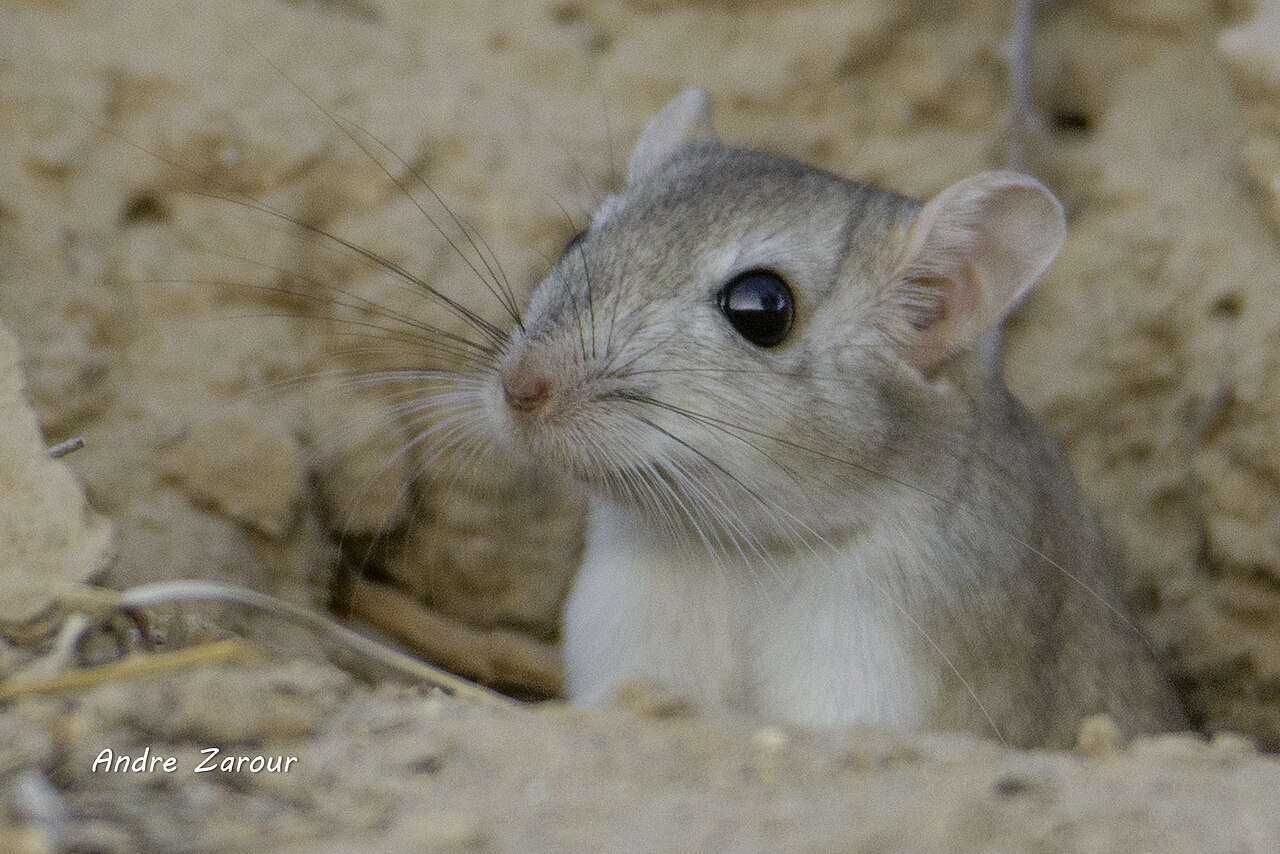
Head close-up
Identification
A large, heavy jird of thirteen to seventeen centimetres head-body, with a tail of about the same length and a weight of 125 to 275 grams. The back is reddish sandy with scattered black hairs, giving a speckled appearance at close range; the belly is white. The tail is bicoloured and ends in a well-developed black pencil. The soles of the hind feet are partly haired, the hind foot is long (30 to 41 mm), and the ears measure 17 to 22 millimetres. The most distinctive character is in the skull and cannot be seen in the field: the tympanic bullae are so strongly inflated that they project beyond the back of the skull and take up more than a third of skull length. On a dead animal or a skull from a pellet the species is immediately recognisable by this.
Similar species
Within its small range confusion is limited but possible. Sundevall's Jird (Meriones crassus) also occurs in the Negev and is the commonest jird there; it is much lighter (55 to 158 grams against 125 to 275), greyer rather than reddish sandy, and has ivory-white claws and a pale tail base. Tristram's Jird (Meriones tristrami) occurs further north, in moister steppe, is smaller and has a poorly developed tail brush. The Fat Sand Rat (Psammomys obesus) is the other heavy gerbilline in Israel: active by day, with a clearly shorter tail (about seventy per cent of head-body length) and dark claws, and living on saltbushes rather than in dune sand. A large Black Rat has a much longer, naked, scaly tail without a pencil, large bare ears and no white belly. Morphologically M. sacramenti is close to the North African Shaw's Jird and Libyan Jird, but these do not occur in its range; molecular study of the species is lacking.
Habitat
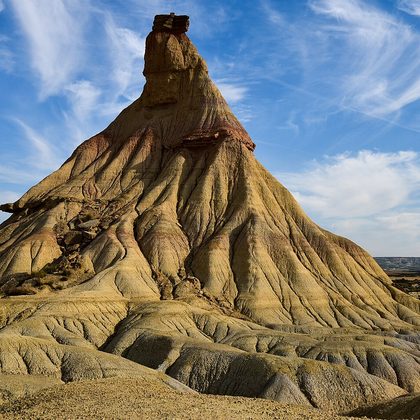
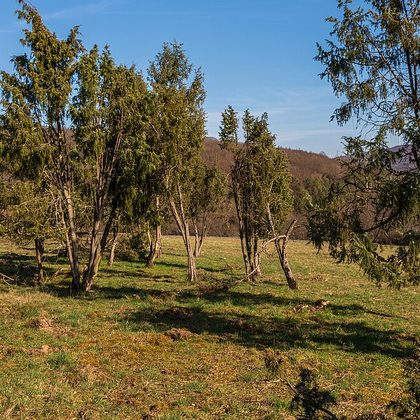
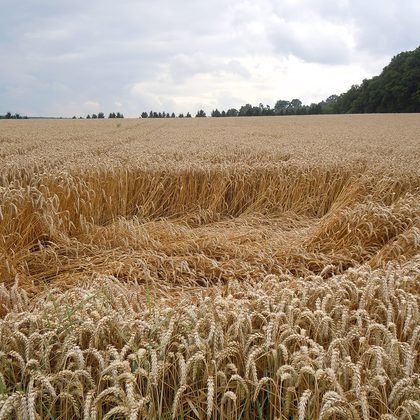
Sand dunes of the coastal plain and semi-desert with low, sparse vegetation: the inland dune ridges and sand fields of the southern coastal plain of Israel and the northern Negev, and the coastal strip of northern Sinai. Where the sand has been fixed under a closed vegetation cover or has disappeared under buildings or farmland, the species is absent; of the jirds in this area it is the least adaptable. Field margins on sandy soil are used, and there conflicts with agriculture arise.
Where the animal is most at home, classified with EUNIS — the European standard for habitats.

Distribution
Endemic to a small area: the coastal plain and the Negev of Israel and Palestine, and the coastal strip of north-eastern Egypt in Sinai. The species is monotypic and has no subspecies. The core lies in the sand fields between Beersheba and the coast; the type locality lies sixteen kilometres south of Beersheba.
- Native
- dark = core range, pale = thinly spread
Way of life
Nocturnal and entirely ground-dwelling, digging in soft soil. The species lives in small family groups, unlike the solitary desert species. The diet consists of leaves and stems, roots and bulbs, seeds, cereals, fruit and insects; the species is considered more folivorous than other jirds, which is linked to its weight and to its dependence on areas with green vegetation in winter. Almost nothing has been published on breeding: gestation, litter size and breeding season are unknown. No hibernation or winter dormancy.
Where and when to look
By day, search a dune field or a sandy fallow strip in the northern Negev or the southern coastal plain of Israel for clusters of burrow entrances and tracks in the sand, and return after dark. The animals emerge early in the night and can be watched well from a fixed spot with a red lamp; they move slowly and are not easily put to flight. Sand tracks and field margins are the best places to see them crossing at night. The species is local: much sand that looks suitable is unoccupied, and several dune fields need to be searched for fresh signs.
Conservation status
Vulnerable (VU, 2021). The species lives at low densities in a small range; the coastal plain and the northern Negev are being built over at a rapid rate, and the remaining sandy soils are being converted to large-scale agriculture. Political instability in the region hampers fieldwork and protection. The lack of data on breeding makes targeted management difficult. The protection of continuous, undeveloped sand fields is decisive for the survival of the species.
Scientific name
Meriones sacramenti | O. Thomas, 1922
O. Thomas described the species in 1922 and placed it straight away in the genus where it still stands. Meriones is the name of Meriones, the Cretan hero of the Iliad; the name itself belongs with Greek mēros, 'thigh'. Why Illiger gave it to a jird he does not say. sacramenti is the genitive of Latin sacramentum, 'oath', so 'of the oath'. Thomas described the animal from Beersheba, whose Hebrew name is read as 'well of the oath'; he does not say so outright, but the allusion is hard to miss. The specimen the first description was based on came from Israel, Beersheba.