All species › Rodents › Mice and rats › Lesser Egyptian gerbil
Lesser Egyptian gerbil | Gerbillus gerbillus
Kleine Egyptische renmuis | Gerbillus gerbillus
The Lesser Egyptian Gerbil (Gerbillus gerbillus) is a gerbil of drifting sand, distributed from the Atlantic dunes of Mauritania to Sinai and the southern edge of the Negev, in areas where the wind moves sand and vegetation is limited to low shrubs in the lee. It is one of the palest gerbils of North Africa and carries the scientific name of the genus. Its bound tracks are common on Saharan dunes in the morning.

Tracks
The species is usually recorded from tracks in the sand and rarely from the animal itself. In the morning, before the wind erases them, a dune slack holds bound tracks: pairs of elongated hind-foot prints two and a half to just over three centimetres long, with the small fore-foot prints between them at a slow gait and without them in a fast bound. Because the soles are haired the print is filled and blurred at the edge, without distinct toes. A fine, continuous drag line from the long tail runs between the prints; jerboas leave no such line and set down no fore feet, so this is the most reliable distinction. The burrow is large: a tunnel system five to forty-five metres long, thirty to eighty centimetres below the surface, with three or four entrances that are plugged by day. Occupied burrows are therefore hard to see in daylight; after sunset there are open entrances with fresh spoil fans. Around the entrances lie seed coats, empty husks and gnawed buds and leaves of shrubs such as Thymelaea, Erodium and Plantago. Sifting pits in the sand beneath the shrubs show where the animal has searched for seed. Droppings are small (two to three millimetres), dark, hard and dry, and scattered. Barn Owl pellets under palms or in ruins often contain many remains of this species in sandy areas.
In its habitat
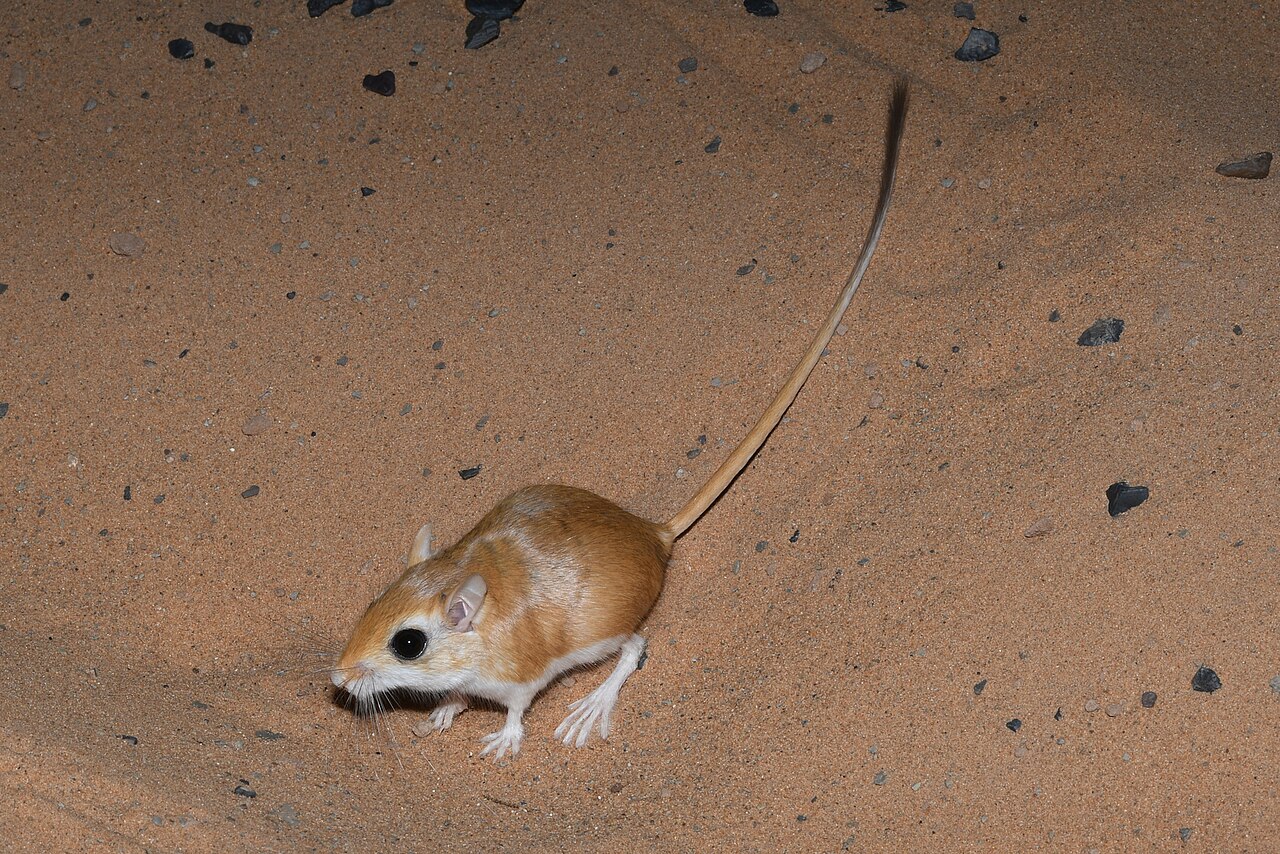
Head close-up

Identification
A small, lightly built gerbil of seven to ten and a half centimetres, with a very long tail of nine to nearly fourteen centimetres, one hundred and thirty-five to one hundred and forty-five per cent of head-body length. The back is sandy to light orange, each hair with a grey base and an orange shaft; the belly is pure white and sharply demarcated. A white ring surrounds the eye and a white patch lies behind the base of the ear; there is also a pale patch on the rump, and hands and feet are white. The ears are large and densely furred (10 to 18 mm). The tail is bicoloured, sandy above and white below, and ends in a tuft of whitish to dark grey hairs. The hind foot measures 25 to 32 millimetres and has densely haired soles, which keep the animal from sinking into loose sand. Weight fourteen to thirty-five grams. Females have four pairs of teats; the chromosome number is 2n = 42 or 43.
Similar species
The gerbils of loose sand often cannot be identified to species in the field. Gerbillus andersoni is the sister species and the most difficult to separate: the same hind-foot length and the same haired soles, but warmer orange-brown and with a proportionally shorter tail (about one hundred and twenty per cent of head-body length, against one hundred and thirty-five to one hundred and forty-five in the Lesser Egyptian Gerbil). Flower's Gerbil (Gerbillus floweri) is clearly heavier and has a much larger hind foot of 31 to 38 millimetres; this is the most usable difference within the group and can also be measured on a print in the sand. Gerbillus dasyurus lives on rock and gravel instead of sand, is greyer yellow, has a dark eyebrow stripe and a shorter hind foot. The Fat-tailed Gerbil has a short tail and a thickset build, the spiny mice have a spiny coat and live on stone, and the jerboas have much longer hind legs and set down only the hind feet. In practice the substrate is the best indication: on drifting sand it is usually this species.
Habitat
Sand, preferably moving sand: drifting dunes and dune slacks, wind-blown sand in wadi beds, sand plains with sparse low shrubs, the sandy margins of salt pans and sebkhas, and date groves and oases where the sand reaches in among the trees. The species goes further into loose sand than Gerbillus andersoni, which prefers semi-stabilised dunes. On hard ground (hamada, gravel, rock) it is absent and other species occur. On the Mauritanian coast densities of 0.2 to 4.8 animals per hectare have been measured.
Where the animal is most at home, classified with EUNIS — the European standard for habitats.
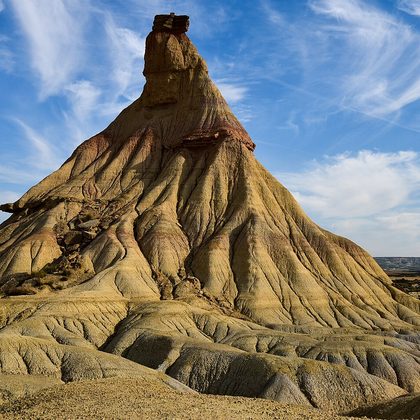

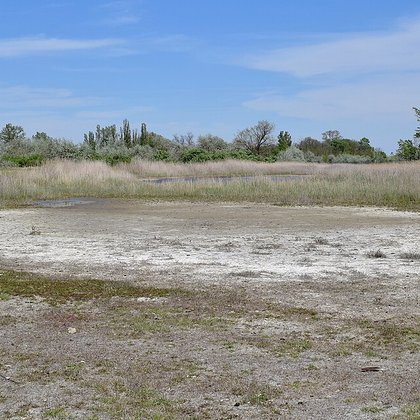
Distribution
Virtually the whole Sahara and its margins: from Morocco and Mauritania east through Algeria, Tunisia, Libya, Mali, Niger and Chad to Egypt and northern Sudan, and on to northern Djibouti; in the east into Sinai, south-western Israel, Palestine and south-western Jordan. The northern part of the range comprises the whole Maghreb north of 29°N, the Libyan and Egyptian deserts, the Nile Valley (the type locality lies in Giza Province), Sinai and the southern Negev. It is one of the most widespread gerbils of the Sahara and occurs on both the Atlantic and the Red Sea; it is not the only one to do so, as Gerbillus nanus, in the broad sense of the Mammal Diversity Database, also ranges from Mauritania and Morocco to beyond the Red Sea.
- Native
- dark = core range, pale = thinly spread
Way of life
Nocturnal and entirely ground-dwelling; by day the animal stays in a deep, plugged tunnel system that it digs itself. The diet consists mainly of seed, supplemented with leaves, buds and fruits of desert shrubs and, in spring, with insects; the species stores food and does not drink. Several animals share one tunnel system, in contrast to the solitary Gerbillus andersoni. The home range is about a hundred metres across; in a night an animal moves on average about ten metres from the burrow, but one animal was retrapped a hundred and five metres away within four nights. Of animals released five hundred to a thousand metres away, half found the burrow again, and of those released at two kilometres, one fifth. In Mauritania breeding takes place all year, with three to six young per litter. In the laboratory the species has been shown to be capable of torpor; in the field it is active at night during the Saharan winter as well.
Where and when to look
The chance of a sighting is highest in the first two hours after sunset on a moonless night; in moonlight the animals stay under the shrubs. Drive at walking pace along a sand track or walk along the foot of a dune slope and look with a lamp for the orange eyeshine; the animals are not very shy and often sit still. At first light, before the wind rises, the night's signs can be seen on the dune: the bound tracks with the fine tail line, the sifting pits under the shrubs and burrow entrances that have not yet been plugged. A hind-foot print of two and a half to three centimetres fits this species, nearly four centimetres Flower's Gerbil. Owl pellets collected under palms give an overview of the rodent species in the area.
Conservation status
Least Concern (LC, 2016). The range covers the whole Sahara and its margins, from the Atlantic to the Red Sea. The species is numerous where it occurs, and drifting sand is little used by people. Locally, the stabilisation of drifting sand by planting, the spread of farming onto oasis sand and overgrazing of the shrubs whose seed it eats have effects; these are local factors within a range in which the species is hardly anywhere under pressure. Numbers, fluctuations and its role in the desert food web have been measured in only a few places.
Scientific name
Gerbillus gerbillus | (Olivier, 1800)
Olivier described the species in 1800 as Dipus gerbillus; because it was later moved to another genus, the author and year stand in brackets. Gerbillus is a diminutive of gerbo, the old name of the jerboa, from Arabic yarbūʿ: the jerboa's little cousin. The specific name repeats the genus name. The specimen the first description was based on came from Egypt, Giza.