All species › Rodents › Blind mole-rats › Oltenia Blind Mole-rat
Oltenia Blind Mole-rat | Spalax istricus
Spalax istricus | Spalax istricus
Spalax istricus, the Oltenia Blind Mole-rat, is a blind mole-rat of the Wallachian Plain in southern Romania. On the Red List it is Critically Endangered, with the addition possibly extinct. Méhelÿ described the taxon in 1909 from animals from Bârza in Romania's Olt county, as a subspecies of Spalax graecus; in 2013 Németh and colleagues showed with skull measurements and DNA that it is a separate, well-defined species. By then the species had not been recorded for thirty years: there has been no record at all since 1983, despite repeated searches at the places where it was known.
No photograph of a living wild animal of this species with a suitable Creative Commons licence exists. Do you have one that meets the rules? Send it in.
Tracks
Nothing is known specifically about the burrowing of this species; the following applies to the genus and probably to this species too. The mounds are broad, low and coarsely clodded, without a visible tunnel mouth, because the tunnel is plugged from inside, and in Spalax lie close together, so that an occupied system forms a churned patch of grassland. A molehill is smaller, higher, finer-grained and comes from a vertical shaft. Further, also by genus: a shallow network of feeding tunnels with, beneath it and reached by vertical shafts, a grass-lined nest, store chambers and latrines, and at the surface patches where a plant has been pulled down from below. Of particular importance are the negative records: at the places where the species was known, repeated searching has found not a single fresh mound.
Identification
Knowledge of this species rests on a few museum specimens. They give a head-body length of about 24 centimetres; no weight has been recorded, and there is no external tail. The colour is described as variable; in the original description the species is reddish brown above and rust-coloured below, and in the literature it is therefore called the reddest blind mole-rat in Europe. Otherwise the build is that of all related species: neckless and cylindrical, with a broad, flat head, a heavy forequarter, no ear pinnae, no visible eyes and no tail, and incisors protruding in front of the lips. The character by which Németh and colleagues separated the species from its relatives in 2013 lies in the skull: a rostrum narrowed above and widened below. Genetic material is lacking, so that its relationships within the genus are unknown.
Similar species
The species cannot be determined on a living animal, and within Spalax the chromosome number does not help either, because all species of the genus have 2n = 60 or 62. In the field only range is usable. On the Wallachian Plain, in Oltenia and Muntenia, this was the only blind mole-rat; north of the Carpathians live S. antiquus in Transylvania and S. graecus in Bukovina, and in Dobruja, east of the Danube, the lesser blind mole-rats begin. The distinction between Spalax and Nannospalax can be made by eye and is a usable field character: a Spalax is twenty to over thirty centimetres long and weighs four to seven hundred grams, a Nannospalax weighs about as much as a large rat and seldom reaches half a kilo. This difference has also been confirmed by DNA (Németh and colleagues, 2013). The mounds show the same: a Spalax makes a dense field of mounds, a Nannospalax a thin line of mounds twenty to thirty metres apart. Also to be excluded are the mole, smaller, with shovel-shaped forefeet and a short tail, and the Water Vole, with normal ears, eyes and tail. A mole-rat mound on the Wallachian Plain is best photographed, given coordinates and reported.
Habitat
Steppe and forest-steppe vegetation on the hilly and level ground of the Wallachian Plain, and also fields and orchards. The species required what all related species require: deep, loose, free-draining soil with an underground supply of roots, tubers and bulbs. In Oltenia and Muntenia this landscape was converted almost entirely into large-scale, deeply tilled arable land during the twentieth century, which is regarded as the main cause of the species' disappearance.
Where the animal is most at home, classified with EUNIS — the European standard for habitats.
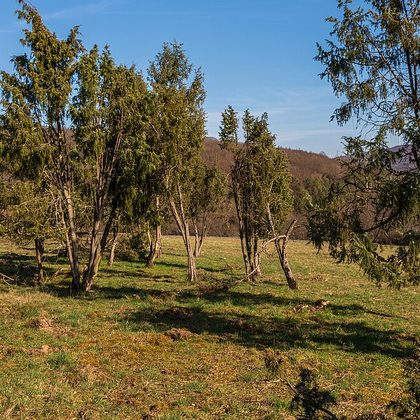
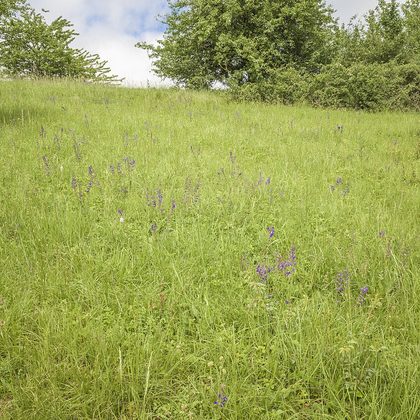


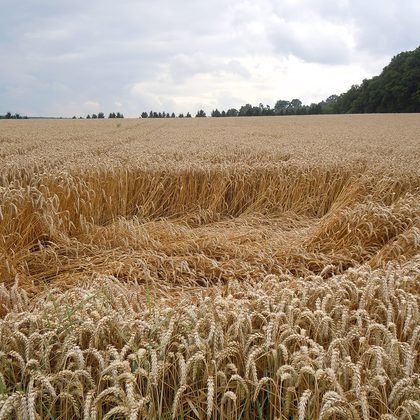
Distribution
Southern Romania: the historical regions of Oltenia and Muntenia, together the Wallachian Plain. The type locality is Bârza in Olt county. More precise distribution data are lacking, because the last certain record dates from 1983 and the old localities have since been surveyed without result. If the species still exists, its extent of occurrence is small and its population highly fragmented. No blind mole-rats occur in the British Isles, the Low Countries or the Iberian Peninsula.
Way of life
Nothing has been published on the habits of this species separately: no daily rhythm, no diet, no breeding data and no densities. The species was only recognised as such when it was no longer being recorded. On the basis of related species the following applies with reasonable certainty: it lived entirely underground, was active round the clock with most digging at the beginning and end of the day, neither hibernated nor kept a winter rest but lived through the winter on its store chambers, ate bulbs, tubers, rhizomes and thick roots, and was solitary. Like the related species it was persecuted as an agricultural pest.
Where and when to look
There is no place where the species can be seen with any chance of success. Anyone who finds a group of broad, low, coarsely clodded soil mounds in Oltenia or Muntenia in March or April, on an unploughed field margin, an old dyke, a railway embankment or in an orchard, can photograph them with an object of known size alongside, record the coordinates and report the find to a Romanian conservation organisation or through a records portal. A single confirmed record could take the species off the list of possibly extinct species.
Conservation status
Critically Endangered, possibly extinct (2024). This is the highest category for a species not declared extinct. The basis is that there has been no record since 1983, despite repeated searches at the former localities. If the species still occurs anywhere, its extent of occurrence is small and its population highly fragmented. The main cause is the conversion of the Wallachian steppe into large-scale, deeply ploughed arable land, together with twentieth-century persecution as an agricultural pest. Earlier Red List assessments included this species in S. graecus and rated the whole as Near Threatened; only after the recognition in 2013 and the 2024 assessment did it become clear that this is probably a vanished species. The species is thus an example of a European mammal that may have gone extinct before it was recognised as a species.
Scientific name
Spalax istricus | Méhelÿ, 1909 (GBIF: Spalax graecus)
Méhelÿ described the species in 1909 and placed it straight away in the genus where it still stands. Spalax is Greek spalax, also aspalax, 'mole'. istricus belongs with Ister, the classical name of the lower Danube (Greek Istros); Méhely described the animal from the Wallachian plain along that river. The specimen the first description was based on came from Romania, Olt.