All species › Bats › Vesper bats › Particoloured Bat
Particoloured Bat | Vespertilio murinus
Tweekleurige vleermuis | Murciélago Bicolor
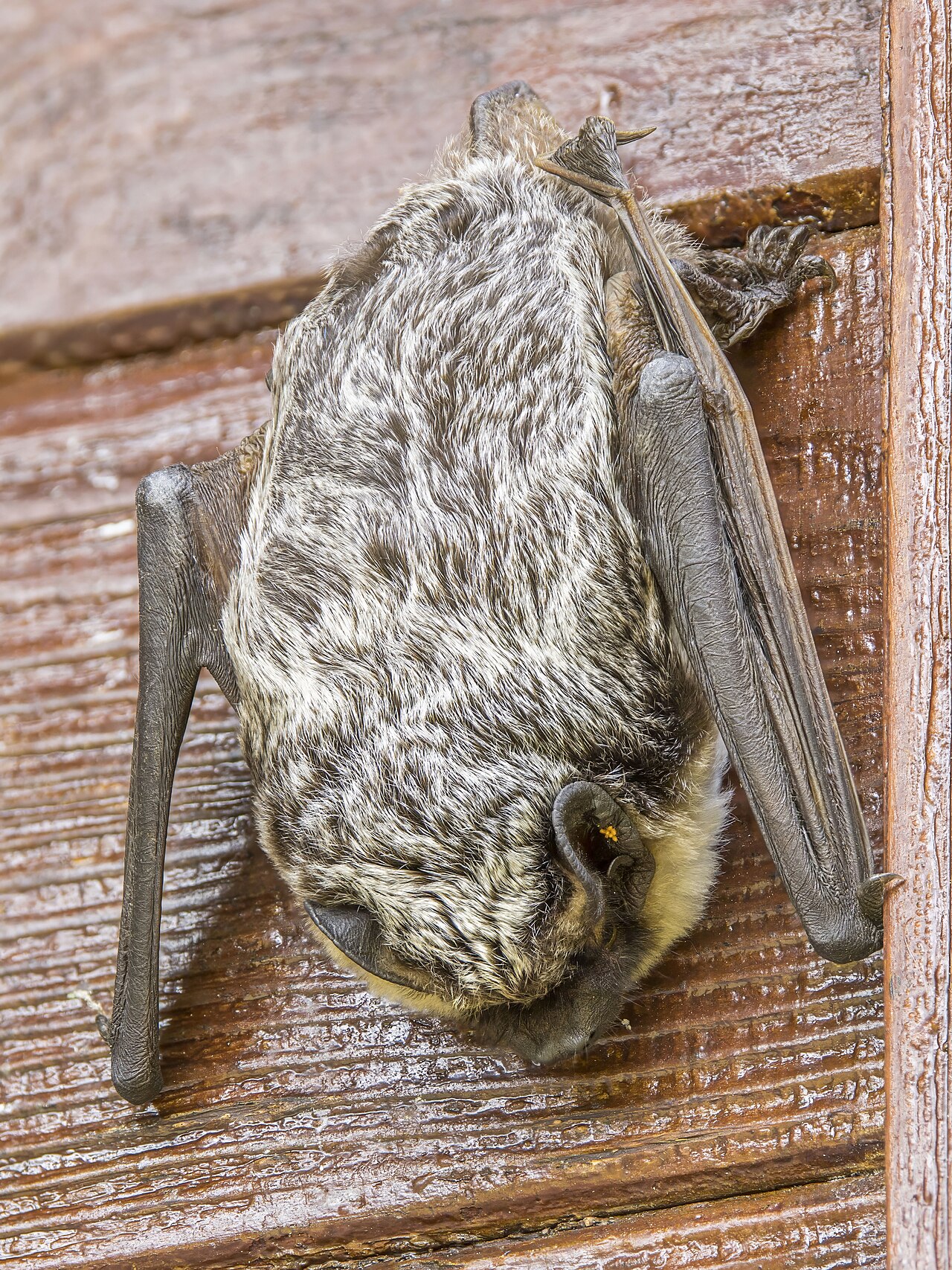
The Particoloured Bat is named for the contrast between its dark, silver-frosted back and white underparts. Forearm 41 to 50 mm, weight 10 to 24 grams. Linnaeus described the species in 1758 as Vespertilio murinus from 'Europe'; Baagøe restricted the type locality in 2001 to probably near Uppsala. The genus Vespertilio contains two species, of which only this one occurs in the guide area. The species is largely sedentary but, as one of few European bats, sometimes travels long distances: up to 1780 km, from Russia to France.
Tracks
Maternity colonies are in buildings: behind cladding, in cavity walls, in lofts, barns and cellars, sometimes in tree holes, rock crevices or bat boxes. In summer males form their own groups of up to 300, sometimes far from the maternity colony. In autumn, the mating season, males perform display flights with loud, repeated calls around 15 kHz at dusk and at night, above the canopy or above open ground surrounded by woodland. In winter single bats or small groups are found in buildings, rock crevices and castle ruins, rarely in caves or mines.
Identification
A medium-sized bat with long, dark dorsal fur with silvery-white hair tips, giving the back a frosted look, and sharply demarcated white underparts and throat, sometimes tinged yellowish or cream. Skin, ears and membranes are dark to black. The ears are short and rounded, the tragus short and broad, as in the Nyctalus species. The wings are narrow (wingspan 27 to 31 cm) and suited to fast flight; the species usually forages 10 to 40 m above the ground or vegetation. Females are the only European bats with four nipples. Search calls begin with a frequency-modulated part and end in a near-constant part (QCF), with maximum energy at 22 to 27 kHz. The display calls of males in autumn have their maximum energy around 15 kHz; in Slovenia an average of 14.7 kHz was measured.
Similar species
Savi's Pipistrelle (Hypsugo savii) has a similar colour pattern but is much smaller (forearm 31 to 38 mm) and has golden rather than silvery hair tips. The Northern Serotine (Cnephaeus nilssonii) is about the same size but has golden hair tips and beige to light brown underparts without a sharp border. The Eurasian Serotine (C. serotinus) is larger and brown. Leisler's Noctule (Nyctalus leisleri, forearm 35 to 46 mm) has a similar flight and a similar tragus, but uniformly brown fur. On a bat detector the search calls resemble those of Leisler's Noctule, Eurasian Serotine and Northern Serotine; without the display call a recording can often only be assigned to that group.
Habitat
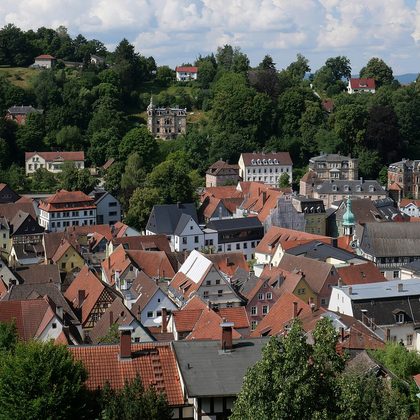
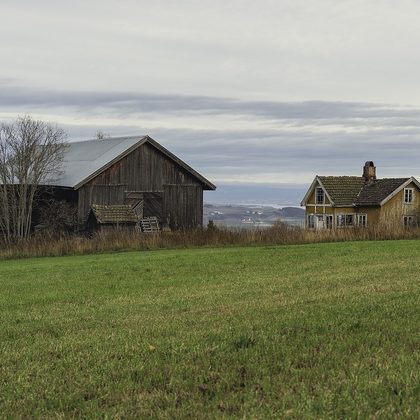
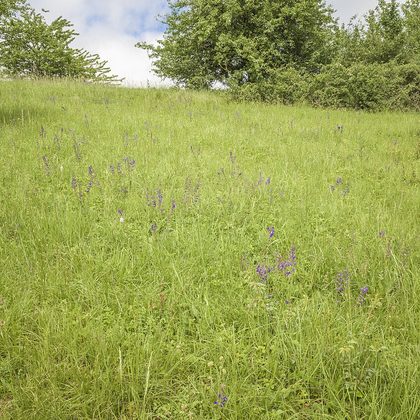
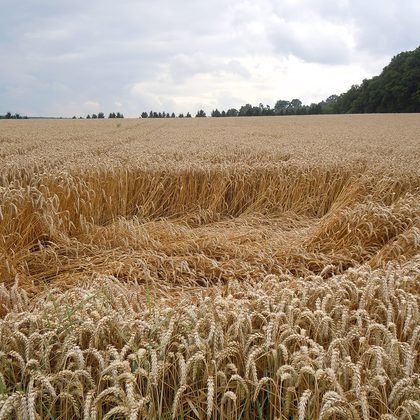
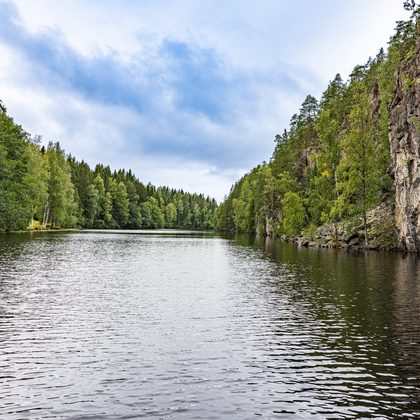
Semi-desert, built-up areas, farmland, scrub and riparian vegetation. Most foraging takes place over meadows and open arable land, also over woodland and water; in Switzerland males foraged mainly over lakes and settlements and females over open farmland and woodland. In the south of the range the species occurs mainly in medium-high to high mountains. The handbook gives elevations from sea level to 3400 m. Foraging areas lie 2 to 20 km from the roost; a foraging range of about 80 km² has been calculated for males and about 15 km² for females. The species also hunts around streetlamps.
Where the animal is most at home, classified with EUNIS — the European standard for habitats.


Distribution
Most of Europe and western Asia to Mongolia and north-west China (subspecies V. m. murinus); from eastern Siberia to Japan lives V. m. ussuriensis. In the guide area the core lies in central and eastern Europe and southern Scandinavia; in the west and south the species is scarcer and mainly males have been recorded there. Large maternity and male colonies are known only from the south-west of the range, including Switzerland, Bavaria and Austria; further south only males have been found so far. According to the handbook the species is spreading in countries including Denmark and the Netherlands.
- Native
- dark = core range, pale = thinly spread
Way of life
The Particoloured Bat hunts in fast, agile flight for midges, aphids, moths and beetles; flies, aphids and moths together make up 60 to 80 per cent of the diet, with caddisflies, true bugs and lacewings as supplements. The bats emerge late in the evening. In the north of the range maternity colonies exist from May to August and hold up to 50 females, exceptionally a few hundred. Births fall from late May to July; females usually have two young a year, and there are reports of three. The mating season is in autumn, with the display calls of the males. Hibernation is spent in buildings, cliffs and ruins, singly or in small groups. The greatest recorded age is 14.5 years.
Where and when to look
The chance of a record is highest in September and October, when males perform display flights at dusk and at night: with a detector reaching down to around 15 kHz the rhythmic calls are recognisable, and because they lie close to the upper limit of human hearing, some people can also perceive them without a detector. In summer a maternity colony in a building can be counted at emergence.
Conservation status
Least Concern (LC, 2016). The species is widespread and probably has a large population, although it is not among the most numerous species. No major threats are officially recognised; the handbook cites loss of habitat and roosts, roost disturbance and mortality at wind turbines, the latter because of its high flight. The species is listed in Annex IV of the Habitats Directive and is covered by the Bern Convention and the EUROBATS Agreement.
Scientific name
Vespertilio murinus | Linnaeus, 1758
Linnaeus described the species in 1758 and placed it straight away in the genus where it still stands. Vespertilio is the Latin word for 'bat', from vesper, 'evening'. murinus is Latin for 'mouse-coloured, mouse-like', from mus, 'mouse'. The specimen the first description was based on came from Sweden, Uppsala.