All species › Rodents › Squirrels and marmots › Podolian Ground Squirrel
Podolian Ground Squirrel | Spermophilus odessanus
Spermophilus odessanus | Spermophilus odessanus
Spermophilus odessanus is the western speckled ground squirrel. Until 2024 it was included in the Speckled Ground Squirrel, but it has 36 chromosomes against 34 in the eastern sister species, and the Dnieper separates the two. It is the ground squirrel of south-eastern Poland, Belarus, Moldova and western Ukraine, and the only species of the genus that can be identified directly from a photograph, because the back carries true white spots. There is no Dutch or Spanish vernacular name; the Mammal Diversity Database uses the English name Podolian Ground Squirrel, and in Polish the species is called suseł perełkowany, 'pearled souslik'.
Tracks
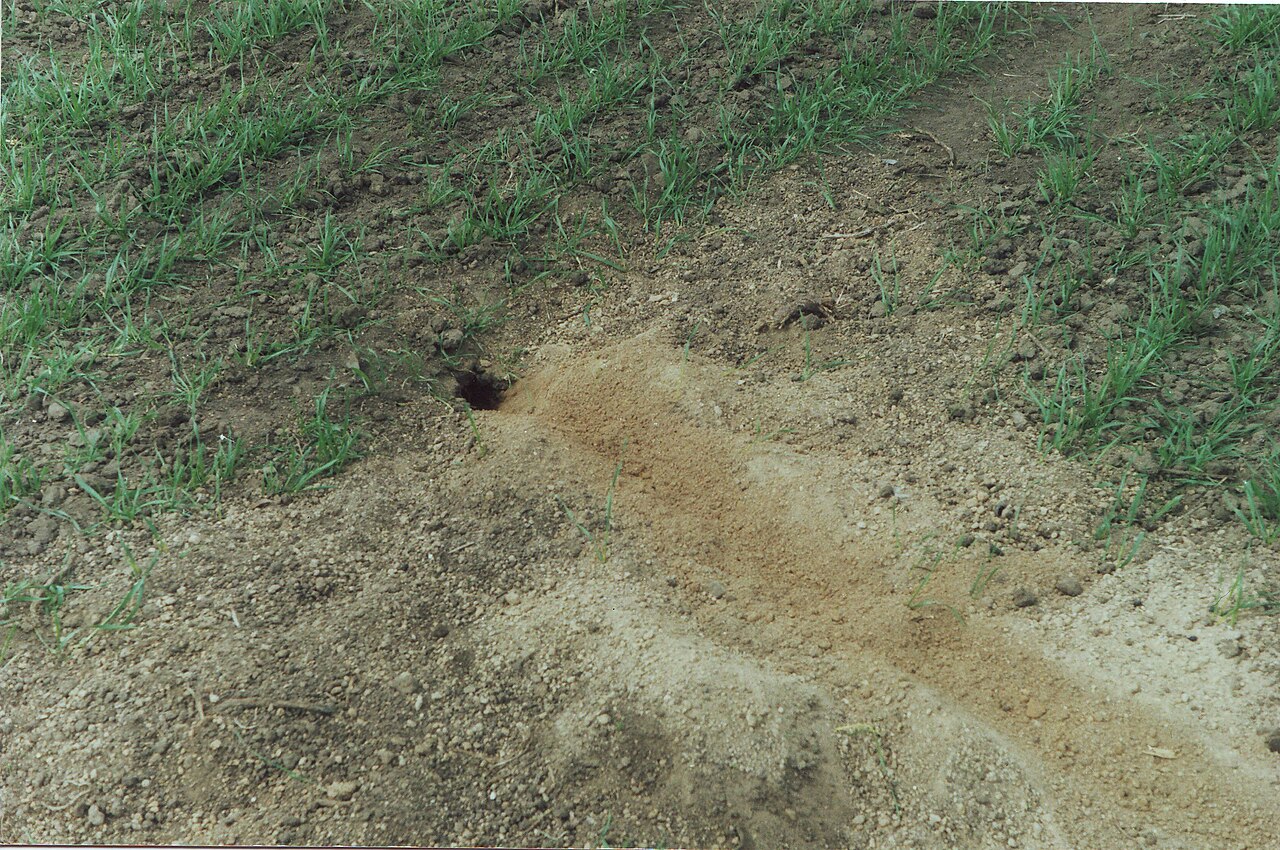
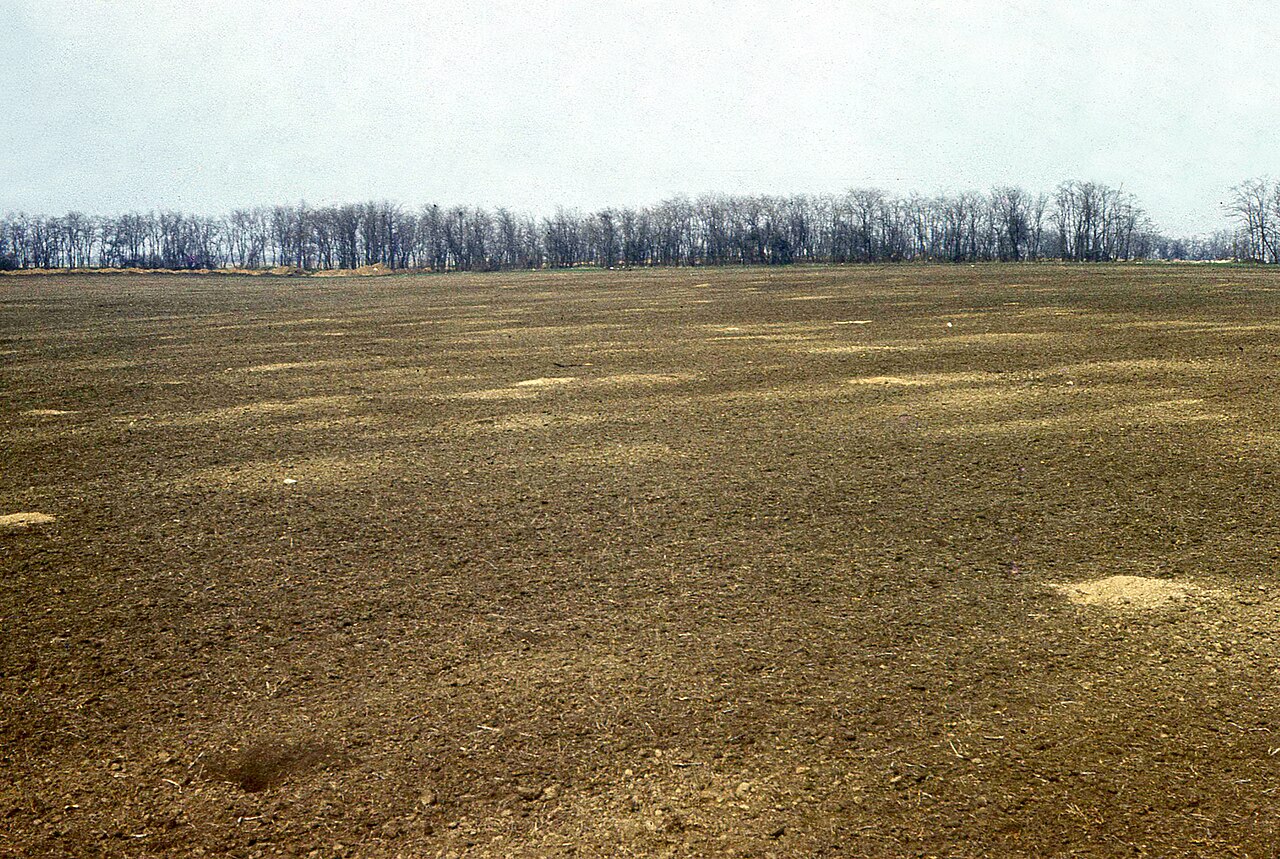
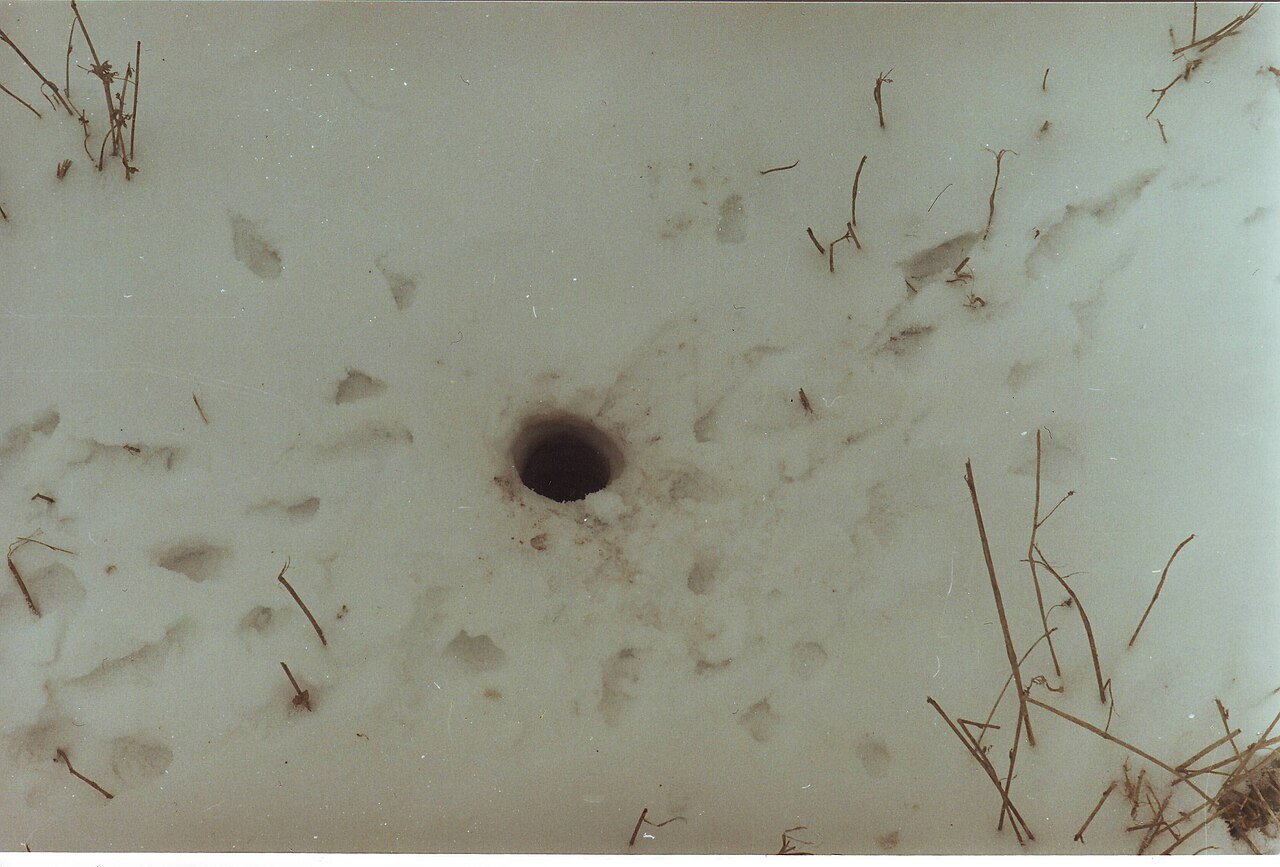
The main sign is the colony. The burrow entrances are round to oval, five to eight centimetres across, run obliquely into the ground and lie by the dozen across a single field. In front of each fresh entrance lies a fan of pale excavated subsoil; on the loess of Volhynia and Podolia this is pale sand against dark topsoil, so that a colony on fallow land is visible from hundreds of metres as a field of pale patches. Around the entrances the grass is grazed short, even where livestock no longer graze, and narrow worn paths run between the entrances. In winter an entrance is plugged from within and recognisable by a plug of earth just below the surface; in March it is reopened and fresh soil lies around it. Droppings are small, dark and sausage-shaped and lie scattered. The most useful field character is the call: a short, sharp whistle repeated through the colony as soon as someone enters the field.
In its habitat
Identification
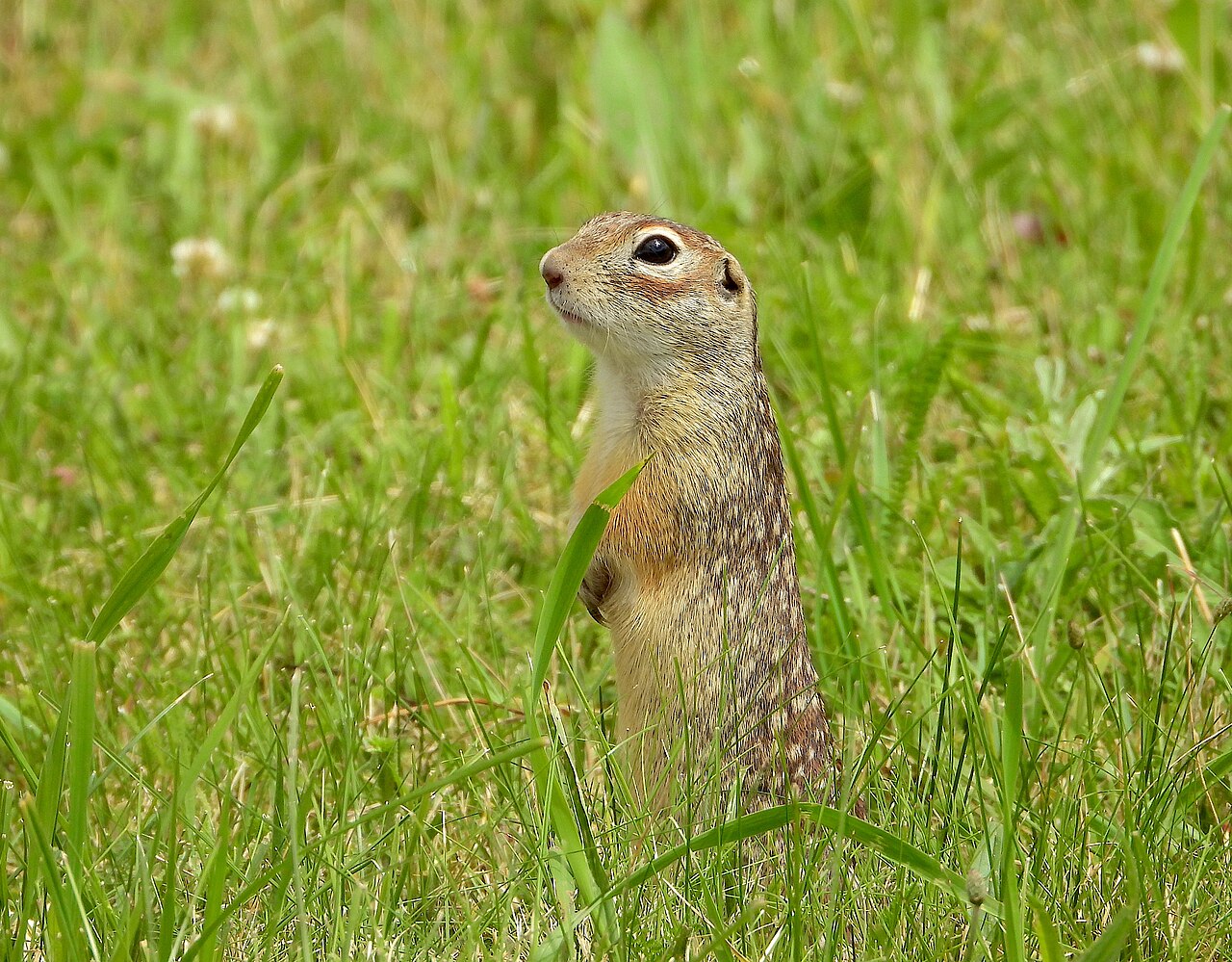
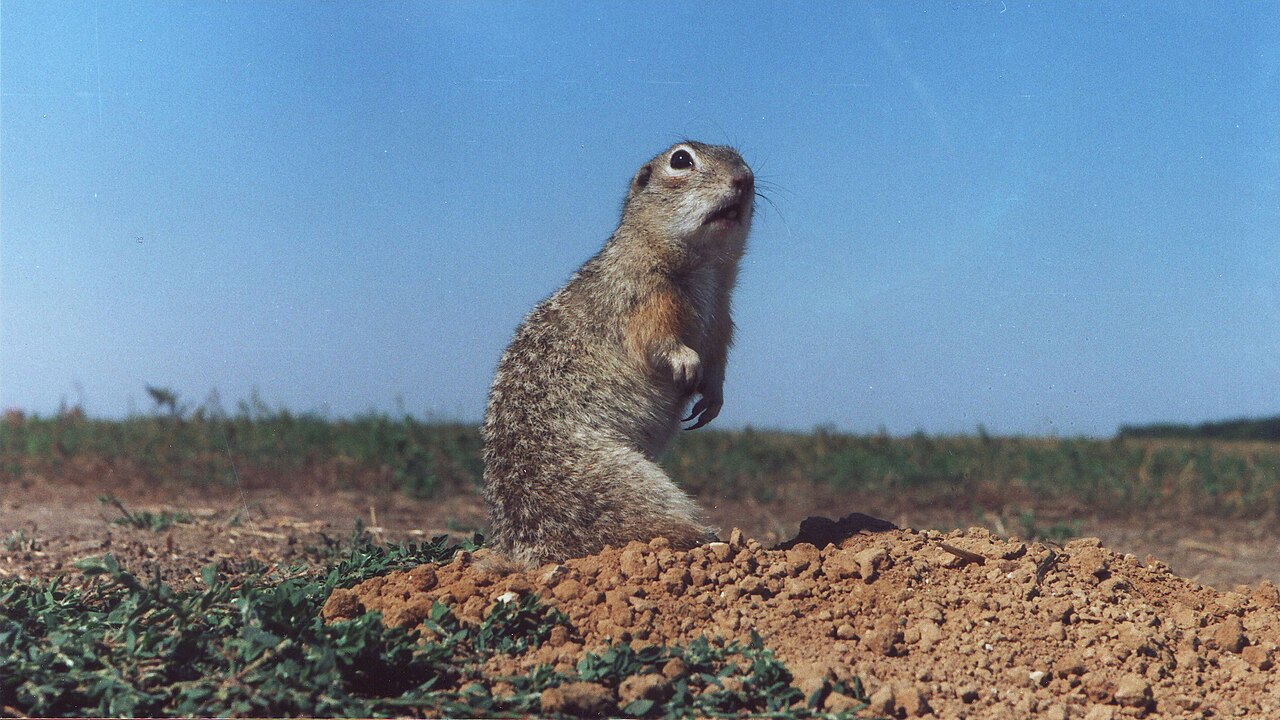
Head-body 19 to 22 cm, tail 3.6 to 5.7 cm, weight 180 to 220 g; slightly smaller than the European souslik and with a much shorter tail. The identification character is on the back: on a greyish-brown to chestnut-brown ground there are sharply defined cream to pure white spots two to five millimetres across, from nape to rump, so evenly distributed that at close range the back appears pearled; the Polish and German names refer to this. The head is browner than the back, with a distinct pale eye-ring and a chestnut patch below the eye; throat and chin are white, the belly yellowish white. The ears are small and rounded, the tail short and thin, dark towards the tip, with a narrow pale fringe. The spots are sharpest in summer coat; in a moulting animal in July they are less distinct. The neck is slender.
Similar species
In ground squirrels range is decisive; this species is also the only one with a character visible on a photograph. Its range comprises Poland south-east of Lublin, Belarus, Moldova and Ukraine west of the Dnieper. There it overlaps with the European souslik; this is the only area of overlap within the group. The difference is clear: the European souslik has only a blurred black mottling, this species sharply defined white spots. East of the Dnieper lives the Speckled Ground Squirrel (S. suslicus), which looks the same and cannot be separated in the field; only the locality relative to the river, the chromosome number and DNA are decisive. Further south-east, in the steppe between Dnieper and Volga, lives the unspotted, sandy S. musicus, and east of the Volga the Little Ground Squirrel. The range nowhere overlaps with the two Turkish species or the Caucasian mountain form. Outside the genus, the Bobak Marmot is much larger and unspotted, the Common Hamster has a black belly and is nocturnal, and the Siberian Chipmunk has longitudinal stripes instead of spots.
Habitat
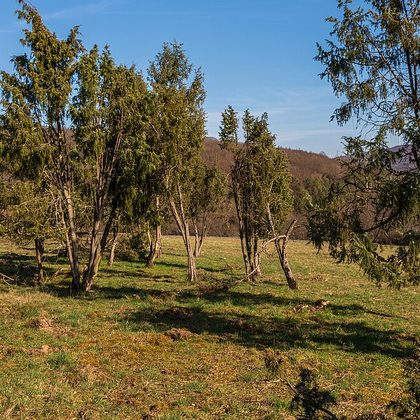
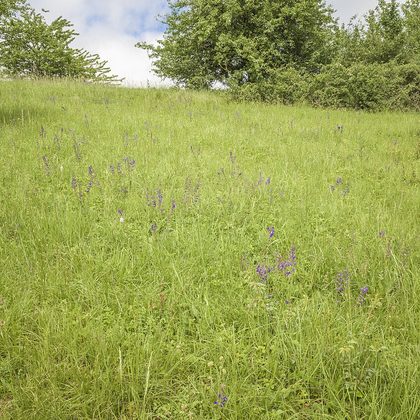
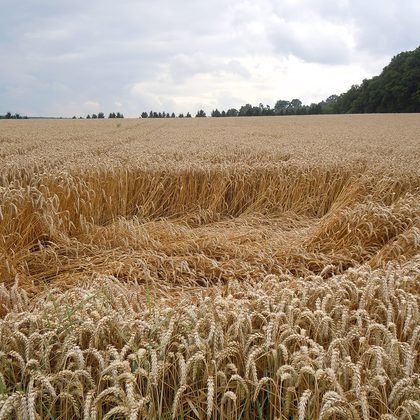
Dry short-grass steppe and steppe pasture on loess and sandy loam, and in farmland sheep pasture, field margins, fallow land, road and railway embankments, dykes, old cemeteries and verges along village streets. Like all sousliks the species depends on deep, free-draining soil and low vegetation, but it tolerates slightly more cover and slightly longer grass than the European souslik. From sea level to about 500 m. In the Polish part of the range it occurs almost only on ground where vegetation is kept short by human use: military training areas, small airfields and grazed slopes near Zamość.
Where the animal is most at home, classified with EUNIS — the European standard for habitats.

Distribution
The range extends from the area around Zamość and Hrubieszów in south-eastern Poland through Belarus and Moldova to the right bank of the Dnieper in Ukraine. The Dnieper forms the eastern boundary; the Speckled Ground Squirrel lives on the left bank. The type locality is Odessa, after which the species is named. In Poland it was widespread in the nineteenth century; a few isolated colonies remain, which have been actively managed since the 1990s and supplemented with captive-bred animals. In Ukraine the range has become severely fragmented over the last thirty years.
Way of life
The species is diurnal, with a peak in the morning and a second in the late afternoon; on hot days the animals stay underground around midday. It lives in colonies but not in groups: each adult has its own burrow system and defends a small territory of a few hundred square metres. Food is largely plant material: seeds, young shoots, leaves, bulbs and tubers, cereal grain in summer, supplemented with grasshoppers and beetles. Food is carried to the burrow in the cheek pouches. Hibernation is long: adults go underground in August or September and reappear in February or March; the entrance is plugged from within. There is a single mating period shortly after emergence; after about four weeks' gestation five to eight young are born, which appear above ground at about four weeks. First-winter mortality is high, locally up to seventy per cent. Predators are fox, European polecat, stoat, steppe polecat and large steppe falcons and eagles; in the wild the animals seldom live longer than three years.
Where and when to look
The best period is late April to mid-June, between nine in the morning and midday. The most accessible population lives on the chalk slopes and training grounds around Zamość in south-eastern Poland, where there are information boards. First search with binoculars for the pale mounds of earth, then sit down and wait; the first animals usually appear within ten minutes. Photograph the back, since that is the identification character in this species, and avoid backlight, in which the spots are not visible. After mid-July the chance of sightings is low.
Conservation status
Not Evaluated (NE). The IUCN has not yet assessed the species separately from the Speckled Ground Squirrel, because the split was only published in 2024. The Speckled Ground Squirrel in the broad sense has been listed as Critically Endangered since 2023, and the western subpopulation, which forms this species, is also declining steeply: in Poland it has been reduced from a common inhabitant of farmland to a few managed colonies, and the trend in Moldova and Ukraine is similar. The causes are the same as in other sousliks: the loss of extensive grazing, the ploughing of the last steppe plots and fragmentation, which prevents lost colonies from being recolonised. A breeding and reintroduction programme has been running in Poland since the 1990s. A separate IUCN assessment of the species is still lacking.
Scientific name
Spermophilus odessanus | von Nordmann, 1842
Von Nordmann described the species in 1842 and placed it straight away in the genus where it still stands. Spermophilus is Greek, from sperma, 'seed', and philos, 'loving': the seed-lover, after the food the animal carries to its burrow in its cheek pouches. odessanus means 'of Odessa'; Nordmann, a professor in that city, described the animal from the steppe around it. The specimen the first description was based on came from Ukraine, Odessa.