All species › Hedgehogs, shrews and moles › Shrews › Valais Shrew
Valais Shrew | Sorex antinorii
Sorex antinorii | Musaraña De Valais
The Valais Shrew is a shrew of the Italian peninsula, the southern Alps, south-eastern France and Switzerland. For a long time it was treated as a chromosome race of the Common Shrew, the 'Valais race'; on the basis of chromosomes and genetic studies it has been recognised as a separate species since 2002. Externally it cannot be told from the Common Shrew. Its name refers to the canton of Valais in Switzerland. The IUCN earlier assessed it as Data Deficient; since 2024 it has been listed as Least Concern.
No photograph of a living wild animal of this species with a suitable Creative Commons licence exists. Do you have one that meets the rules? Send it in.
Tracks
No signs are unique to this species. Runs in the leaf litter, droppings and footprints are the same as those of the Common Shrew. High, shrill squeaks from the vegetation betray a shrew but not the species. In owl pellets Sorex skulls and jaws are recognisable by their red-brown tooth tips; the Valais and Common Shrews cannot be reliably separated on them, and here too locality decides in practice.
Identification
A medium-sized to large Sorex with a three-toned coat: light to dark brown back, reddish-tinged brownish flanks and a pale grey belly. The snout is long and pointed, the ears are hidden in the fur and the tooth tips are red-brown, as in all Sorex. The tail is shorter than head and body. Pregnant females can exceed the weights given below. The character that truly defines the species lies in its chromosomes: 2n = 24 in females and 25 in males, with a sex-chromosome system of one X and two Y chromosomes, as throughout the araneus group. Head-body 5.5 to 8.2 cm, tail 4.0 to 5.5 cm, hind foot 11 to 13 mm, weight 5.7 to 13 g.
Similar species
The Common Shrew (Sorex araneus) cannot be separated externally from the Valais Shrew; both have the same three-toned coat and overlap in all measurements. Identification rests on chromosomes or DNA, and in practice on locality: the two species live largely side by side rather than intermixed, and meet in narrow contact zones in the Alps. In the Apennines the Apennine Shrew (Sorex samniticus) also occurs; it has a shorter tail on average (3.3 to 4.5 cm), but it too cannot be reliably separated in the field. Recognisable are the Alpine Shrew (Sorex alpinus), uniformly dark grey with a tail about as long as head and body, and the Eurasian Pygmy Shrew (Sorex minutus), much smaller and two-toned, with a relatively long, thick tail. Water shrews (Neomys) are black with a sharply demarcated pale belly and swimming fringes, and white-toothed shrews (Crocidura) have white teeth, prominent ears and long scattered hairs on the tail.
Habitat
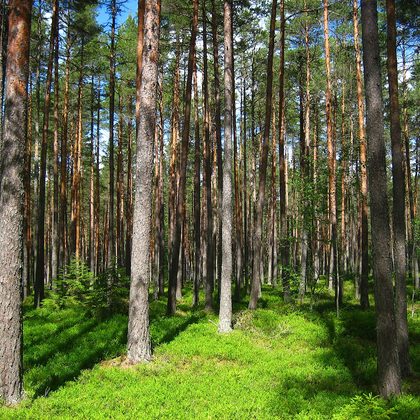
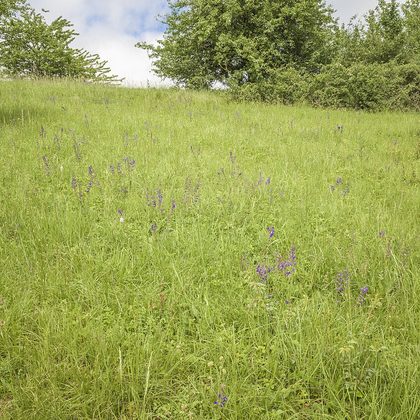
Montane forests of conifers and broadleaved trees in the Alps and Apennines, and beyond them places with a dense, damp layer of herbs or litter, such as woodland edges and rank vegetation. Little has been published on the habitat use of this species separately; much of what has been described as Common Shrew habitat in the Alps probably applies to the Valais Shrew as well, but this has not been studied on its own.
Where the animal is most at home, classified with EUNIS — the European standard for habitats.




Distribution
A European endemic of Italy, south-eastern France and Switzerland. The range covers the Italian peninsula and the southern Alps; in Switzerland it includes Valais. To the north and west it borders the range of the Common Shrew, with narrow contact zones in the French and Swiss Alps where hybrids are found. A genetic study from 2012 points to post-glacial expansion from a refugium probably in the Apennines, with possibly a second in north-eastern Italy. The same study found no support for Sorex arunchi, a species described in 1998 from north-eastern Italy, as distinct; the animals there belong genetically to the Valais Shrew.
- Native
- dark = core range, pale = thinly spread
Way of life
Little has been published on the life of this species specifically. There are no data on daily rhythm, home-range size or social organisation. Its food is similar to that of the Common Shrew: earthworms, molluscs, harvestmen, spiders, beetles and fly larvae, in roughly equal proportions. A female produces two to three litters per season, with five to seven young per litter. Like all Sorex, it does not hibernate.
Where and when to look
A Valais Shrew cannot be recognised as such in the field. A three-toned Sorex of this size on the Italian peninsula is usually this species or, in the Apennines, the Apennine Shrew; in the Alps, where the Common Shrew also lives, only chromosome or DNA work gives certainty. With any sighting, record the exact place and altitude. Owl pellets from within the range give records at genus level. Trapping shrews in Italy, France and Switzerland is allowed only under licence.
Conservation status
Least Concern (LC, 2024) on the IUCN Red List. In an earlier assessment the species was listed as Data Deficient (DD) because of the lack of data. Within its range it is common at most sites, but little is known about numbers, trends and threats. It is listed on Appendix III of the Bern Convention.
Scientific name
Sorex antinorii | Bonaparte, 1840
Bonaparte described the species in 1840 and placed it straight away in the genus where it still stands. Sorex is the Latin word for a shrew. antinorii almost certainly honours the Italian naturalist and African traveller Orazio Antinori (1811–1882), who worked with Bonaparte in those years; Bonaparte gives no explanation. The specimen the first description was based on came from Italy, Lombardy.